
Back in the day, some folks paid lip service to the notion of eco-friendly homes. Now, it’s an entirely different ballgame. Everyone is, at the very least, now aware that environmentally-conscious living benefits the planet. But closer to home, eco-friendly homes are also budget-friendly. A rudimentary exploration of the green realm reveals that environmentally focused living makes a whole lot of sense. We see it with solar power, insulated homes, borehole water, and general energy conservation.
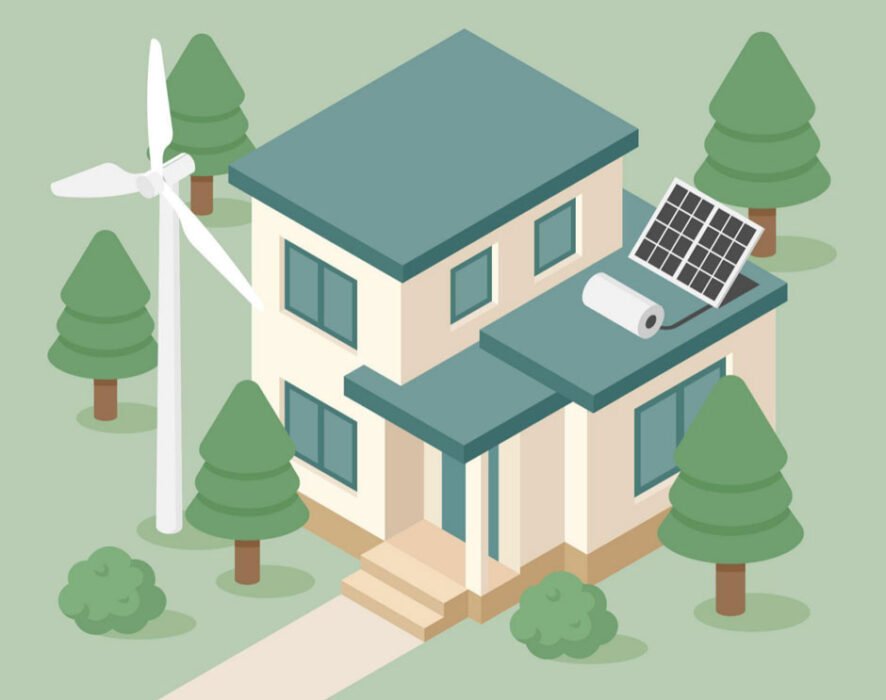
Here’s the clincher: Buyers aren’t chasing green homes to save the planet. Sure, it’s a welcome benefit. Homebuyers are going green because they are highly motivated to do so. Did you know that the federal government placed policies in place to encourage homeowners to install solar roofs? Similar policies were in place for electric vehicles, including tax credits. These are highly motivating factors for aspiring homeowners. So, in short, it’s all about chasing predictability for homeowners.
If we look at energy bills, maintenance costs, and long-term comfort, it’s apparent that eco-friendly solutions are winning the hearts and minds of buyers. The more environmentally conscious buyers are, the greater the control they exercise over their purse strings. It’s no longer about bragging rights – everyone and their spouse has a Tesla or electric vehicle of some sort in their near or extended family. Now it’s all about buying into the eco-friendly realm because the math adds up. In an age of spiraling costs, with real inflation still felt by every household, costs matter. Often, government data releases attempt to allay fears that inflation is under control, but the tea leaves tell a somewhat different story.
Every day, American families feel the pinch and are looking for viable, eco-friendly solutions. Homes that stay cool in summer (because they’re properly insulated from the heat outside) are a win-win. The opposite holds for wintertime – homes that stay warm despite the frigid outside temperatures. For this reason, tech accoutrements like solar panels are indispensable. They are now so much more than a novelty. We can infer that they are now an effective hedge against rising utility costs. The transition from concept to practical solution has unfolded, and homeowners aren’t wasting any time getting involved.
The Principles of Eco-Friendly Living
Eco-friendly homes are multivariable systems. In other words, there are numerous moving parts in every environmentally friendly home. We can list a couple off the top of our heads: energy efficiency, water conservation, build quality, and long-term operating costs. All of these factors make sense when viewed holistically. Importantly, buyers are looking toward efficiency of operations, and that’s really what it boils down to: dollars and cents.
The green movement has spread beyond the neatly defined borders of yesteryear. Today, demographics across the spectrum are buying into the green dream because it makes so much sense. Take, for example, the warriors who fought so bravely to serve their country, those who sacrificed for the greater good. Even vets, service members, and eligible family members are exploring eco-friendly living options. These are some of the many VA loan benefits available to aspiring homeowners who choose partially government-backed loans to secure real estate.
Getting to Grips with Runaway Costs
Eco-friendly living has certainly been incentivized across all demographics, both actively and passively. This holds true with its suppressive effect on spiraling costs, helping to rein in runaway expenses when everyone is desperately trying to stay solvent. Financing is an invaluable component of eco-friendly homeownership. Often, these upfront improvements pay for themselves over time, but only if buyers can manage the initial costs without too much difficulty. Fortunately, VA loans don’t require downpayments; an opportunity cost that can be invested directly in modifications.
The often accommodating qualification criteria for these loans mean they are inherently flexible for buyers. They are designed for long-term efficiency rather than a short-term tradeoff. Indeed, it’s a wide arc including families, retirees, veterans, and especially cost-conscious households. No single demographic defines this lifestyle choice anymore. The alignment with how people budget and live is quite a distinction. The core tenets of eco-friendly homes are in full effect: operational efficiency, system durability, and stable predictability. In short, sustainable living is now strongly focused on common sense over aspirational desires.