
Homeowners Associations (HOAs) are an increasingly common feature of residential communities, from condominiums and townhouses to single-family homes in planned developments. While HOAs aim to maintain property values and provide shared amenities, they come with a significant financial commitment: HOA fees. Understanding these fees, what they cover, and their implications is crucial for anyone considering buying a property within an HOA-governed community. This comprehensive article will delve into the world of HOA fees, explaining their purpose, how they are determined, the benefits and drawbacks they entail, and the financial and legal considerations every prospective homeowner should be aware of. By the end, you will be equipped to make an informed decision about whether an HOA community aligns with your lifestyle and financial goals.
Understanding HOA Fees
Before exploring the specifics, it’s essential to grasp the fundamental nature of HOA fees.
A. What are HOA Fees?
Industry insights from RealtyWerx Property Management specialists indicate that hOA fees are regular, mandatory payments made by homeowners who reside in a community managed by a Homeowners Association. These fees are typically collected monthly, quarterly, or annually and are a condition of property ownership within the association. Unlike property taxes, which fund public services, HOA fees fund the private services and amenities within the community.
B. How are HOA Fees Determined?
HOA fees are primarily determined by the association’s annual budget. The HOA board of directors, elected by the community members, creates this budget by estimating the costs of maintaining common areas, providing services, and funding reserve accounts for future major repairs. Factors influencing the budget include the size of the community, the number and type of amenities (e.g., pools, gyms, clubhouses), the age of the infrastructure, and local labor and material costs.
C. Average Cost of HOA Fees
The cost of HOA fees can vary significantly. While many single-family homes in HOA communities might see fees ranging from $100 to $300 per month, fees for condominiums or communities with extensive amenities can easily reach $500 to over $1,000 per month. The variability depends heavily on the location, the type of property, and the scope of services and amenities provided by the HOA.
What Do HOA Fees Cover?
The services and amenities covered by HOA fees are diverse and directly impact the quality of life within the community.
A. Common Area Maintenance
A significant portion of HOA fees goes towards the maintenance and upkeep of common areas. This includes landscaping for shared green spaces, maintenance of recreational facilities like swimming pools, tennis courts, and clubhouses, and the repair of private roads, sidewalks, and gates within the community.
B. Utilities for Common Areas
HOA fees often cover the cost of utilities for common areas, such as electricity for streetlights, water for irrigation of shared landscaping, and gas for heating community clubhouses or pools. This ensures that shared spaces are functional and inviting for all residents.
C. Insurance
HOAs typically maintain a master insurance policy that covers common structures and liability for accidents occurring in shared areas. For condominium owners, this master policy often covers the building’s exterior and common elements, while individual homeowners are responsible for insuring their unit’s interior.
D. Reserve Funds
A crucial component of HOA fees is the contribution to reserve funds. These funds are set aside for major, long-term repairs and replacements that are not part of routine maintenance, such as roof replacement, exterior painting of buildings, resurfacing of roads, or major upgrades to amenities. Adequate reserve funding helps prevent the need for sudden, large special assessments.
E. Administrative Costs
HOAs incur administrative costs, including fees for professional management companies, legal counsel, accounting services, and the organization of community events. These costs ensure the smooth operation and governance of the association.
F. Specific Services (Varies by HOA)
Depending on the community, HOA fees might also cover specific services like trash removal, snow removal, pest control, or even security services. The extent of these services directly influences the amount of the HOA fee.
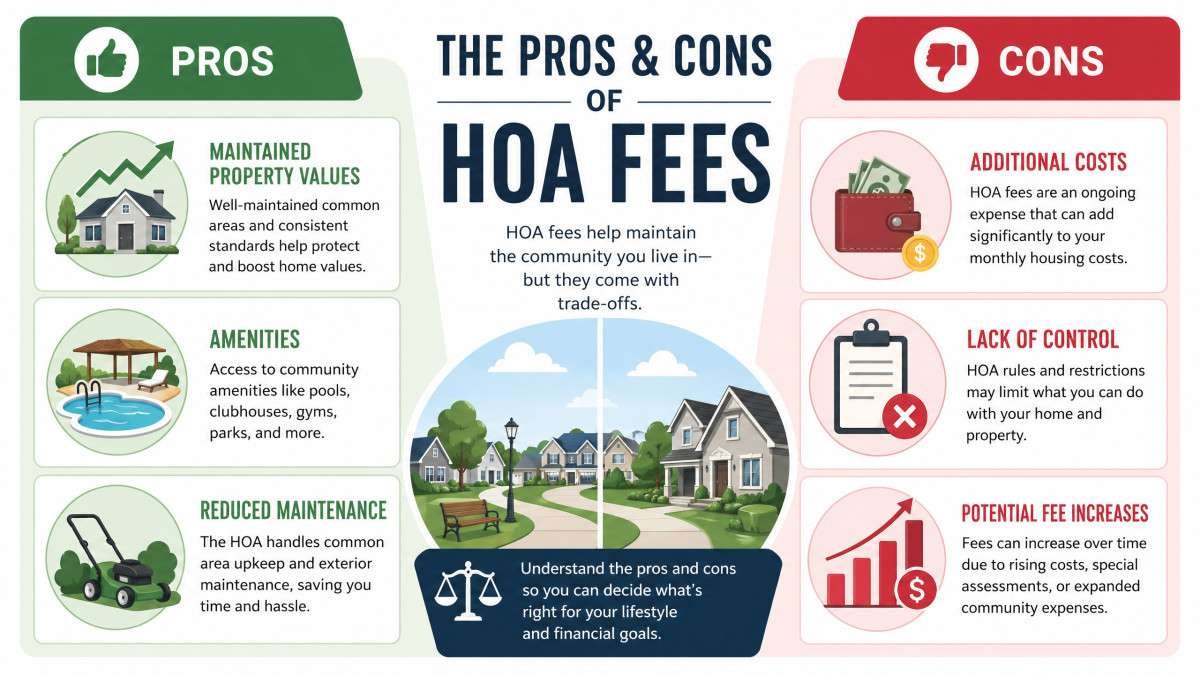
Pros and Cons of HOA Fees
While HOA fees provide numerous benefits, they also come with certain drawbacks that prospective buyers should consider.
A. Advantages
- **Maintained Property Values:** Consistent upkeep of common areas and adherence to community standards often contribute to higher and more stable property values.
- **Access to Amenities:** Residents gain access to exclusive amenities like pools, gyms, clubhouses, and parks, which they might not be able to afford or maintain individually.
- **Reduced Personal Maintenance:** For many, especially those in condos or townhouses, HOAs handle exterior maintenance, landscaping, and sometimes even roof repairs, reducing personal responsibility and freeing up time.
- **Community Living:** HOAs can foster a sense of community through organized events and provide a structured mechanism for dispute resolution among neighbors.
- **Financial Protection:** Well-managed reserve funds offer a degree of financial protection against unexpected major repair costs for common elements.
B. Disadvantages
- **Additional Monthly Cost:** HOA fees add a recurring expense to homeownership, which must be factored into your budget and mortgage qualification.
- **Lack of Control:** Living in an HOA community means adhering to rules and regulations (covenants, conditions, and restrictions or CC&Rs) that can dictate everything from exterior paint colors to landscaping choices and pet policies. This can limit personal freedom in modifying your property.
- **Potential for Fee Increases:** HOA fees can increase over time due to rising maintenance costs, inflation, or insufficient reserve funding. Homeowners may also face special assessments for major unforeseen expenses.
- **Foreclosure Risk:** Non-payment of HOA fees can lead to severe consequences, including late fees, liens on your property, and, in extreme cases, foreclosure by the association.
- **Restrictive Covenants:** The CC&Rs can be quite detailed and restrictive, impacting lifestyle choices such as parking, noise levels, and even the type of holiday decorations allowed.
Financial and Legal Implications
Beyond the direct costs, HOA fees have broader financial and legal ramifications.
A. Impact on Affordability
Lenders consider HOA fees when calculating a buyer’s debt-to-income ratio, which can affect the amount of mortgage you qualify for. High HOA fees can reduce your purchasing power, even if the property’s price is within your budget.
B. Special Assessments
Even with a healthy reserve fund, HOAs may levy special assessments—one-time fees charged to homeowners—to cover significant unexpected expenses or to fund major projects for which reserves are insufficient. These can be substantial and add considerable financial strain.
C. Reviewing HOA Documents
Before purchasing, it is imperative to thoroughly review all HOA documents, including the CC&Rs, bylaws, budget, and recent meeting minutes. These documents outline your rights and responsibilities, the rules you must follow, and the financial health of the association. It is highly advisable to have a real estate attorney review these documents on your behalf.
D. Consequences of Non-Payment
Failure to pay HOA fees can result in late fees, interest charges, and legal action. HOAs have the power to place a lien on your property, and in many states, they can even initiate foreclosure proceedings to collect unpaid dues, regardless of whether your mortgage is current.
Questions to Ask Before Buying in an HOA Community
To ensure you make an informed decision, consider asking the following questions:
- What are the current HOA fees, and what exactly do they cover?
- How often have fees increased in the past, and by how much?
- What is the amount in the reserve fund, and is a recent reserve study available for review?
- What are the major rules and regulations that will impact my lifestyle or property modifications?
- Are there any pending special assessments or major projects planned for the near future?
- What is the overall financial health of the HOA, and are there any ongoing legal disputes?
Conclusion: Informed Decisions for Community Living
Homeowners Associations can offer a structured and amenity-rich living environment, but the associated fees and regulations require careful consideration. By thoroughly understanding what HOA fees entail, what services they provide, and the potential financial and legal implications, prospective buyers can make informed decisions. Weighing the benefits of community maintenance and amenities against the costs and restrictions is crucial to ensure that an HOA-governed property is the right fit for your lifestyle and long-term financial well-being. Proactive research and due diligence are key to a harmonious and financially sound experience in an HOA community.