
In the complex dance of a real estate transaction, trust and commitment are essential components for both buyers and sellers. While a signed purchase agreement is a legally binding contract, it is often accompanied by a tangible demonstration of a buyer’s serious intent: the earnest money deposit. Frequently referred to as a “good faith” deposit, earnest money plays a pivotal role in securing a property and providing the seller with a level of financial protection during the period between the offer acceptance and the final closing. This comprehensive article will explore the multifaceted role of earnest money in a home purchase, delving into how it works, typical amounts, its relationship with the down payment, and the crucial question of its refundability. By understanding the nuances of earnest money, prospective homebuyers can navigate the transaction process with greater confidence and clarity.
How Earnest Money Works
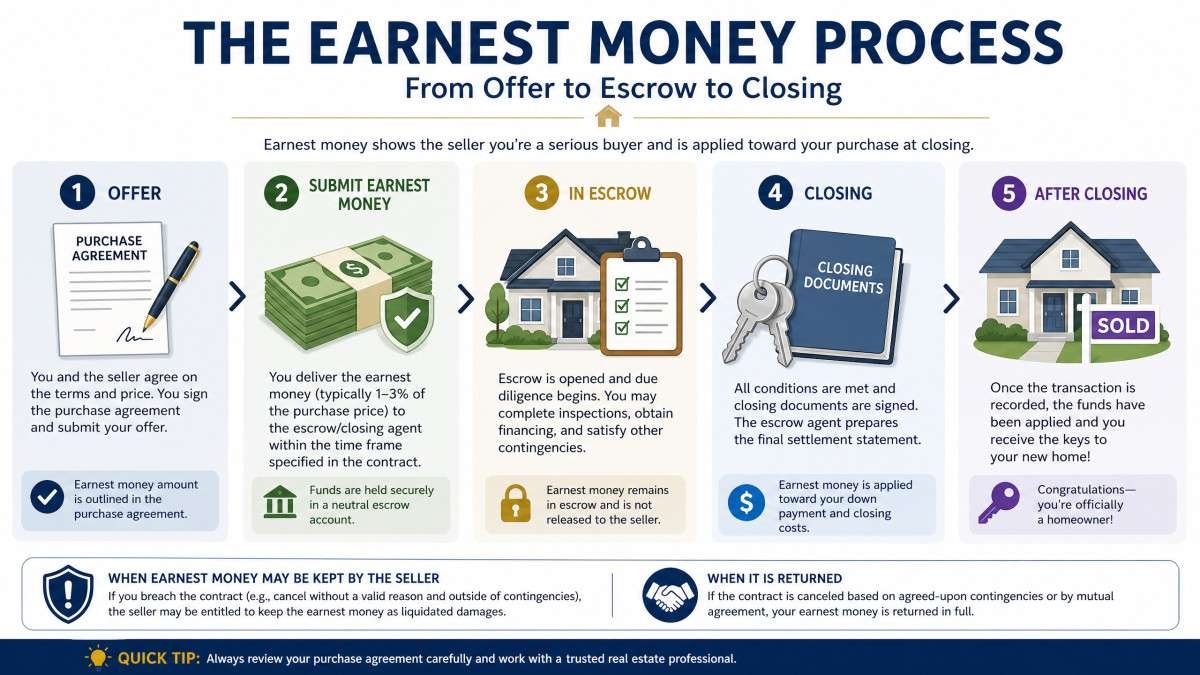
As RPM Reliance Beverly explains, earnest money is more than just a gesture; it is a structured part of the real estate process with specific procedures for handling and final application.
A. The Offer Phase
When a buyer makes an offer on a home, the purchase agreement typically specifies the amount of earnest money they are willing to deposit. This amount is negotiable and is often used to signal the buyer’s level of commitment. A larger deposit can be particularly advantageous in a competitive seller’s market, as it demonstrates a higher degree of financial stability and a stronger desire to close the deal.
B. Holding the Funds
Once the offer is accepted, the earnest money is typically deposited into an escrow account held by a neutral third party, such as a title company or a real estate brokerage. This ensures that the funds are kept safe and are not directly accessible to either the buyer or the seller until the transaction is finalized or terminated according to the terms of the contract.
C. Final Application of Funds
If the transaction proceeds smoothly to closing, the earnest money is applied toward the buyer’s down payment or closing costs at settlement. In essence, it acts as a “pre-payment” of a portion of the total funds required to purchase the home.
Determining the Earnest Money Amount
The amount of earnest money can vary significantly based on several factors, including local customs and market conditions.
A. Typical Percentages
While there is no fixed rule, earnest money deposits typically range from 1% to 3% of the home’s purchase price. For example, on a $400,000 home, a 1% deposit would be $4,000, while a 3% deposit would be $12,000. In some highly competitive markets, deposits can even reach 5% or 10%.
B. Factors Influencing the Amount
Several factors can influence the final earnest money amount:
| Factor | Influence on Earnest Money |
|---|---|
| Market Conditions | In a seller’s market, higher deposits are common to strengthen offers. In a buyer’s market, lower deposits may be acceptable. |
| Property Value | Higher-priced homes often require larger absolute deposits. |
| Local Customs | Standard practices in a particular region or city can dictate typical amounts. |
| Competition | Multiple offers on a property can lead buyers to increase their deposit to stand out. |
Earnest Money vs. Down Payment
It is important to distinguish between earnest money and the down payment, although they are related.
A. Key Differences
The primary differences lie in their timing and purpose. Earnest money is paid at the time of the offer or shortly after acceptance to show commitment. The down payment is the total amount of cash the buyer pays toward the purchase price (excluding the mortgage) and is finalized at closing. Earnest money is essentially a subset of the down payment that is paid early.
Is Earnest Money Refundable?
The question of whether a buyer can get their earnest money back is a critical one, and the answer depends heavily on the contingencies included in the purchase agreement.
A. Contingencies: The Buyer’s Protection
Contingencies are conditions that must be met for the transaction to proceed. Common contingencies include:
- **Inspection Contingency:** Allows the buyer to back out if the home inspection reveals significant issues.
- **Appraisal Contingency:** Protects the buyer if the home appraises for less than the purchase price.
- **Financing Contingency:** Ensures the buyer can cancel the deal if they are unable to secure a mortgage.
- **Home Sale Contingency:** Allows the buyer to back out if they cannot sell their current home.
B. Scenarios Where the Buyer Gets a Refund
If a buyer cancels the deal based on a valid, unexpired contingency, they are typically entitled to a full refund of their earnest money. Additionally, if the seller breaches the contract (e.g., by failing to complete agreed-upon repairs), the buyer can usually get their deposit back.
C. Scenarios Where the Seller Keeps the Money
The seller may be entitled to keep the earnest money if the buyer backs out of the deal without a valid contingency or if they fail to meet contractual deadlines. This serves as compensation to the seller for the time the property was off the market.
Protecting Your Earnest Money Deposit
Homebuyers should take proactive steps to safeguard their earnest money throughout the transaction.
- **Understand the Agreement:** Carefully read and understand all contingencies and deadlines in the purchase agreement.
- **Work with Professionals:** Rely on the expertise of your real estate agent and attorney to ensure all contractual obligations are met.
- **Maintain Documentation:** Keep clear records of all communications and ensure all notices and requests are made in writing and within specified timeframes.
Conclusion: The Foundation of a Secure Transaction
Earnest money is a fundamental element of the real estate process, serving as a vital link between a buyer’s offer and the final transfer of ownership. By demonstrating commitment and providing a degree of security for the seller, it helps build the trust necessary for a successful transaction. For homebuyers, understanding how earnest money works, the importance of contingencies, and the strategies for protecting their deposit is essential for a smooth and secure journey toward homeownership. By being informed and proactive, you can ensure that your “good faith” deposit truly paves the way for a happy and successful home purchase.