
I. Introduction: The Enduring Appeal of Older Homes
The housing market presents a myriad of choices, from gleaming new constructions to homes steeped in history. For many prospective buyers, the allure of an older home is undeniable. These properties often exude a unique charm and character that newer builds struggle to replicate, offering a tangible connection to the past and a sense of established community. Imagine intricate architectural details, mature trees lining the streets, and a story embedded within every brick and beam – these are the qualities that draw many to consider an older residence.
However, the decision to purchase an older home is not without its complexities. While the romantic appeal is strong, it’s crucial for buyers to approach such an investment with a clear understanding of both the advantages and potential challenges. This article aims to provide a balanced perspective, delving into the various pros and cons associated with buying an older home. By exploring factors ranging from architectural beauty and established neighborhoods to maintenance demands and potential hidden issues, we will equip you with the knowledge necessary to make an informed decision that aligns with your lifestyle, budget, and long-term aspirations.
II. The Allure: Pros of Buying an Older Home
Older homes often captivate buyers with a distinct set of advantages that are difficult to find in contemporary constructions. These benefits extend beyond mere aesthetics, encompassing aspects of community, value, and inherent quality.
A. Character and Architectural Charm
One of the most significant draws of an older home is its unparalleled character and architectural charm. Unlike the often standardized designs of new developments, older properties frequently boast unique historical details, intricate craftsmanship, and distinctive aesthetics. Features such as crown molding, original hardwood floors, built-in cabinetry, ornate fireplaces, and unique window designs are common. These elements not only add visual appeal but also tell a story of a bygone era, offering a sense of individuality and warmth that modern homes often lack. Whether it’s the grandeur of a Victorian, the functional elegance of a Craftsman, or the timeless appeal of a Colonial, older homes provide a tangible connection to architectural heritage.
B. Established Neighborhoods and Mature Landscaping
Older homes are typically situated in established neighborhoods, which come with their own set of benefits. These areas are often located closer to city centers, offering convenient access to amenities such as shops, restaurants, cultural institutions, and public transportation. The infrastructure is usually well-developed, and the communities have had decades to mature, fostering a strong sense of belonging and neighborly connection. Furthermore, these neighborhoods are characterized by mature trees, lush gardens, and well-maintained public spaces, providing a serene and aesthetically pleasing environment that enhances quality of life and property value.
C. Potentially Lower Purchase Price and Larger Lots
In many markets, older homes can offer a more affordable entry point compared to newly constructed properties, especially when considering the square footage or lot size. This can be a significant advantage for buyers on a tighter budget, allowing them to acquire more space for their investment. Additionally, older homes frequently come with more generous lot sizes than their modern counterparts. Decades ago, land was often more readily available and less expensive, leading to properties with larger backyards, ample space for gardening, or potential for future expansion. This extra outdoor space provides privacy, recreational opportunities, and a greater sense of openness.
D. Solid Construction and Quality Materials
While not universally true, many older homes were built with a focus on durability and longevity, often utilizing high-quality, old-growth timber and traditional construction techniques. The craftsmanship of earlier eras sometimes prioritized robust structural integrity over speed and cost-efficiency, resulting in homes that have stood the test of time. These properties can possess a foundational solidity that is reassuring to homeowners, suggesting a resilience that might require less significant structural intervention over the years compared to some modern builds.
E. Renovation Potential and Customization Opportunities
For buyers with a vision, an older home can serve as an ideal canvas for personalization and modern upgrades. While some may see outdated features as a drawback, others view them as opportunities to infuse their own style and enhance functionality. Thoughtful renovations can transform an older property into a contemporary dream home while preserving its inherent charm. This potential for customization allows homeowners to create a space that perfectly reflects their tastes and needs, often leading to increased property value and a deeply satisfying sense of accomplishment. From updating kitchens and bathrooms to reconfiguring layouts, older homes offer a unique chance to blend historical character with modern living.
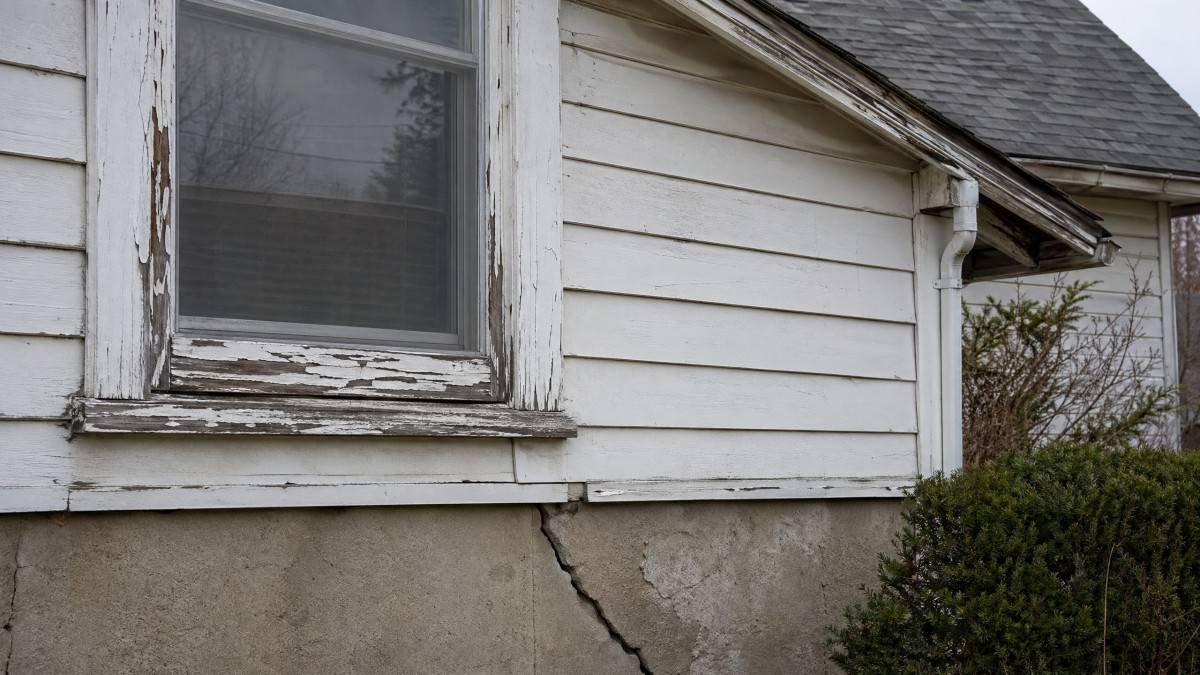
A close-up of a section of an older home showing common issues like a cracked foundation and peeling paint, illustrating potential maintenance challenges.
III. The Challenges: Cons of Buying an Older Home
While the charm of an older home is undeniable, prospective buyers must also be aware of the potential challenges and drawbacks that often accompany these properties. Understanding these aspects is crucial for a realistic assessment of the investment and ongoing commitment required.
A. Higher Maintenance and Repair Costs
One of the most significant considerations when purchasing an older home is the likelihood of higher maintenance and repair costs. Components such as roofing, foundations, exterior siding, and windows have a finite lifespan, and in an older home, these elements are often nearing or past their expected longevity. This can lead to a continuous cycle of repairs and replacements, which can be both time-consuming and financially demanding. Unexpected issues, such as water damage, pest infestations, or deteriorating structural elements, can arise suddenly, requiring substantial investment to rectify.
B. Outdated Systems (Electrical, Plumbing, HVAC)
Older homes were built to different standards and for different needs than modern residences, particularly concerning their core systems. Electrical systems in older homes may not be equipped to handle the power demands of contemporary appliances and electronics, potentially leading to tripped breakers, fire hazards, or the need for costly panel upgrades and rewiring. Plumbing systems often feature older materials like galvanized pipes or cast iron, which are prone to corrosion, leaks, and reduced water pressure. Similarly, heating, ventilation, and air conditioning (HVAC) systems in older homes are frequently inefficient or at the end of their operational life, necessitating expensive replacements to ensure comfort and energy efficiency.
C. Energy Inefficiency and Higher Utility Bills
A common characteristic of older homes is their relative energy inefficiency compared to newer, more tightly constructed properties. This often stems from inadequate insulation in walls, attics, and basements, as well as the presence of single-pane windows and drafty doors. These factors contribute to significant heat loss in winter and heat gain in summer, resulting in higher utility bills for heating and cooling. While upgrades can improve energy performance, they represent an additional upfront cost that buyers must factor into their budget.
D. Potential for Hazardous Materials (Asbestos, Lead Paint)
Homes built before certain regulatory standards were enacted may contain hazardous materials that pose health risks and require specialized, costly remediation. Lead-based paint, commonly used in homes built before 1978, can chip and create toxic dust, particularly dangerous for children. Asbestos, once a popular insulating and fire-retardant material, can be found in various components of older homes, including insulation, flooring, and pipe wraps. If disturbed, asbestos fibers can become airborne and cause serious respiratory illnesses. Radon gas, a naturally occurring radioactive gas, can also be present in older homes, necessitating testing and mitigation.
E. Structural Issues and Foundation Concerns
Over decades, homes can experience settling, shifting, and wear that may lead to structural issues. Cracks in foundations, uneven floors, sagging roofs, or misaligned doors and windows can be indicators of underlying problems. While minor settling is normal, significant structural damage can be extremely expensive and complex to repair. Additionally, older homes may be more susceptible to issues like wood rot, termite damage, or other pest infestations that compromise the integrity of the structure, often requiring extensive and specialized interventions.
F. Outdated Layouts and Limited Modern Amenities
Architectural trends and lifestyle preferences have evolved considerably over time. Many older homes feature compartmentalized layouts with smaller, distinct rooms, which can feel restrictive to those accustomed to modern open-concept living spaces. Kitchens and bathrooms may be smaller, less functional, and require complete overhauls to meet contemporary standards. Furthermore, amenities common in new builds, such as walk-in closets, en-suite bathrooms, dedicated laundry rooms, or integrated smart home technology, are often absent in older properties, requiring significant renovation to incorporate.
G. Insurance Challenges
Obtaining homeowner’s insurance for older properties can sometimes present challenges. Insurers may view older homes as higher risk due to their aging systems, potential for hidden issues, or susceptibility to certain types of damage. This can result in higher premiums, more stringent coverage requirements, or even difficulty securing coverage from some providers. Buyers may need to shop around and potentially make certain upgrades to satisfy insurance company demands, adding another layer of complexity and cost to the ownership experience.
IV. Key Considerations Before You Buy
Given the unique characteristics of older homes, a thorough and strategic approach to the buying process is essential. Prospective buyers should undertake several key steps to mitigate risks and ensure a sound investment.
A. The Importance of a Comprehensive Home Inspection
For an older home, a standard home inspection is simply not enough; a comprehensive inspection is paramount. It is crucial to hire a qualified and experienced home inspector who specializes in older properties and is familiar with their common issues. This inspector should meticulously examine the foundation, roof, electrical system, plumbing, HVAC, and look for signs of hazardous materials, structural damage, or pest infestations. A detailed inspection report will provide a clear picture of the home’s current condition, highlighting immediate repair needs and potential future expenses. This information is invaluable for negotiating the purchase price or deciding if the property is a viable investment.
B. Budgeting for Renovations and Unexpected Repairs
Buyers of older homes must anticipate and budget for both planned renovations and unexpected repairs. It is wise to set aside a significant emergency fund specifically for the home, as unforeseen issues can arise at any time. Beyond cosmetic updates, consider the potential costs of major system upgrades, such as replacing an entire electrical panel, re-piping the plumbing, or installing a new HVAC system. Obtaining estimates from contractors for identified issues during the inspection phase can help create a realistic financial plan. Overlooking this crucial budgeting step can lead to financial strain and project delays.
C. Understanding Local Building Codes and Permits
Before undertaking any significant renovations or additions to an older home, it is imperative to understand and comply with local building codes and permit requirements. Codes can vary significantly by municipality and may have changed since the home was originally built. Non-compliance can lead to fines, stop-work orders, and the need to redo work, all of which are costly and time-consuming. Researching these regulations and consulting with local authorities or experienced contractors early in the process will ensure that all work is performed legally and safely, preserving the home’s value and your investment.
D. Researching the Home’s History
Delving into the history of an older home can provide invaluable insights into its past care and potential future. This research can involve reviewing previous ownership records, looking for past renovation permits, and inquiring about any known maintenance issues or major repairs. Sellers are often required to provide disclosure statements detailing known defects or past problems, which should be carefully reviewed. Understanding the home’s lineage can help predict future maintenance needs, uncover hidden issues, and provide a more complete picture of the property’s journey through time, aiding in a more informed purchasing decision.
V. Frequently Asked Questions (FAQ)
A. Are older houses worth buying?
Older houses can absolutely be worth buying, especially for those who appreciate unique character, established neighborhoods, and potentially larger lots. They often come with a rich history and architectural charm that newer homes lack. However, the decision depends heavily on your budget for maintenance and renovations, your tolerance for potential issues, and your willingness to conduct thorough due diligence. With proper inspection and financial planning, an older home can be a rewarding investment.
B. What is the biggest red flag in a home inspection?
While many issues can arise during a home inspection, the biggest red flags typically involve significant structural problems (e.g., foundation cracks, severe sagging floors, major roof damage), extensive water damage (e.g., active leaks, mold, rot), or severely outdated and unsafe electrical or plumbing systems. These issues can be extremely costly and complex to repair, potentially impacting the safety and habitability of the home. Always consult with specialists if such red flags are identified.
C. What devalues a house the most?
Several factors can significantly devalue a house. Major structural issues, extensive deferred maintenance (e.g., a dilapidated roof, broken windows, peeling paint), outdated interiors (especially kitchens and bathrooms that haven’t been updated in decades), poor curb appeal, and an undesirable location (e.g., high crime rates, proximity to noisy industrial areas) are common culprits. Additionally, functional obsolescence, where the home’s layout or features no longer meet modern living standards, can also contribute to devaluation.
D. What are some signs of a poorly kept home?
Signs of a poorly kept home often include visible deferred maintenance, such as a leaky roof, cracked or peeling paint, overgrown landscaping, clogged gutters, and damaged siding. Inside, look for signs of water stains on ceilings or walls, musty odors, outdated and non-functional appliances, dirty carpets, neglected bathrooms and kitchens, and general disrepair. These indicators suggest that the current owners have not invested adequately in the home’s upkeep, which could lead to more significant problems down the line.
VI. Conclusion: Making an Informed Decision
The journey to homeownership is deeply personal, and the choice between an older home and a newer one is no exception. As we have explored, older homes offer a compelling blend of unique character, architectural charm, and the benefits of established communities. They can provide a sense of history and individuality that is often absent in modern constructions, appealing to those who value craftsmanship and a connection to the past.
However, this appeal must be weighed against the practical realities of owning an older property. The potential for higher maintenance costs, outdated systems, energy inefficiencies, and the presence of hazardous materials are significant considerations that demand careful attention. These challenges are not insurmountable, but they necessitate a proactive approach, diligent research, and a realistic financial plan.
Ultimately, making an informed decision about buying an older home hinges on several critical factors: conducting a comprehensive home inspection by a specialist, budgeting adequately for both anticipated and unexpected expenses, understanding local building codes, and thoroughly researching the property’s history. Engaging with experienced real estate agents, inspectors, and contractors who understand older homes can provide invaluable guidance throughout this process.
For the right buyer—one who appreciates the unique qualities of a historic property, is prepared for the responsibilities of its upkeep, and is willing to invest the time and resources into its preservation and modernization—owning an older home can be an incredibly rewarding experience. It offers not just a place to live, but a piece of history to cherish, a project to nurture, and a home filled with character and enduring appeal.