
Water damage is a homeowner’s nightmare, often leading to costly repairs, structural issues, and potential health hazards if left unaddressed. It can be a silent threat, slowly deteriorating a home from the inside out, making early detection crucial. For prospective homebuyers, identifying signs of water damage during a showing or inspection can be the difference between a sound investment and a money pit. This comprehensive guide will equip you with the knowledge to spot potential water damage in a home, covering visual, tactile, and olfactory cues, common problem areas, and what steps to take if you suspect an issue. By understanding these indicators, you can protect your investment and ensure a healthy living environment.
Visual Cues: What to Look For
According to Rico Real Estate Neepawa, the most obvious signs of water damage are often visible to the naked eye. A thorough visual inspection can reveal much about a home’s history with moisture.
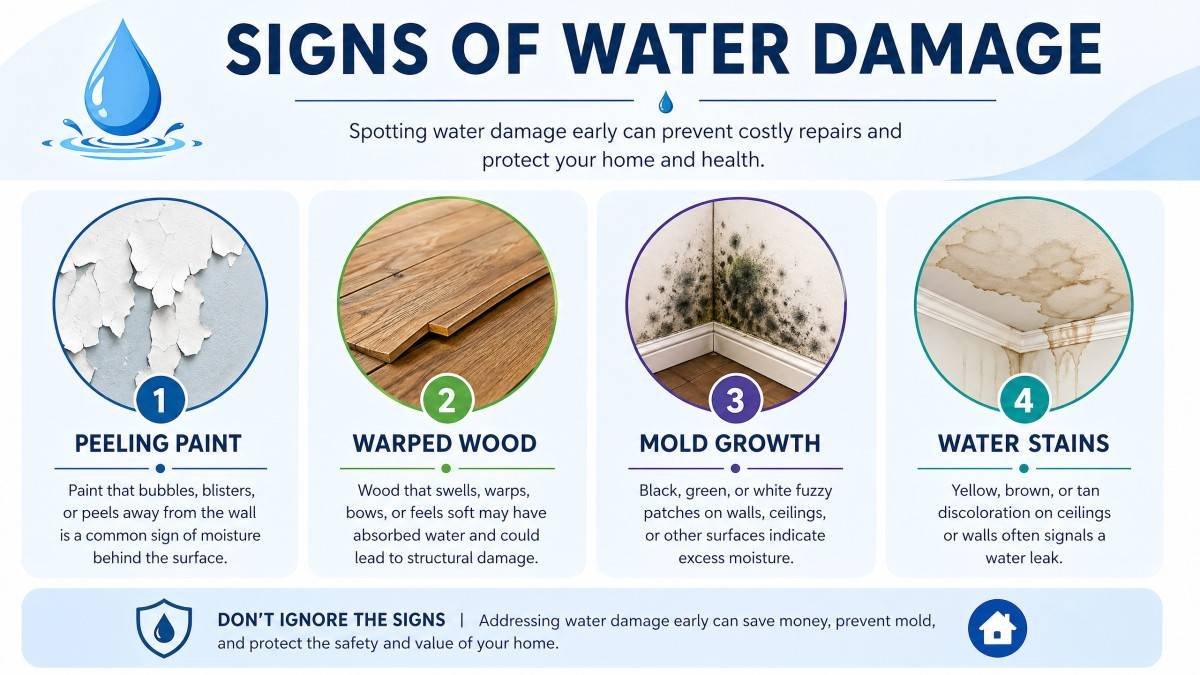
A. Stains and Discoloration
Look for yellow, brown, or dark spots on ceilings, walls, and floors. These are classic indicators of water intrusion. Water rings or
tide marks, especially on ceilings or near windows, are also strong indicators of past or ongoing leaks.
B. Peeling, Bubbling, or Flaking Paint/Wallpaper
Moisture behind painted walls or wallpaper can cause the finishes to lose adhesion. If you notice paint peeling, bubbling, or flaking, particularly near the bottom of walls or around fixtures, it’s a clear sign of water damage. The moisture causes the material to expand and contract, leading to these visible imperfections.
C. Warped, Buckled, or Swollen Materials
Wood and other porous materials absorb water, causing them to change shape. Look for warped or buckled hardwood or laminate flooring, swollen baseboards, or distorted drywall. These changes indicate that the material has been exposed to excessive moisture and is a strong sign of water damage.
D. Sagging Ceilings or Walls
Prolonged water exposure can compromise the structural integrity of ceilings and walls. If you observe any areas that appear to be sagging, bulging, or soft to the touch, it could be due to significant water accumulation within the structure. This is a serious sign that requires immediate attention.
E. Visible Mold or Mildew Growth
Mold and mildew thrive in damp environments. Visible patches of black, green, white, or fuzzy growth on walls, ceilings, floors, or around windows are undeniable evidence of moisture problems. Beyond being unsightly, mold can pose significant health risks and indicates a persistent water issue.
Tactile and Olfactory Signs: Feel and Smell
Sometimes, water damage isn’t immediately visible but can be detected through touch and smell.
A. Dampness or Soft Spots
Feel for dampness or soft spots on walls, floors, carpets, or under sinks. Areas that feel spongy or unusually cool to the touch may indicate hidden moisture. Pay close attention to areas around plumbing fixtures, windows, and exterior walls.
B. Musty or Earthy Odors
A persistent musty, earthy, or stale odor, even if you can’t see any visible water damage, is a strong indicator of mold or mildew growth. These odors are caused by microbial volatile organic compounds (MVOCs) released by mold, signaling a hidden moisture problem that needs to be investigated.
C. Cold Spots
Areas that feel unusually cold to the touch on walls or floors, especially when compared to surrounding surfaces, can suggest the presence of moisture. Water has a higher thermal conductivity than dry materials, making damp areas feel cooler.
Common Problem Areas for Water Damage
Certain areas in a home are more prone to water damage due to plumbing, weather exposure, or drainage issues.
A. Bathrooms
Bathrooms are high-moisture areas. Check around toilets for leaks at the base, under sinks for pipe drips, around showers and tubs for compromised caulk or grout, and behind walls adjacent to plumbing for signs of moisture.
B. Kitchens
In the kitchen, inspect under the sink for leaks, around the dishwasher, and behind the refrigerator (especially if it has an ice maker line). Look for water stains on cabinets or flooring in these areas.
C. Basements and Crawl Spaces
These areas are particularly vulnerable to water intrusion from foundation cracks, leaky pipes, or poor exterior drainage. Look for standing water, damp concrete, efflorescence (white powdery residue on masonry), and musty odors. Check the functionality of sump pumps if present.
D. Attics and Roof
Inspect the attic for signs of a leaky roof, such as water stains on the ceiling joists or insulation. Check for damaged or missing shingles, compromised flashing around chimneys and vents, and clogged gutters or ice dams that can cause water to back up.
E. Windows and Doors
Poorly sealed windows and doors can allow rainwater to seep in. Look for water stains on the sills, frames, or adjacent walls, and check for drafts or compromised weather stripping.
F. Laundry Rooms
Washing machine hoses are a common source of leaks. Inspect the hoses for cracks or bulges and check the floor and walls behind the washer and dryer for any signs of moisture.
Hidden Water Damage: Beyond the Obvious
Some water damage is not immediately apparent and requires a more thorough investigation.
A. Behind Walls and Under Flooring
Water can seep into hidden spaces, causing damage that isn’t visible. Professional home inspectors often use moisture meters to detect elevated moisture levels behind walls, under flooring, or in other concealed areas. Unexplained increases in humidity can also be a sign.
B. Plumbing Leaks
Slow, persistent plumbing leaks can go unnoticed for extended periods. Listen for dripping sounds within walls or under floors. An unexplained increase in your water bill can also be a strong indicator of a hidden leak.
C. Exterior Drainage Issues
Improper grading around the foundation, clogged downspouts, or inadequate drainage can cause water to pool near the house, leading to foundation issues and basement leaks. Ensure that rainwater is directed away from the home.
What to Do if You Suspect Water Damage
If you identify or suspect water damage, taking prompt action is crucial to mitigate further issues.
A. Identify the Source
If safe to do so, try to locate and stop the source of the water. This might involve turning off a water valve, clearing a clog, or patching a temporary leak. If the source is unclear or unsafe to approach, contact a professional immediately.
B. Document the Damage
Take clear photos and detailed notes of all visible damage. This documentation will be essential for insurance claims or when discussing repairs with contractors.
C. Call a Professional
For significant or hidden water damage, it’s best to call a professional. This could be a home inspector for a comprehensive assessment, a water damage restoration specialist for cleanup and drying, or a plumber to fix a persistent leak.
D. Consider a Professional Home Inspection
Especially if you are buying a home, a professional home inspection is non-negotiable. Inspectors are trained to identify subtle signs of water damage and can use specialized tools to detect hidden moisture, providing you with a detailed report on the home’s condition.
Conclusion: Vigilance for a Healthy Home
Water damage, whether obvious or hidden, poses a significant threat to the structural integrity and health of a home. By being vigilant and knowing what signs to look for—from visual cues like stains and peeling paint to tactile sensations and musty odors—homeowners and prospective buyers can detect problems early. Early detection not only saves money on extensive repairs but also prevents potential health issues associated with mold growth. Regular home maintenance, coupled with professional inspections, are your best defenses against the silent threat of water damage, ensuring a healthy, safe, and valuable living environment.