
Identifying the Type of Noise
The first step in silencing your garbage disposal is identifying the specific type of noise it is making. Different sounds point to different underlying issues:
| Sound Type | Likely Cause | Severity |
|---|---|---|
| Humming or buzzing | Jammed impeller or motor issue | High (turn off immediately) |
| Grinding or rattling | Foreign object in the disposal | Medium |
| Squealing | Worn out bearings or motor | High |
| Clanking | Loose mounting ring or components | Medium |
Safety First: Before You Begin
Before attempting any repairs on your garbage disposal, safety is paramount. Never put your hands inside the disposal while it is connected to power.
- Turn off the switch that controls the disposal.
- Unplug the unit from the wall outlet under the sink. If it is hardwired, turn off the circuit breaker that supplies power to the kitchen.
- Use a flashlight to look inside the drain.
Removing Foreign Objects
The most common cause of a rattling or grinding noise is a foreign object that has fallen into the disposal. Silverware, bones, fruit pits, and small toys are frequent culprits.
Once the power is completely disconnected, use a pair of long-handled tongs or pliers to reach into the disposal and remove the object. Never use your fingers, as the blades are sharp even when the unit is off. After removing the object, restore power and test the disposal with running water.
Freeing a Jammed Impeller
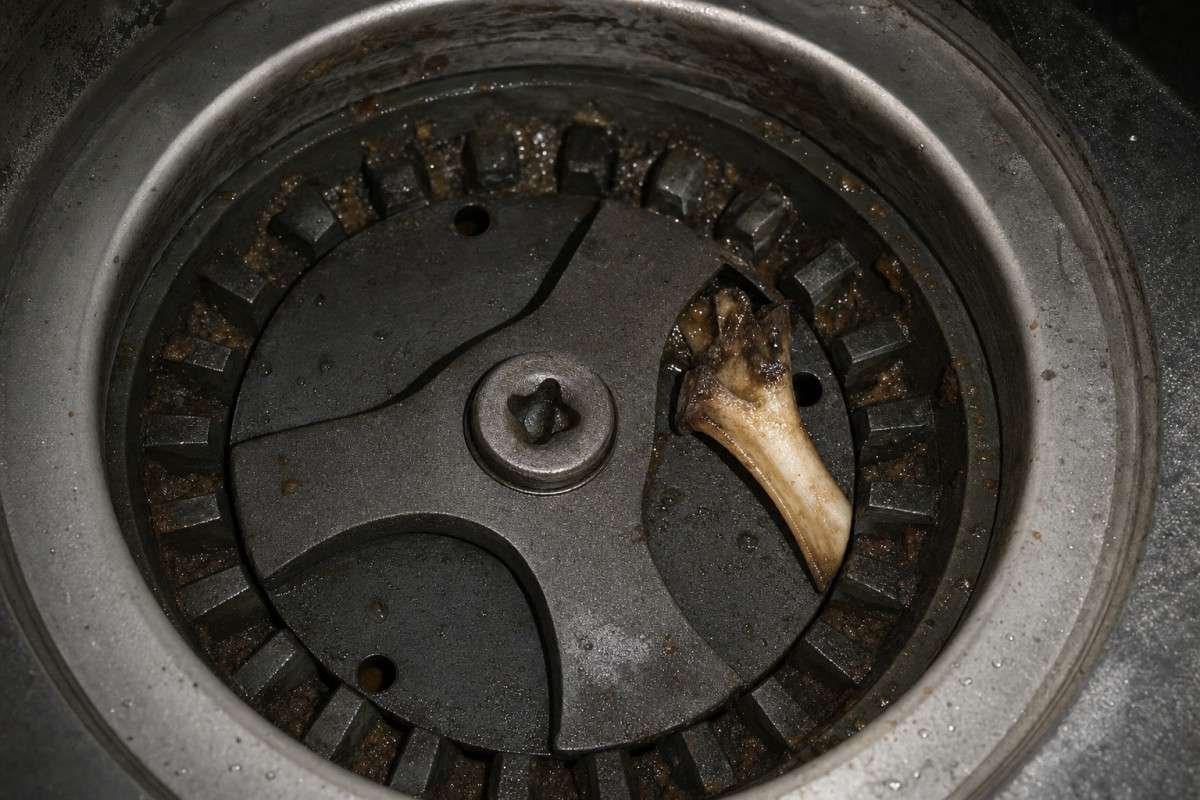
If your disposal makes a humming or buzzing sound but the blades do not turn, the impeller is likely jammed. This happens when tough food waste or a foreign object wedges between the impeller plate and the shredder ring.
- Disconnect the power.
- Locate the hex socket (Allen wrench hole) on the bottom of the disposal unit under the sink.
- Insert a 1/4-inch Allen wrench (often provided with the unit) into the socket.
- Turn the wrench back and forth to manually rotate the motor shaft and free the jam.
- Once the shaft turns freely, remove the wrench, restore power, and press the red reset button on the bottom of the unit before testing.
Tightening Loose Components
A clanking or vibrating noise often indicates that the disposal is loose. The vibration of normal operation can cause the mounting ring or other components to loosen over time.
Check the mounting ring that connects the disposal to the sink flange. If it is loose, tighten it using a screwdriver or the specialized wrench that came with the unit. Also, check the dishwasher drain connection and the main drain pipe connection to ensure they are secure.
Cleaning and Maintenance
Sometimes, a noisy disposal is simply a dirty one. Built-up food residue can cause the impellers to stick or operate inefficiently.
To clean your disposal:
- Pour a cup of ice cubes and a cup of rock salt into the disposal.
- Run cold water and turn on the unit. The ice and salt will scour the blades and the inside of the grinding chamber.
- For a fresher smell, grind a few citrus peels (lemon or orange) after the ice treatment.
When to Replace the Disposal
If you have removed foreign objects, cleared jams, and tightened all connections, but the disposal still makes a squealing or excessively loud noise, the motor bearings or the motor itself may be failing. In this case, repairing the unit is often more expensive than replacing it. Most garbage disposals have a lifespan of 8 to 15 years.
Frequently Asked Questions
Why is my garbage disposal humming but not spinning?
A humming sound indicates that the motor is receiving power but the impeller is jammed. Turn off the unit immediately to prevent the motor from burning out, and use an Allen wrench on the bottom of the unit to manually free the jam.
Can I put eggshells in the garbage disposal?
While eggshells are not likely to damage the disposal itself, the membrane inside the shell can wrap around the shredder ring, and the ground shells can accumulate in your pipes, leading to clogs. It is generally better to compost eggshells.
How do I reset my garbage disposal?
Locate the small red reset button on the bottom of the disposal unit under the sink. If the unit has overheated or tripped due to a jam, this button will pop out. Press it back in to reset the internal circuit breaker.
Is it normal for a garbage disposal to be loud?
Garbage disposals are inherently noisy appliances, but the sound should be a consistent, low-pitched grinding. High-pitched squealing, metallic clanking, or a sudden increase in volume are not normal.
What should you never put down a garbage disposal?
Avoid putting grease, oil, fat, coffee grounds, fibrous vegetables (like celery or corn husks), pasta, rice, and large bones down the disposal. These items can cause clogs or damage the blades.
Conclusion
A noisy garbage disposal is a common household annoyance, but it is rarely a cause for panic. By prioritizing safety, identifying the type of noise, and following these troubleshooting steps, you can often resolve the issue quickly and inexpensively. Regular maintenance and mindful usage will keep your disposal running smoothly and quietly for years to come.