
The couple signed the purchase agreement on a Thursday evening, confident their offer on the three-bedroom colonial would close in thirty days. By Monday morning, the inspector had found a crumbling foundation and knob-and-tube wiring. Repairs totaled an estimated $45,000.
There was a catch. Their inspection contingency carried a five-day deadline, and the inspector couldn’t schedule until day six. They lost all $15,000 in earnest money. The clause they signed had zero provision for extensions.
A single missed deadline. That’s how fast a deal unravels, shares Sun-Pro Realty and Management professionals. For first-time buyers learning the ropes, investors juggling multiple escrow accounts, or FSBO sellers navigating the legal labyrinth alone, real estate mistakes don’t just cost money—they can unwind an entire transaction, trigger litigation, or expose you to personal liability.
The Top 5 Legal Mistakes That Cost Real Estate Buyers and Sellers Thousands
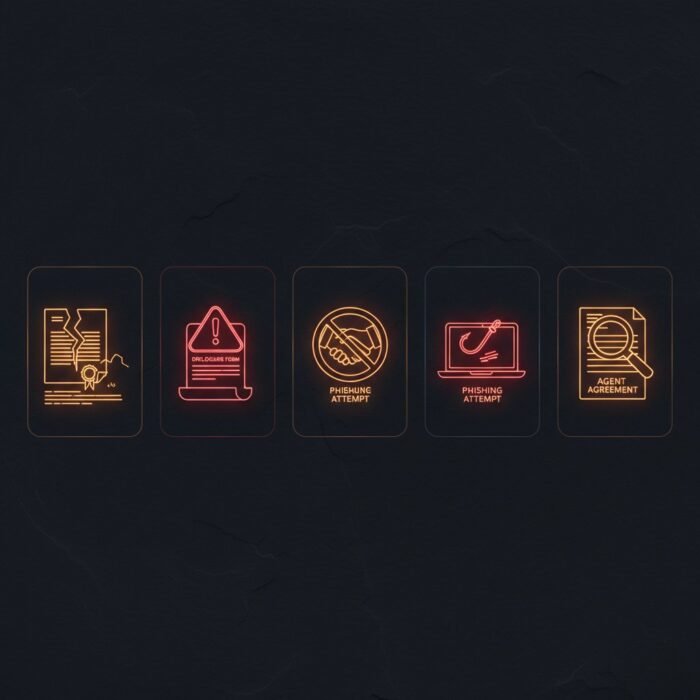
Most real estate transactions that go wrong fall apart due to five specific legal errors. According to the National Association of Realtors (2024), roughly 26% of all contract cancellations come from contingency-related disputes alone.
The other four mistakes — faulty disclosures, oral promises, wire fraud, and agency contract traps — account for a disproportionate share of litigation and financial losses in residential sales. Here is what each one looks like in practice and how to avoid it.
1. Skipping or Misunderstanding Contingency Clauses
Contingency clauses are your legal escape hatches. Waive them, and your earnest money is at risk. An inspection contingency lets you walk away over a cracked foundation. A financing contingency protects you if the loan falls through. An appraisal contingency keeps you from overpaying.
Miss a deadline on any of these, and the protection evaporates. A buyer in California who failed to remove an inspection contingency within the 17-day window lost $15,000 in earnest money even though the home had active mold. Always calendar every deadline and never waive contingencies without legal counsel.
2. Incomplete or Incorrect Disclosure Forms
Sellers are legally required to disclose material defects — mold, foundation cracks, faulty wiring. Hiding these can trigger lawsuits years after closing. The federal Lead-Based Paint Disclosure Act mandates disclosure for any home built before 1978, with penalties up to $16,000 per violation.
State requirements differ sharply. California demands 17 specific categories. Texas covers 60+ items, from flood history to termite damage. A Florida seller paid $50,000 in damages for hiding a recurring roof leak. When in doubt, disclose it in writing.
3. Verbal Agreements and Handshake Deals
Oral promises are nearly unenforceable in real estate. The Statute of Frauds, on the books in every U.S. state, requires land sale contracts to be in writing. A verbal agreement to include appliances or extend closing means nothing in court.
A New York seller learned this the hard way. He orally agreed to leave his washer and dryer, then sold them before closing. The buyer sued but lost. The written contract didn’t mention appliances. Every modification, every concession, every promise must be documented in a signed addendum. Zero exceptions.
4. Ignoring E-Signature and Wire Fraud Risks
Wire fraud is now the fastest-growing legal risk in real estate. The FBI’s Internet Crime Complaint Center (IC3) reported over $446 million in real estate wire fraud losses in 2023. Scammers intercept email threads between buyers, agents, and title companies, then send fake wiring instructions days before closing.
E-signatures themselves are legally valid under the ESIGN Act and UETA, adopted by 49 states. But platform matters. DocuSign and Adobe Sign provide audit trails that survive court scrutiny. Never accept a scanned signature pasted into a PDF — it lacks the metadata judges look for. Always confirm wiring instructions verbally using a known phone number, not one from an email.
5. Failing to Review Agency Representation Agreements
Buyer representation agreements often contain exclusivity clauses that lock you into paying commission regardless of who finds the house. An exclusive right-to-represent contract means your agent earns commission even if you discovered the property yourself. Non-exclusive agreements let you work with multiple agents but hide traps in the fine print.
In 2024, a Colorado buyer was forced to pay $12,000 to an agent she met once at an open house. She had signed an exclusive agreement with no expiration for six months. Read the termination clause. Negotiate a shorter term — 30 days is standard for first-timers. Never sign an agreement that outlasts your actual search window.
| Mistake | Typical Financial Impact | Prevention Strategy |
|---|---|---|
| Skipping contingencies | Loss of earnest money ($5,000–$25,000) | Include all three contingencies; calendar deadlines |
| Incomplete disclosures | Lawsuits ($10,000–$100,000+) | Disclose every known defect in writing |
| Verbal agreements | Unenforceable promises ($0 recovery) | Get every modification in a signed addendum |
| Wire fraud | Loss of closing funds ($50,000–$500,000+) | Verbally verify all wiring instructions |
| Bad agency contracts | Unwanted commission ($5,000–$20,000+) | Negotiate shorter terms; read exclusivity clauses |
State-Specific Disclosure Requirements You Can’t Afford to Ignore
Missing a single state-required disclosure form can void your contract or trigger a lawsuit years after closing. Real estate disclosure laws are a patchwork of federal mandates and state-specific rules that vary dramatically.
The federal Lead-Based Paint Disclosure Rule applies to any home built before 1978 and requires sellers to provide an EPA-approved pamphlet plus disclose known lead hazards. That’s just the baseline. California adds a Transfer Disclosure Statement covering material defects and even neighborhood noise issues. Texas mandates a Seller’s Disclosure Notice with 60+ specific checklist items. Skip the wrong form in the wrong state, and you risk losing earnest money or facing a rescinded deal.
Federal vs. State Disclosure Obligations
The federal lead-based paint rule is non-negotiable for pre-1978 homes. But it’s only the starting line. According to the National Association of Realtors (2024), over 30 states mandate disclosure forms that go well beyond federal requirements.
California’s TDS asks sellers to check boxes on roof leaks, soil stability, and security bars. Florida requires flood zone and sinkhole disclosure. New York mandates a Property Condition Disclosure Statement, though sellers can opt out by paying a $500 credit at closing. The table below captures the key differences:
| State | Required Disclosure Form | Key Unique Requirement |
|---|---|---|
| California | Transfer Disclosure Statement (TDS) | Must disclose neighborhood nuisances (airport noise, sex offender proximity) |
| Texas | Seller’s Disclosure Notice | Covers 60+ items, including previous pest treatments and foundation repairs |
| New York | Property Condition Disclosure Statement | Sellers can pay $500 credit instead of completing the form |
| Florida | Seller’s Property Disclosure | Mandatory flood zone and sinkhole disclosure |
Buyers should request a completed disclosure form before signing any purchase agreement. Sellers should consult a real estate attorney to verify they’ve met every state-specific obligation. One unchecked box can derail the whole deal.
The Cost of Non-Disclosure
What happens when a seller stays silent? In a 2023 Colorado case, a seller failed to disclose a recurring roof leak that had caused mold in the attic. The buyer discovered it during inspection and sued for fraudulent non-disclosure.
The court awarded the buyer $50,000 in damages covering repair costs and legal fees, plus a penalty for deliberate omission. According to the American Bar Association (2024), statutes of limitations for non-disclosure claims range from two to six years depending on the state.
That means a seller can be sued years after closing if the buyer proves the defect was known and intentionally concealed. For FSBO sellers especially, the risk runs higher, without professional guidance, they may not recognize that a cracked foundation or old water damage is legally disclosable. The safest rule: put everything in writing, even borderline issues. Silence is the real liability.
How to Avoid Contract Disputes Over Earnest Money and Contingencies
Earnest money disputes are the most common legal flashpoint in residential real estate. They account for roughly 60% of contract-related escrow claims, according to the American Land Title Association (2024).
The key to protecting your deposit lies in how you structure contingency clauses. A well-written contract gives you a clear exit ramp. A poorly written one locks you into a bad deal or forfeits your money.
Setting Realistic Contingency Deadlines
Contingency clauses are your legal escape hatches. They define the conditions under which you can walk away without penalty. The three most critical ones are inspection, financing, and appraisal. Each comes with a strict clock.
Negotiate adequate time for each phase. A standard inspection contingency allows 10 to 14 days. Older homes or properties in flood zones may require 17 to 21 days for specialist inspections, mold, sewer scope, structural engineer. For financing, 30 to 45 days is typical, though cash buyers can often waive this entirely. The most common mistake: accepting the seller’s first deadline without checking how long your lender actually takes.
Miss a contingency deadline, and the clause expires. You lose the right to cancel for that reason. The seller can then demand that escrow release your earnest money to them. According to NAR data, roughly 23% of earnest money forfeitures happen because a buyer missed a single inspection deadline by one day. Calendar everything with hard reminders.
What to Do If You Need to Back Out
You can legally cancel without penalty only by exercising a valid contingency. A failed inspection revealing $15,000 in foundation damage qualifies. A seller’s refusal to negotiate repairs does not, unless your contract includes a repair cap or right-to-terminate addendum.
The process is strictly procedural. You must deliver written notice within the contingency period, citing the specific clause. Your agent or attorney sends it to the title company holding your earnest money in escrow. Escrow then returns the full deposit to you.
Backing out without a valid contingency puts your deposit at risk. The seller can claim breach of contract and demand the full earnest money as liquidated damages. In some states, they can also sue for additional losses. The safest move: never waive contingencies unless you are genuinely prepared to lose the deposit.
| Contingency Type | Typical Deadline | What Happens If You Miss It |
|---|---|---|
| Inspection | 10–14 days | Lose right to cancel for defects; deposit at risk |
| Financing | 30–45 days | Must close with cash or forfeit earnest money |
| Appraisal | 14–21 days | Cannot renegotiate price; must pay gap or lose deposit |
Legal Risks in Digital Transactions: E-Signatures and Wire Fraud Prevention
Digital transactions create two distinct legal vulnerabilities that paper-based deals rarely trigger: the enforceability of electronic signatures and the near-irreversible loss of closing funds to wire fraud.
The Federal Trade Commission (2024) reports that real estate wire fraud losses exceeded $145 million in 2023. The average victim lost over $70,000. Understanding both risks before you sign or wire a single dollar is not optional, it’s table stakes for a safe closing.
When Is an E-Signature Legally Binding?
An electronic signature carries the same legal weight as wet ink under the federal ESIGN Act of 2000 and the Uniform Electronic Transactions Act (UETA), adopted by 47 states. Three exceptions exist: wills, court orders, and eviction or foreclosure notices still require physical signatures.
The key requirement is intent to sign. Clicking a “Sign” button on DocuSign or Adobe Sign creates a binding contract if both parties consented to electronic delivery. Problems arise with generic email signature blocks or scanned signatures pasted into PDFs without an audit trail. Courts have upheld these in some cases, but the lack of a verifiable timestamp and IP address makes them harder to defend.
The fix is straightforward: use a platform that generates a certificate of completion with date, time, and IP logs for every signature. The table below breaks down the risks by method.
| Signature Type | Legal Validity | Best Practice |
|---|---|---|
| Platform-based (DocuSign, Adobe Sign) | Fully enforceable under ESIGN/UETA | Always use audit trail feature |
| Scanned wet signature pasted into PDF | Enforceable but harder to verify | Keep original signed document as backup |
| Typed “/s/ Name” in email | Questionable in some state courts | Avoid for purchase agreements and closing docs |
| Verbal consent recorded | Generally not sufficient for real estate | Only use for minor addenda with written follow-up |
How to Spot and Stop Wire Fraud
Wire fraud in real estate follows a predictable pattern. A buyer receives an email that appears to come from their title company, escrow officer, or agent. It contains “updated” wiring instructions. The sender address looks legitimate but is off by one character.
The FBI’s IC3 reports that real estate wire fraud complaints rose 14% from 2022 to 2023. Red flags include last-minute changes, urgent language like “wire today or closing will be delayed,” and mismatched email domains.
Never trust wiring instructions sent via email alone. Call your title company or escrow officer at a phone number you independently verified, not the number in the suspicious email, and confirm the routing and account numbers verbally. If you suspect fraud, contact your bank immediately and request a “wire recall.” The Federal Reserve’s Regulation J gives banks roughly 24 hours to attempt a recall. Success rates drop sharply after that window closes.
Frequently Asked Questions
What are the most common legal mistakes in real estate?
The five most frequent errors: skipping contingency clauses, failing to disclose material defects, relying on verbal agreements, falling victim to wire fraud during closing, and signing agency agreements without understanding commission obligations.
According to the American Bar Association (2024), contract disputes over contingencies account for roughly 40% of real estate litigation involving individual buyers.
What happens if you don’t disclose a defect in a house?
Concealing a material defect opens sellers to lawsuits for fraud, negligent misrepresentation, or breach of contract. Penalties commonly include paying the buyer’s repair costs, triple damages under consumer protection statutes, and legal fees.
California Civil Code Section 1102, for example, mandates a Transfer Disclosure Statement. Omitting known issues like a leaking roof has resulted in judgments exceeding $50,000 in recent California Superior Court cases.
Can you back out of a real estate contract without penalty?
Yes, but only within the specific windows defined by your contract’s contingency clauses. You can cancel if an inspection reveals major structural issues, if your financing falls through despite good-faith efforts, or if the appraisal comes in below the purchase price. The catch: you must meet the deadlines in your contract.
Miss those deadlines, and you risk forfeiting your earnest money deposit, typically 1-3% of the purchase price.
What is the statute of limitations for real estate contract disputes?
Statutes of limitations vary by state and claim type. Breach of a written real estate contract generally carries a 4- to 6-year limit in most states. Fraud claims often have shorter windows of 2 to 3 years from the date of discovery.
According to the National Association of Realtors (2024), buyers who discover undisclosed defects after closing should consult an attorney immediately. Waiting too long can permanently bar recovery.
Do I need a lawyer to buy a house?
Thirteen states require attorney involvement in real estate closings, including New York, North Carolina, and Georgia. In the remaining states, attorney representation is optional but strongly recommended for first-time buyers, FSBO transactions, or any deal involving complex contingencies, trust ownership, or boundary disputes.
The American Land Title Association reports that transactions without legal review face dispute rates roughly three times higher than those with attorney oversight.
Conclusion
The legal mistakes that sink real estate deals follow consistent patterns. Missing contingency deadlines costs earnest money. Hiding defects triggers lawsuits years later. Handshake agreements turn unenforceable in court.
Wire fraud has become an epidemic, over $145 million in reported losses in 2023, and that’s just the cases people filed. Agency contracts with hidden exclusivity clauses trap buyers into paying commissions they never expected.
The fix is mechanical, not philosophical. Calendar every deadline. Get every promise in writing. Verify every wire instruction over the phone. Read every contract clause before signing. These are not sophisticated legal strategies. They are guardrails, and most people skip them because nothing bad has happened to them yet.
| Mistake | Cost if Avoided | Cost if Ignored |
|---|---|---|
| Skipping contingency clauses | Protected exit from a bad deal | Loss of earnest money (1-3% of price) |
| Incomplete disclosure forms | Clean closing, no future liability | Legal defense costs + damages ($10k-$100k+) |
| Verbal agreements only | Enforceable written contract | Unenforceable promise, potential lawsuit |
| Ignoring wire fraud risks | Closing funds arrive safely | Total loss of down payment ($20k-$200k+) |
| Unreviewed agency agreements | Fair commission terms, no double payment | Paying commission twice or to wrong agent |
Download your free Legal Mistake Prevention Checklist now to keep every transaction protected from offer letter to final deed recording.