
To fix a leaky refrigerator, first find where the water starts: inside the fresh-food compartment, under the freezer, behind the appliance, or near the front grille. Most leaks come from a clogged defrost drain, loose water supply line, overflowing drain pan, bad door gasket, or heavy condensation.
Unplug the refrigerator before removing panels, moving the appliance, or touching any water near electrical parts. If the leak is coming from a cracked supply tube or active water connection, shut off the refrigerator water supply before cleaning anything else.
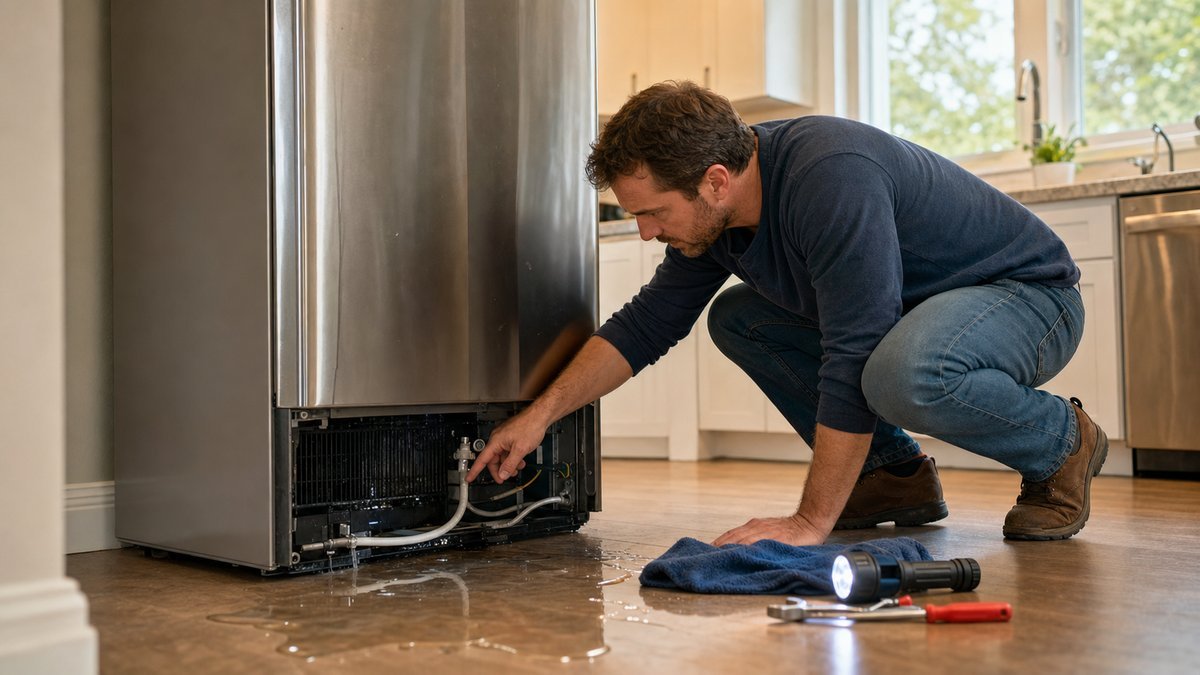
Find the Leak Pattern Before Taking Parts Apart
The fastest way to fix a leaky refrigerator is to match the puddle location with the likely source. Water inside the fridge points to a drain issue, water behind the fridge points to a supply line, and water near the front often points to the drain pan or door seal.
Start with a towel, flashlight, and one dry test cycle. If you are learning how to fix a leaky refrigerator for the first time, mop up all visible water, pull the appliance slightly forward if it is safe, then watch where fresh water appears. A leak that returns during cooling is different from one that appears only after the ice maker fills or the defrost cycle runs.
| Where Water Shows Up | Likely Cause | First Fix |
|---|---|---|
| Bottom of fresh-food compartment | Clogged or frozen defrost drain | Flush the drain with warm water |
| Behind the refrigerator | Loose, cracked, or kinked water line | Inspect fittings and replace damaged tubing |
| Water after dispenser or ice maker use | Filter housing, dispenser tube, or frozen supply line | Check filter seating, tubing, and ice maker fill timing |
| Front floor under the grille | Overflowing or misaligned drain pan | Clean and reseat the pan |
| Door edges or shelves | Worn gasket or warm air leak | Clean, test, or replace the gasket |
| Outside surfaces sweating | Humidity, blocked airflow, or weak seal | Improve clearance and check door closure |
Reddit field signal: In April 2026, a r/fixit homeowner thread titled “[I Fixed] My Whirlpool refrigerator ice maker” received 2 upvotes and pointed to the same practical pattern this guide uses: isolate whether the leak is tied to the ice maker, dispenser, drain path, or standing water before replacing parts.
Clear a Clogged or Frozen Defrost Drain
A clogged defrost drain is one of the most common causes of water under refrigerator drawers or ice on the freezer floor. During defrost, melted frost should flow through a drain tube to the pan below, but food debris or ice can block that path.
Look for water collecting under the crisper drawers, a sheet of ice at the bottom of the freezer, or repeated puddles that appear after the fridge has been running normally. Those signs fit a drain that cannot move meltwater away fast enough.
- Unplug the refrigerator and remove food from the affected lower shelf or freezer floor.
- Find the drain opening, usually near the back wall or below the evaporator cover.
- Remove visible ice with towels and warm water, not sharp tools.
- Flush the drain with warm water from a turkey baster or squeeze bottle.
- Use a flexible plastic drain tool if debris is blocking the tube.
- Dry the area, restore power, and check again after the next cooling cycle.
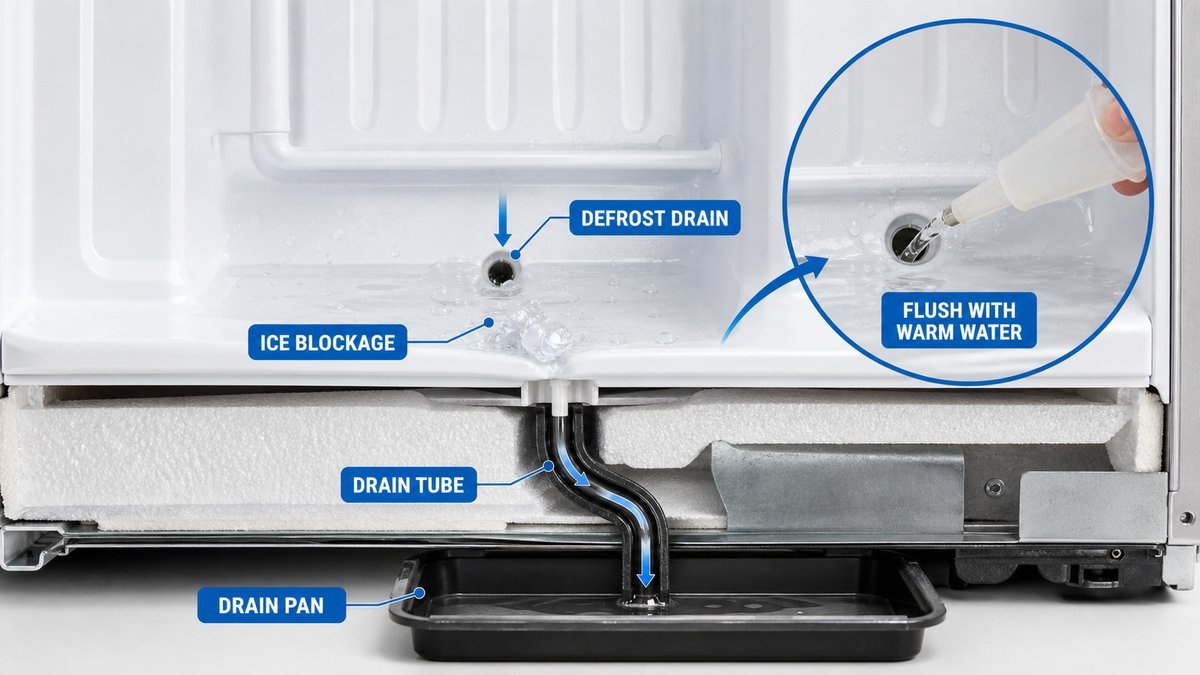
Do not chip ice with a screwdriver or knife. A punctured liner or damaged tube can turn a simple cleaning job into a major repair. If the drain refreezes within a few days, the drain heater, airflow pattern, or thermostat behavior may need professional diagnosis.
Inspect the Refrigerator Water Supply Line
A damaged or loose water line can leak whenever the ice maker or water dispenser calls for water. This leak usually appears behind the refrigerator, near a wall valve, under the rear panel, or along the plastic or braided supply tube.
Pull the refrigerator forward slowly so the line does not stretch or kink. Dry the floor and fittings, then run the water dispenser or wait for the ice maker to fill. Fresh droplets at a compression nut, push fitting, filter housing, or tube bend show you where to focus.
Tighten only slightly if a fitting is loose. Over-tightening can crush plastic tubing or damage a ferrule. If the tube is brittle, flattened, split, or badly kinked, replacement is safer than trying to patch it. Use tubing rated for refrigerator water supply and follow the appliance manual for size and connection type.
If the shutoff valve will not close completely, stop the repair and address the valve first. A leaky refrigerator connected to a bad shutoff valve can become a room leak very quickly, especially if the appliance is moved and the old line cracks.
Check the Filter Housing, Dispenser, and Ice Maker Fill
A refrigerator can leak only when the dispenser or ice maker runs, which usually points to the filter housing, dispenser tube, inlet valve, or ice maker fill line. This pattern is different from a drain leak because the puddle appears after water is actively requested.
Remove and reinstall the water filter if your model has one. A filter that is cross-threaded, not fully locked, missing an O-ring, or installed with the wrong adapter can drip into the fresh-food compartment or down the back wall.
Next, press the dispenser while watching the lower hinge area, filter compartment, and rear line. If the ice maker is the trigger, empty the bin, wait for a fill cycle, and look for water near the ice maker mold or fill tube. A frozen fill tube can splash or redirect water instead of feeding the mold cleanly.
Replace damaged tubing rather than taping it. Tape may hold for a moment, but refrigerator water lines are under pressure and sit near flooring, cabinets, and electrical parts. A proper connector or new tube is the safer repair.
Check the Drain Pan and Refrigerator Level
The drain pan catches defrost water below the refrigerator so it can evaporate during normal operation. If the pan is cracked, out of position, packed with dirt, or receiving more water than it can evaporate, you may see water near the front or underneath the appliance.
Remove the lower grille if your model allows it, then inspect the pan with a flashlight. Some pans slide out; others are fixed in place. Clean dust and sticky residue with a cloth, mild soap, and warm water. If the pan is cracked, replacement is the right fix.
Level matters because water must flow toward the drain path and doors must close with consistent pressure. Many refrigerators should lean very slightly backward so doors settle shut. Use the leveling feet rather than shims that can shift later.
If the pan repeatedly overflows, look for a second problem. Heavy frost, a blocked drain tube, frequent door openings, or a warm kitchen can send more moisture into the pan than usual. The pan is often where the symptom appears, not always where the problem starts.
Fix Door Gasket and Condensation Leaks
A worn door gasket lets warm, humid air enter the refrigerator, which can create condensation, frost, and small water trails. This type of leak often looks less dramatic than a broken water line, but it keeps coming back because the appliance is constantly fighting incoming moisture.
Clean the gasket first. Crumbs, syrup, grease, and dust can prevent a good seal even when the rubber is still usable. Wipe the gasket and the metal contact surface with warm soapy water, then dry both surfaces fully.
Use the paper test: close the door on a strip of paper and gently pull. You should feel resistance. If the paper slides out easily in one section, inspect that area for a twisted gasket, torn rubber, or a door that is not aligned. Repeat around the whole door.
Replace the gasket if it is torn, hardened, flattened, or pulling away from the door. If a new gasket still will not seal, the hinge, door alignment, or cabinet level may be the real issue.
Stop Leaks Caused by Ice Buildup or Poor Airflow
Ice buildup can melt into sudden puddles when airflow is blocked or the defrost system cannot keep up. Overpacked shelves, blocked vents, dirty condenser coils, or repeated warm-air entry can all create extra moisture inside the appliance.
Leave space around interior vents so cold air can move. Keep food packages from pressing against the back wall. Vacuum accessible condenser coils according to the owner manual. A refrigerator that runs constantly or struggles to cool will often create more condensation problems than one that cycles normally.
If the freezer back wall is covered with heavy frost, do not keep clearing puddles without addressing the frost pattern. A failed defrost heater, sensor, control board, or evaporator fan can cause recurring ice and water symptoms.
When to Call a Technician
Call a technician when the leak continues after the drain, pan, gasket, water line, and leveling checks are complete. Knowing how to fix a leaky refrigerator also means knowing when to stop: professional help is safer when water reaches electrical areas, the shutoff valve fails, the refrigerator will not cool, or heavy frost returns quickly.
A sealed-system cooling problem, failed defrost component, cracked internal reservoir, or inaccessible water valve can be hard to confirm without tools. At that point, repeated towels and guesswork cost more time than a direct diagnosis.
Document the leak pattern before calling. Take a photo of the puddle location, note when it appears, and write down whether the ice maker, dispenser, defrost cycle, or door opening seems connected. That information helps narrow the repair faster.
FAQ
Why is my refrigerator leaking water onto the floor?
Your refrigerator is usually leaking onto the floor because the defrost drain is blocked, the water supply line is loose or cracked, the drain pan is damaged, or the door gasket is letting in humid air.
Can I use hot water to unclog a refrigerator drain?
Warm water is usually safer than very hot water for flushing a defrost drain. Use a squeeze bottle or turkey baster, work slowly, and avoid sharp tools that can puncture the liner or drain tube.
How do I know if the water line is leaking?
Dry the rear fittings and floor, then run the dispenser or wait for the ice maker to fill. If fresh droplets appear at a connector, tube bend, filter housing, or valve, the water line is the likely source.
Is a leaking refrigerator dangerous?
A small leak can become dangerous if water reaches wiring, outlets, flooring seams, or nearby cabinets. Unplug the refrigerator before inspecting wet areas and shut off the water supply if the leak comes from a water line.
Why does my refrigerator leak only sometimes?
An occasional leak often follows the defrost cycle, ice maker fill cycle, humid weather, or a door that was left slightly open. Timing is a clue, so note when the puddle appears before replacing parts.
What is the first thing to check on a leaky refrigerator?
The first thing to check is the leak location. Water inside the fridge usually points to the defrost drain, while water behind the fridge often points to the supply line or valve connection.
Final Takeaway
How to fix a leaky refrigerator comes down to tracing the water, not guessing at parts. Clean the defrost drain, inspect the water line, check the drain pan, test the door gasket, and confirm the refrigerator is level before assuming a major failure.
If the leak stops after one targeted fix, monitor it for several days and keep the area dry. If it returns in the same place, the pattern is telling you the next step. That calm, evidence-first approach is what keeps a refrigerator leak from becoming a bigger home repair.
Sources reviewed: Whirlpool refrigerator leak guidance, Mr. Appliance refrigerator leak troubleshooting, Roto-Rooter refrigerator water leak causes, and Asurion refrigerator repair tips.