
Vietnamese coconut jelly is a refreshing tropical dessert made from coconut water or coconut milk, loved for its chewy texture and light sweetness. From traditional nata de coco to modern flavored versions, it is widely used in drinks, desserts and retail products, reflecting Vietnam’s strong coconut industry and growing global demand.
What makes Vietnamese coconut jelly so popular?
Vietnamese coconut jelly stands out for its naturally chewy texture, mild sweetness and versatility in both food and beverage applications. Unlike heavier desserts, it feels light and refreshing, making it ideal for hot climates and modern healthy lifestyles.
This ingredient is widely used in bubble tea, fruit juices, sweet soups, yogurt and ready-to-eat snacks. With its plant-based origin, Vietnamese coconut jelly fits well with clean-label trends and consumer demand for low-fat, high-fiber ingredients.
Popular types of Vietnamese coconut jelly
Nata de coco
Nata de coco is the most well-known form of Vietnamese coconut jelly. It is produced by fermenting mature coconut water using Acetobacter xylinum bacteria. During fermentation, a thick cellulose layer forms, which is later cut into cubes and cleaned thoroughly.
Coconut jelly (also known as nata de coco) is valued for being low in calories, fat-free and rich in dietary fiber. It delivers a chewy bite that enhances drinks and desserts without overpowering other flavors. However, like any fiber-rich food, it should be enjoyed in moderation.
Coconut agar jelly
Another traditional variation of coconut jelly from Vietnam is coconut agar jelly. This type is cooked using coconut water, coconut milk and agar powder. It often features two layers: a clear coconut water layer and a creamy coconut milk layer.
This version offers a softer texture and gentle coconut aroma, making it a favorite dessert at family gatherings, restaurants, and special occasions in Vietnam.
Modern-flavored coconut jelly
Today, fermented coconut jelly has evolved with creative flavors such as pandan, coffee, caramel and fruit-infused varieties. These innovations allow manufacturers and F&B brands to customize products for different markets while maintaining the authentic coconut base.
Health benefits of Vietnamese coconut jelly
Coconut jelly from Vietnam is not only enjoyable but also aligns with modern wellness trends:
- Naturally high in dietary fiber, supporting digestive health.
- Low-calorie, fat-free composition suited for lighter eating habits.
- Fully plant-based with zero cholesterol content.
- Works well as an ingredient in beverages, desserts or snack applications.
These benefits make Vietnamese coconut jelly a preferred ingredient for both consumers and food manufacturers seeking healthier alternatives.
Vietnamese coconut jelly can be paired with a wide variety of foods and beverages, adding a refreshing, enjoyable element to the tasting experience.
Where to buy nata de coco for quality and safety
For many buyers, especially F&B businesses and importers, where to buy nata de coco is a key concern. The market offers numerous low-cost products, but many lack certifications, consistency and food safety assurance.
Choosing a reliable supplier ensures consistent quality, proper packaging, and compliance with international standards. This factor is crucial for long-term brand growth as well as export success.
GC Food: A trusted manufacturer of Vietnamese coconut jelly
G.C Food Joint Stock Company (GC Food) is one of Vietnam’s leading producers of Vietnamese coconut jelly, specializing in high-quality nata de coco made from Ben Tre coconuts. With a closed-loop production system, the company controls every step from raw coconut sourcing to finished products.
Using advanced pasteurization technology, GC Food preserves the natural texture and fiber structure of Vietnamese nata de coco while extending shelf life and ensuring food safety.
Product lines to meet global demand
B2B nata de coco solutions
GC Food supplies raw nata de coco for manufacturers and beverage chains, including:
- Pressed coconut jelly in bulk bags.
- Cubed jelly in multiple sizes.
- Shaped jelly (stars, hearts, pearls, strings).
- Fruit-flavored coconut jelly options.
Selecting the right supplier supports reliable quality outcomes, proper packaging practices and alignment with international requirements. This choice plays a vital role in long-term brand growth while strengthening export performance.
Retail-ready coconut jelly products
For consumers, GC Food offers ready-to-eat Vietnamese coconut jelly in cans, pouches, jars, suitable for supermarkets and convenience stores. These products meet international retail standards and diverse market preferences.
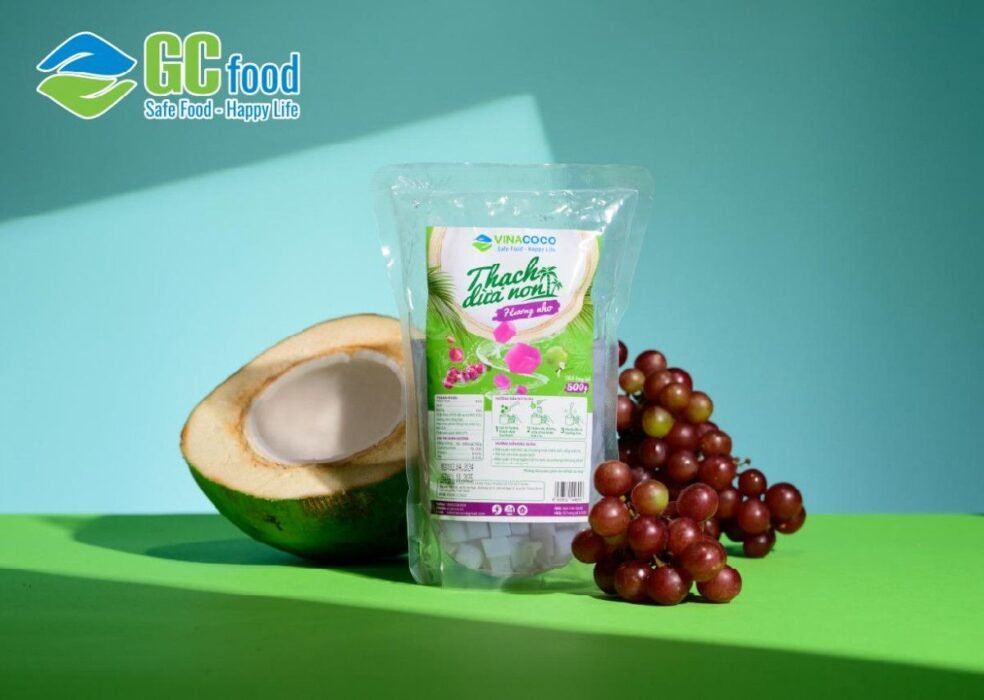
GC Food’s coconut jelly products offer a wide range of types and flavors, making it easy for customers to choose options that match their preferences and usage needs.
Why GC Food is the smart choice for high-quality nata de coco
When businesses ask where to buy nata de coco, GC Food stands out thanks to:
- International certifications: FSSC 22000, HALAL, FDA, GACC.
- Stable supply capacity for domestic and export markets.
- Modern manufacturing facilities in Dong Nai.
- Flexible OEM and private label services.
With exports to over 27 countries, GC Food has proven its ability to deliver consistent nata de coco from Vietnam at a global scale.
Bringing Vietnamese coconut jelly to the world
Coconut jelly reflects the value of Vietnam’s agricultural resources and processing expertise. From traditional nata de coco to innovative modern products, it continues to gain popularity across global markets.
For brands and importers seeking premium coconut jelly products, choosing the right partner is essential. With its commitment to quality, sustainability and long-term cooperation, GC Food proudly contributes to bringing Vietnamese nata de coco to consumers worldwide.