
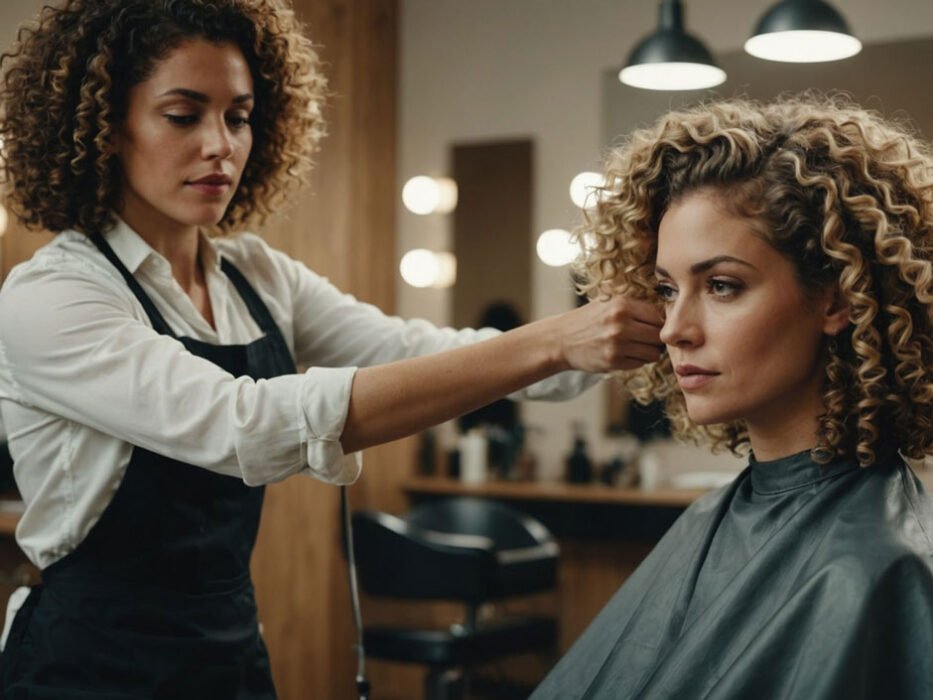
Curly hair is unique, expressive, and full of personality—but it also demands its own rulebook. From choosing the right cut to building a smart care routine and mastering everyday styling, understanding how curls behave can transform your hair from “unpredictable” to consistently flattering and manageable. This handbook walks through the essentials so your curls can work with you, not against you.
Understanding Your Curl Pattern and Hair Needs
Before choosing cuts or products, it helps to understand your curl pattern and overall hair characteristics.
Curl pattern overview:
| Type | Look | Main Challenges |
| 2A–2C (Wavy) | Loose “S” waves | Flat roots, frizz, uneven bends |
| 3A–3B (Curly) | Defined spirals with bounce | Frizz, shrinkage, dryness |
| 3C–4A (Tight curls) | Coils and corkscrews with lots of volume | Tangles, shape, moisture balance |
| 4B–4C (Coily) | Tight coils or zigzags, dense and compact | Breakage, dryness, shrinkage |
Other factors matter too: porosity (how easily your hair absorbs water), density, and thickness all affect how curls respond to products and cuts. The tighter and drier the curls, the more they generally need moisture, gentle handling, and structured shaping.
Cut Essentials for Flattering Curly Shapes
A great curly cut works with your pattern, not against it. Traditional “straight hair” cutting techniques can create triangle shapes, uneven shelves, or unexpected length loss when curls spring up.
Cut ideas that usually flatter curls (list section one):
- Rounded layered cut
- Layers follow the shape of your head for balanced volume.
- Ideal for medium to tight curls that tend to grow wide at the bottom.
- Curly bob or lob
- Sits between chin and collarbone when dry (allowing for shrinkage).
- Light layering keeps the shape soft instead of blocky.
- Face‑framing layers
- Shorter pieces around the face to open up features and prevent heavy curtains.
- Works well for almost every curl pattern.
- Curly fringe (bangs)
- Cut carefully, usually on dry hair so the true length is visible.
- Can soften foreheads and add a modern, editorial feel.
Because curly bangs are a big commitment and behave differently day to day, many people test the look first. curly bangs wigs let you try different curl densities and bang lengths without touching your own hair, making it easier to decide whether a curly fringe suits your face shape and styling habits.
Building a Curl‑Friendly Care Routine
Healthy curls start in the shower and at the detangling stage. A consistent routine makes styling much easier and reduces breakage over time.
Core care steps (list section two):
- Cleanse gently
- Use sulfate‑free shampoos or cleansing conditioners.
- Wash as often as your scalp needs (for some, that’s 1–3 times weekly).
- Condition generously
- Apply a rich conditioner from mid‑lengths to ends.
- Detangle with fingers or a wide‑tooth comb while the conditioner is in.
- Deep treat regularly
- Use a deep conditioner or mask every 1–2 weeks.
- Focus on mid‑lengths and ends, where curls are driest.
- Protect at night
- Sleep on a satin or silk pillowcase.
- Use a pineapple (loose high ponytail) or bonnet to preserve definition.
- Trim on a schedule
- Regular micro‑trims keep ends healthy and shape intact.
- Frequency depends on growth and damage, often every 8–12 weeks.
The goal is to keep curls hydrated and strong so the cut can really show its shape instead of being overwhelmed by frizz and breakage.
Everyday Styling Techniques for Defined, Soft Curls
Styling curls is about timing, application, and drying method just as much as product choice.
Basic styling flow:
- Work on very wet or damp hair: curls clump best when water is still present.
- Layer products: leave‑in conditioner for slip, then cream or gel for hold.
- Use techniques like “praying hands” (smoothing product down each section) followed by scrunching to encourage curl formation.
- Choose air‑drying for minimal frizz or diffusing on low heat and low airflow when you need speed and volume.
Simple “VS” focus for styling:
- Heavy products vs. lightweight products
- Heavy: better for thick, dense, tight curls needing control.
- Light: better for fine waves and curls that get weighed down easily.
- Strong hold vs. soft hold
- Strong hold gel: more definition and humidity resistance.
- Soft cream: more movement, touchable but less long‑lasting hold.
Once dry, gently scrunch out any stiffness from gel using a tiny bit of oil. Avoid brushing dry curls; instead, separate curls with fingers if you want more volume.
Exploring Length and Looks Without Commitment
Curls can take a long time to grow out, and experimenting with big changes—like going very long or adding dramatic fringe—can feel risky. Wigs provide a low‑pressure way to explore different curly identities.
Why wigs are useful for curl experimentation:
- You can see how different lengths and shapes look with your face and wardrobe.
- Your natural curls stay protected while you try new textures or colors.
- Styling time drops dramatically on days you choose to wear a wig instead of your own hair.
If you’ve always wondered about ultra‑romantic, flowing curls, a long curly wig offers instant length and volume, from chest‑length to waist‑grazing spirals, without months or years of growing and protective styling. You can swap between your natural length and a dramatic, long curly look depending on your mood or the occasion.
Combined with test‑driving fringe, layers, or shapes via wigs and then working with a curl‑savvy stylist, this approach gives you both freedom and security. With the right cut, care routine, and styling habits, your curls can become your favorite feature—defined, healthy, and versatile enough to fit every version of your life.