
A quitclaim deed transfers whatever ownership interest someone has in a property to another person without any warranties. If the person signing it holds a clean title, the transfer works beautifully. If their ownership is murky or outright nonexistent, the recipient gets exactly that, with no recourse. Understanding what is a quitclaim deed and its limitations before signing one saves you from expensive legal disasters, observes State Property Management Deland.
Real estate transfers usually come with promises: the title is clean, no hidden liens are lurking, the seller actually owns what they claim. A quitclaim deed strips all of that away. It is the legal equivalent of handing someone keys and saying, whatever I have here is yours now, but I am not telling you what that is.
What a Quitclaim Deed Actually Is
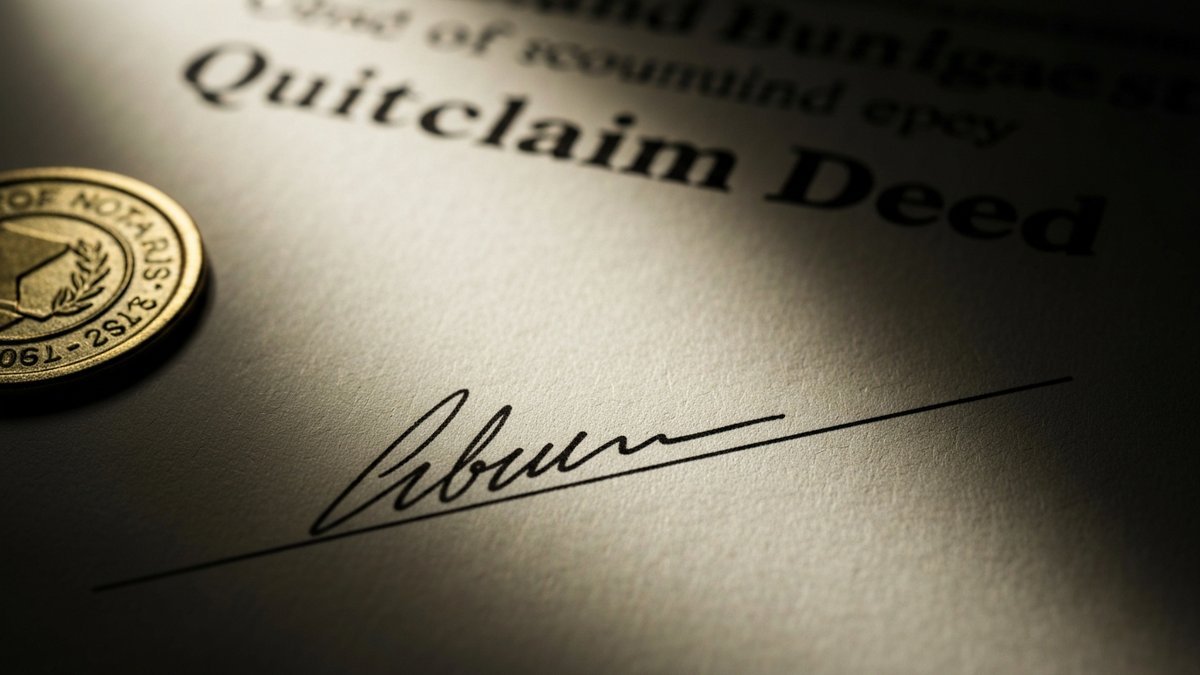
A quitclaim deed is a legal instrument that conveys a grantor’s interest in real property to a grantee without any warranty of title. Unlike a warranty deed, it makes no promises about ownership. It simply releases whatever right, title, or interest the grantor may have. The word comes from Norman French: “quit” meaning to release and “claim” meaning a right to something.
Most people encounter this document in non-sale contexts. A parent transferring a house to a child. A divorcing spouse removing their name from the marital home. A property owner moving real estate into a living trust. In each case the parties know and trust each other, and the quitclaim deed serves as a fast, inexpensive way to shuffle ownership interests within that trusted circle.
| Feature | Quitclaim Deed | General Warranty Deed |
|---|---|---|
| Title guarantee | None | Full, covers entire chain of title |
| Defends against claims | No obligation | Grantor must defend grantee’s title |
| Typical cost | Low, filing fee only | Higher, often includes title search |
| Common use | Family transfers, divorce, trusts | Arms-length property sales |
| Title insurance eligibility | Usually unavailable | Routinely available |
How a Quitclaim Deed Works
The mechanics are deliberately simple. The grantor signs the deed in front of a notary, the document gets filed with the county recorder, and the transfer is complete. No title search is required. No attorney opinion letter is needed. The entire process can take less than an afternoon. That speed is precisely why the instrument exists, and precisely why it carries so much risk.
Because the deed transfers only the grantor’s current interest, it cannot fix problems the grantor did not create. If a previous owner took out a second mortgage and never paid it off, that lien stays attached regardless of what the quitclaim deed says. The grantee steps into the grantor’s shoes, every wart included.
Quitclaim Deeds vs. Warranty Deeds
In a standard real estate transaction, buyers receive a general warranty deed. That document contains covenants, legally binding promises, that the seller holds a marketable title and will defend the buyer against any future claims. A quitclaim deed contains none of those promises. It is a release, nothing more.
A special warranty deed sits somewhere between the two. It guarantees that the grantor did nothing to encumber the title during their ownership period but stays silent about what happened before they owned the property. For someone who trusts the grantor but wants a modest safety net, this middle ground can be the smart choice.
The Real Limitations You Need to Understand
Most discussions of quitclaim deeds mention “no title guarantee” and move on. The limitations run deeper than that single sentence suggests. Some of them have blindsided property owners in ways that cost thousands of dollars to untangle.
No Protection Against Hidden Liens or Encumbrances
A quitclaim deed does not clear existing mortgages, tax liens, mechanic’s liens, or judgment liens. If the property carries a $40,000 contractor’s lien from a renovation the previous owner never paid for, the grantee inherits that debt along with the keys. The deed gives no right to demand the grantor pay anything off.
The underlying logic is straightforward but brutal. The grantor transfers only what they own. If what they own is a property with three liens stacked on top of it, the quitclaim deed transfers exactly that. A title search, the thing a quitclaim deed deliberately skips, would have caught those liens before the transfer happened.
Title Insurance Becomes Nearly Impossible to Obtain
Title insurance companies base their underwriting on a documented chain of ownership. A quitclaim deed, by its nature, introduces a gap in that chain. The insurer cannot verify what was actually transferred because the deed itself disclaims any verification. Most title insurers will refuse to issue a policy on a property acquired through a quitclaim deed.
This can become a serious problem years after the transfer. When the grantee tries to sell or refinance, the buyer’s lender will almost certainly require title insurance. If the insurer balks at the quitclaim gap, the deal stalls. Some owners have spent thousands on quiet title actions just to undo the mess a quitclaim deed created.
“My father transferred his house to me via quitclaim deed 10 years ago. Now I’m trying to sell and the title company says there’s a cloud on the title because my father’s late brother’s name still appears in an old deed from the 1980s. They won’t issue title insurance until I get a quiet title judgment. I didn’t even know that uncle existed.”
— u/deleted in r/legaladvice · 1 upvote · 11 comments
No Defense Against Third-Party Claims
A warranty deed requires the grantor to step in and defend the grantee if someone else asserts a claim to the property. The grantor pays the legal fees. A quitclaim deed imposes no such obligation. If a long-lost heir appears with a convincing ownership argument, the grantee fights that battle alone.
Take a property that passed through three generations without formal probate. Each transfer used a quitclaim deed. The family assumed everything was fine. Then a title examiner discovers that one transfer skipped a deceased owner whose estate was never settled. Suddenly four different people might have a claim. None of the quitclaim deeds provide any recourse against the person who signed them.
Mortgage Liability Does Not Transfer With the Deed
This limitation catches people by surprise on a regular basis. A quitclaim deed transfers ownership interest only. It has no effect on the mortgage contract. If a divorcing spouse quitclaims the house to the other spouse but both names remain on the mortgage, both remain legally responsible for the payments. The bank did not sign the quitclaim deed and the bank does not care about it.
The situation gets worse from there. If the spouse who received the property stops making payments, the lender can pursue the spouse who signed away their interest. Their name is still on the loan. The quitclaim deed removed their ownership stake but preserved their debt obligation. The only way to sever mortgage liability is to refinance, a completely separate transaction.
When a Quitclaim Deed Makes Sense
Despite the limitations, quitclaim deeds are not reckless instruments. They exist because certain situations genuinely benefit from a fast, warranty-free transfer. The trick is understanding which situations qualify.
Transferring property into a living trust is probably the most common responsible use. The grantor transfers property to themselves as trustee, so no arms-length risk exists. The warranty gap is irrelevant because the grantor knows exactly what they own.
Divorce settlements are another natural fit, but only when paired with a refinance. One spouse quitclaims the marital home to the other as part of the property division. Both parties understand the property’s history and the risk is contained. Family law attorneys almost always condition quitclaim transfers on simultaneous refinancing or loan assumption for good reason.
Correcting minor title defects, like a misspelled name or an incorrect legal description, is a low-risk use case. The grantor is not transferring ownership to a new person but fixing a clerical error. Everyone agrees on who owns what. The quitclaim deed simply aligns the paperwork with reality.
When You Should Avoid a Quitclaim Deed Entirely
Any transaction involving a stranger, a significant sum of money, or a property whose history is unclear calls for a warranty deed and a professional title search. Buying a house at auction, purchasing from an estate sale, acquiring property from someone you met online: in each of these scenarios a quitclaim deed is a gamble dressed as a shortcut.
Commercial real estate transactions should almost never use quitclaim deeds. The stakes are too high, the chain of title too complex, and the financing requirements too strict. A commercial lender will demand title insurance, and a quitclaim deed will almost certainly prevent that insurance from being issued.
Any situation where the grantor’s ownership is uncertain, because of inheritance disputes, unresolved probate, or old liens, is a bright red flag. A quitclaim deed in that context transfers uncertainty rather than ownership. The grantor washes their hands of the problem at the grantee’s expense.
Tax Implications Worth Knowing
Quitclaim deeds themselves do not trigger income tax. The IRS views the transfer through a quitclaim deed the same way it views any other deed transfer. But gift tax can apply. If the fair market value of the transferred interest exceeds the annual gift tax exclusion, $19,000 per recipient in 2025, the grantor must file a gift tax return.
State and local transfer taxes vary widely. Some jurisdictions exempt transfers between spouses or between parents and children. Others charge a flat fee per page. A handful of states impose a transfer tax calculated as a percentage of the property’s assessed value even when no money changes hands. Checking local requirements before signing is not optional.
Capital gains deserve attention too. When property is gifted through a quitclaim deed, the grantee takes the grantor’s cost basis. If the grantor bought the house for $80,000 and it is now worth $400,000, the grantee inherits that low basis. Selling later could trigger taxes on a $320,000 gain. An inheritance through a will, by contrast, steps up the basis to the property’s date-of-death value.
How to Execute and File a Quitclaim Deed
The process is mechanical but unforgiving of mistakes. A single error in the legal description can cloud the title for years.
- Obtain the correct form. Most county recorder websites provide quitclaim deed templates. Using the wrong form for your jurisdiction is the most common and most avoidable mistake.
- Complete the legal description exactly. Copy the property’s legal description verbatim from the most recent deed. Do not paraphrase or abbreviate. A lot number is not a substitute for a metes and bounds description if the prior deed used metes and bounds.
- Identify all parties precisely. Full legal names, current addresses, and marital status if required by state law. Some states require a grantee’s address for tax billing.
- Sign before a notary. The grantor must sign in the notary’s presence. Some states also require the grantee’s signature. Check local rules before showing up.
- File with the county recorder. Bring the original signed and notarized deed to the county recorder in the county where the property sits. Pay the recording fee. The transfer is effective upon recording, not upon signing.
Can a Quitclaim Deed Be Challenged or Canceled?
A quitclaim deed can be set aside by a court if it was signed under duress, obtained through fraud, or executed by someone who lacked mental capacity at the time of signing. These are the same grounds that can invalidate any legal document. The absence of warranties does not make a quitclaim deed immune from basic contract defenses.
Creditors can also challenge a quitclaim deed as a fraudulent transfer. If someone signs over a property to a relative right before filing for bankruptcy, a bankruptcy trustee or judgment creditor can ask the court to reverse the transfer. The deed’s speed and simplicity, in that context, work against the grantor. The transfer looks exactly like what it probably was: an attempt to hide assets.
A quiet title action is another path to challenge. If two parties both claim ownership through conflicting quitclaim deeds, a court sorts out who holds superior title. The quitclaim deed proves nothing about the quality of the title. It only proves that someone gave up whatever interest they had, whatever that interest turned out to be.
Frequently Asked Questions
What is a quitclaim deed and its limitations?
A quitclaim deed transfers property ownership without any promises about whether the grantor actually owns it free and clear. Its core limitations include zero protection against hidden liens, no defense against third-party claims, near-impossibility of obtaining title insurance, and no effect on existing mortgage obligations. Accepting a quitclaim deed means accepting the property exactly as-is.
Does a quitclaim deed remove someone from a mortgage?
No. A quitclaim deed transfers ownership interest in the property only. It has no effect on the mortgage contract because the lender is not a party to the deed and is not bound by it. Anyone whose name remains on the mortgage stays legally obligated to make payments. The only way to remove someone from a mortgage is to refinance the loan solely in the other person’s name.
Can you get title insurance after receiving property through a quitclaim deed?
Generally, no. Most title insurance companies will not issue a policy on property acquired through a quitclaim deed because the deed provides no assurance of what was actually transferred. Some insurers may issue a policy after a waiting period, typically two to five years, if no claims have surfaced. Others require a quiet title judgment from a court confirming the owner’s interest before they will underwrite a policy.
Is a quitclaim deed the same as giving away property?
Not exactly, though it can be. A quitclaim deed transfers whatever interest the grantor has, whether as a gift or as part of a sale. If no money changes hands the transfer may be treated as a gift for tax purposes. If money does change hands, the deed still provides no warranties, meaning the buyer purchases the property blind. That is why arms-length sales almost never use quitclaim deeds.
How much does it cost to file a quitclaim deed?
Recording fees vary by county but typically range from $10 to $100 for the first page with extra charges for additional pages. Some states impose a transfer tax based on the property’s value. Notary fees add $5 to $15. Attorney fees, if needed, range from $150 to $500. The total cost rarely exceeds $1,000 for an uncontested transfer.
What happens if a quitclaim deed is never recorded?
An unrecorded quitclaim deed is valid between the grantor and grantee but offers no protection against third parties. If the grantor later sells the same property to someone else using a warranty deed and that buyer records their deed first, the unrecorded quitclaim grantee will almost certainly lose their claim. Recording exists precisely to notify the world of who owns what. Skipping that step defeats the entire purpose.
What is a quitclaim deed and its limitations when used in a divorce?
In a divorce, a quitclaim deed transfers one spouse’s interest in the marital home to the other. It does not remove the transferring spouse from the mortgage. Both names stay on the loan, both remain liable for payments. A quitclaim deed in divorce only works cleanly when paired with a simultaneous refinance into the receiving spouse’s name.