
You typed it into your search bar, and now you’re here, wondering: Is grouse actually a cheese? It’s a fair question. The internet offers a confusing mix of answers, with some sources confidently describing its flavor profile while others mention a famous game bird.
Get ready to become the most knowledgeable person in the room on this surprisingly tricky topic. Let’s dive in.
First Things First: What Exactly Is a Grouse?
Let’s clear the air immediately. First and foremost, a grouse is a bird. It is not a type of cheese. Grouse are wild game birds, belonging to the same family as pheasants and partridges, and they are particularly famous in the moorlands of the United Kingdom, especially Scotland. According to Wikipedia, grouse belong to the order Galliformes and the family Phasianidae, making them relatives of turkeys and quails.
For centuries, the grouse has been a prized item in British cuisine. Its meat is known for having a rich, complex, and distinctly ‘gamey’ flavor that deepens as the hunting season progresses. Think of it as a more intense, darker version of chicken. The famous “Glorious Twelfth” of August marks the start of the red grouse shooting season in the UK, a date eagerly anticipated by hunters and chefs alike. This culinary status is the primary reason its name has become entangled with the world of fine foods, including cheese.
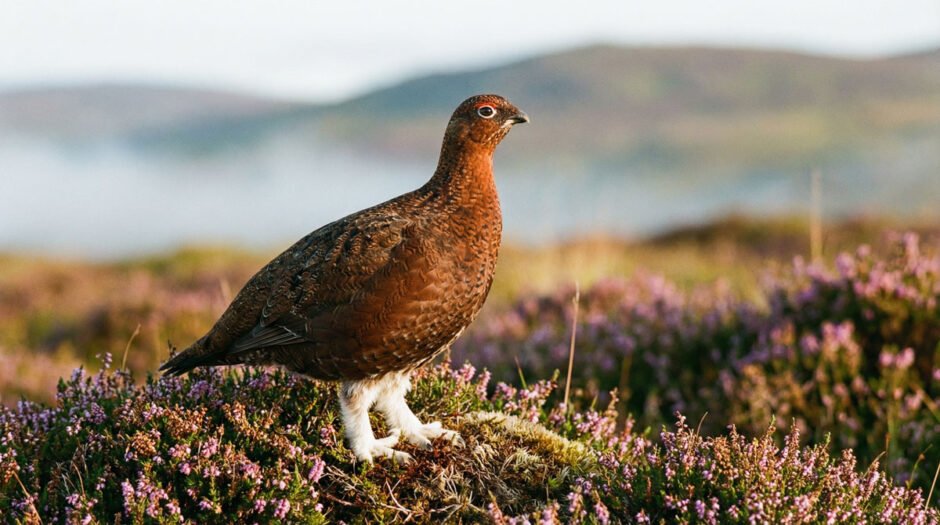
The Red Grouse, native to the British moorlands, is a prized game bird with rich, gamey meat.
The Big Question: Is Grouse a Real Type of Cheese?
So, let’s get to the heart of the matter. The direct answer is no. Unlike Cheddar, Brie, or Gouda, “Grouse Cheese” is not a recognized, traditional variety of cheese. You cannot walk into a typical cheese shop and ask for a wedge of grouse cheese as you would with other established types. It does not appear in authoritative cheese databases like Wikipedia’s comprehensive list of cheeses. The term’s existence stems from two main areas of confusion.
First, it is a branding concept. Some modern artisan cheesemakers use evocative names to tell a story about their product. A name like “Grouse Cheese” is intended to paint a picture of wild, rugged landscapes—the same kind of terroir the grouse bird inhabits. It suggests an earthy, rustic, and natural product, but it does not mean the cheese is a specific, defined type.
Second, the phrase is sometimes used as a culinary pairing term. In high-end cuisine, chefs and food writers might refer to a “grouse cheese” to describe a cheese that pairs exceptionally well with a cooked grouse dish. This is similar to how one might talk about a “dessert wine”—it describes its use, not its composition.
The Exception That Proves the Rule: Scotland’s Real ‘Grouse-Themed’ Cheeses
Just when the story seems settled, there’s a fascinating twist. While “Grouse Cheese” as a category doesn’t exist, there is at least one artisan producer in Scotland that makes specific, named cheeses with a grouse theme. Drumturk Cheeses, a small-batch producer based in Scotland, has created what they call their “Grouse themed cheese family.”
This family includes unique products like “Funky Grouse”, a blue cheese with a distinctive character, as well as others named after game birds like “Ptarmigan” and “Capercaillie.” In August 2024, Drumturk announced the birth of their newest cheese, Funky Grouse, joining their existing grouse-themed lineup. It is crucial to understand that these are brand names for specific products from a single dairy. They are not a general type of cheese, but rather a creative and localized expression of cheesemaking, further cementing the link between Scottish game birds and artisan food.
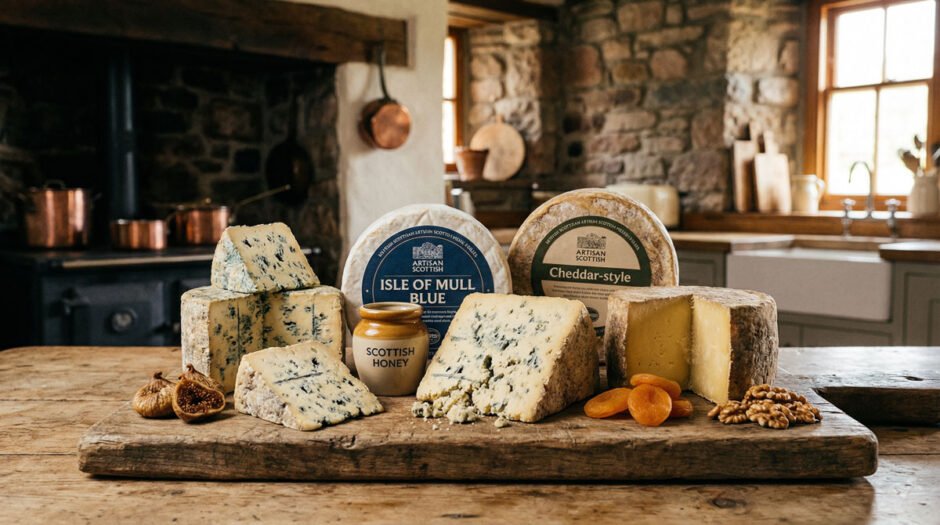
Scottish artisan cheeses offer a world of authentic flavors to explore.
Grouse vs. “Grouse Cheese”: A Clear Comparison
To eliminate any lingering confusion, let’s put the two concepts side-by-side. This simple table breaks down the essential differences between the famous bird and the cheese concept that shares its name.
| Feature | The Grouse (Bird) | “Grouse Cheese” (The Concept) |
|---|---|---|
| What It Is | A wild game bird, a type of poultry. | A branding concept for artisan cheese or a culinary pairing suggestion. |
| Origin | Native to the moorlands of the UK, particularly Scotland. | Rooted in modern artisan cheesemaking and culinary language. |
| Taste Profile | Rich, complex, and gamey dark meat. | Varies by producer, but typically described as earthy, nutty, and rustic. |
| Is it a Cheese? | No. It is a bird. | No. It is a name or a description, not a formal cheese category. |
This distinction is the key takeaway. When you hear “grouse,” think of the bird first. When you hear “grouse cheese,” think of a marketing story or a dinner menu suggestion, not a cheese aisle staple.
Forget the Myth: Discover These Real Scottish Artisan Cheeses
Now that we’ve cleared up the myth, let’s get to the fun part. Your interest in “grouse cheese” shows you have a palate for unique and authentic flavors. Scotland has a thriving artisan cheese scene with a rich history shaped by its climate and geography. Instead of chasing a concept, here are a few incredible, real Scottish cheeses worth discovering.
For a deeper dive into the world of Scottish cheese, resources like BBC Good Food offer excellent guides and recipes.
The Ultimate Pairing Guide: What Cheese Actually Goes with Grouse?
This brings us back to the culinary interpretation. If you are planning to serve the rich, gamey meat of the grouse bird, what cheese should you put on the board? The goal is to complement, not overpower. You need a cheese with enough character to stand up to the strong flavor of the bird.
Here are three excellent choices:
Frequently Asked Questions
- 1. Does grouse cheese contain any bird meat?
- No, absolutely not. The name is purely conceptual or for branding. “Grouse cheese” is a dairy product, and the name is meant to evoke the wild, natural habitat of the grouse bird, not to indicate it as an ingredient. There is no poultry in any cheese product using the “grouse” name.
- 2. So, is there any real cheese with “Grouse” in the name?
- Yes, but it’s very specific. The Scottish artisan producer Drumturk Cheeses makes a line of “Grouse themed” cheeses, including a blue cheese named “Funky Grouse.” These are unique, branded products from a single dairy, not a general category of cheese you’ll find everywhere.
- 3. What does grouse (the bird) taste like?
- Grouse has a rich and complex flavor. It is dark meat, often described as gamey, with a taste that is stronger and more distinctive than chicken. Its flavor is highly prized in fine dining and is often compared to a more intense version of pheasant or duck.
- 4. What kind of cheese is similar to the idea of grouse cheese?
- If you’re looking for a cheese with the earthy, nutty, and rustic profile that “grouse cheese” is meant to suggest, look for a farmhouse or clothbound cheddar, a French Tomme de Savoie, or a Spanish Manchego. These often have the complex, terroir-driven flavors you’re seeking.
- 5. Why do people search for “is grouse a cheese”?
- The confusion likely arises from the evocative use of the word “grouse” in culinary contexts. Since grouse is associated with fine dining and rustic Scottish cuisine, the name has been borrowed by some artisan cheesemakers for branding purposes, leading to genuine curiosity about whether a cheese type by that name exists.
Conclusion: You’ve Got the Real Story
So, is grouse a cheese? The answer is a clear no. Grouse is a bird, and “Grouse Cheese” is a concept—a piece of marketing, a culinary suggestion, but not a cheese you can find in a book of cheese types. You are now armed with the facts to confidently debunk this common food myth.
Your curiosity led you down a fascinating rabbit hole, and you’ve emerged with a deeper appreciation for both wild game and authentic artisan cheese. Instead of searching for a cheese that doesn’t exist, you can now explore the rich world of real Scottish cheeses with confidence.
Which one will you try first?