
Many people expect snow and ice damage to fix itself during colder months. In reality, winter often places quiet stress on lawns beneath frozen surfaces. Winter lawn care offered by professional lawn care services ensures the grass roots are protected, helps preserve soil structure, and minimizes damage before it shows. If you take the proper method, spring’s recovery will feel easier and more natural. A strong winter lawn develops through patience, awareness of the seasons, and consistent attention, rather than aggressive action. When you give attention early, your lawn returns in spring with strength and ease.
Snow and Ice Damage Comes From Hidden Winter Stress
Snow and ice damage develop when pressure, trapped moisture, and temperature changes work together. Snow presses grass blades down for long periods. Ice restricts airflow. Damp soil stays wet longer beneath frozen layers.
In the winter months, grass is slower to grow and concentrates on its survival. It may appear protective. However, repeated freezing and thawing can weaken the lawns as time passes. Ice sheets block oxygen and sunlight. Without proper winter lawn care, this stress carries forward into spring.
Lawns remember winter conditions. Patchy areas, thinning blades, and slow greening appear later. When you follow consistent winter lawn care tips, you reduce damage long before it becomes visible.
Foot Traffic on Frozen Lawns Causes Long-Term Compaction
Walking on frozen grass often feels harmless. The ground seems solid, and grass looks dormant. Still, pressure on frozen turf leaves lasting damage.
- Compacted soil limits root space.
- Grass blades snap instead of bending.
- Roots struggle to expand.
- Recovery stretches into late spring.
Repeated walking creates stress lines across the lawn. Snow hides this damage until thawing begins. With gentle winter lawn care, you limit lawn access and support natural recovery.
Temporary walkways make a real difference. Designated paths reduce repeated pressure and quietly protect long-term turf health.
Snow Mold Develops Under Prolonged Snow Cover
Snow mold forms when moisture stays trapped under snow for long periods. Cold temperatures and poor airflow create ideal conditions for fungal growth.
- Gray or pink patches appear after the snow melts.
- Grass blades stick together in matted circles.
- Affected areas feel slimy or brittle.
This problem stays hidden all winter. Mold only reveals itself after thawing. When you take simple preventive steps early, mold becomes far less likely. Proper mowing height and debris removal reduce moisture buildup. With steady winter lawn care habits, fungal growth stays under control.
Snow mold rarely destroys entire lawns, but affected areas recover slowly. Early prevention supports a smoother transition into spring.
Ice Accumulation Restricts Oxygen and Weakens Roots
Ice forms dense layers that seal the soil surface. Oxygen exchange drops, and roots struggle beneath the surface.
- Soil remains overly saturated.
- Roots cannot breathe properly.
- Nutrient absorption slows.
- Overall turf strength declines.
Extended ice cover often causes thinning areas. St. Augustine Grass crowns weaken under prolonged suffocation. Thoughtful green grass lawn care reduces ice stress by preventing water pooling and soil compaction before freezing.
Gentle snow management helps stop repeated ice formation. Small actions taken early offer lasting protection.
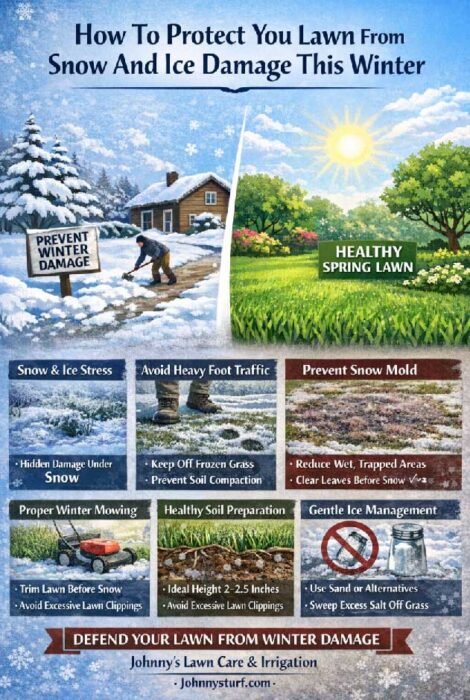
Proper Pre-Winter Mowing Supports Grass Survival
Grass height before snowfall plays a major role in winter resilience. Tall grass mats under snow, while very short grass suffers from cold exposure.
- Balanced mowing prepares turf for dormancy.
- Long blades trap moisture.
- Short blades expose crowns to freezing air.
- Even height supports airflow and insulation.
Before winter arrives, lawns benefit from gradual trimming rather than sudden cuts. A calm transition into dormancy strengthens grass crowns. With careful winter lawn care services in St. Augustine, preparation feels steady and intentional.
Healthy Soil Builds Strong Winter Resilience
Soil condition often determines how well a lawn handles winter. Healthy soil supports turf quietly throughout the season. It retains warmth, drains efficiently, and protects dormant roots.
- Aerated soil improves oxygen movement.
- Balanced nutrients strengthen roots.
- Organic matter supports microbial life.
Compacted or depleted soil increases winter damage. Roots lose flexibility and protection. Through consistent winter lawn care tips, soil health becomes the foundation of winter survival.
Autumn soil preparation often shapes winter outcomes. When soil stays balanced, lawns rest with greater stability.
Chemical Ice Melts Leave Lasting Lawn Damage
Ice melts offer short-term safety but often harm lawns long-term. Chemical salts seep into soil and grass tissue.
- Salt residue disrupts soil structure.
- Grass blades dry out and burn.
- Root zones collect harmful buildup.
Ice melt damage appears slowly. Yellow edges and thinning patches show up in spring. Gentle snow removal reduces the need for chemicals. With mindful green grass lawn care, soil balance stays intact.
Natural alternatives and physical snow removal protect both turf and nearby plants.
Seasonal Lawn Support Benefits From Professional Insight
Winter lawn care may feel inactive, but preparation and monitoring still matter. Professional insight brings clarity during quiet months.
- Experts identify hidden risks early.
- They adjust preventive strategies by season.
- They plan spring recovery thoughtfully.
Trusted lawn care services often focus on prevention, not repair. Names like Johnny’s Lawn Care & Irrigation Services or simply Johnnysturf.com reflect seasonal understanding and careful planning rather than harsh treatments. Support during winter reduces the need for corrective work later. Good guidance helps lawns enter spring with fewer setbacks.
Emotional and Practical Readiness Shapes Winter Lawn Care
Lawns often carry personal meaning. They host gatherings, quiet mornings, and familiar routines. Winter changes their look, but their value remains.
- Winter care slows down.
- Focus shifts from growth to protection.
- Prevention replaces urgency.
- Patience leads the process.
With steady winter lawn care, lawns rest without neglect. Each small step before snowfall becomes an investment in future health. Recovery then feels natural, not forced.
How Thoughtful Winter Care Shapes Spring Recovery
Winter damage rarely announces itself. Stress builds quietly under snow and ice. When you act early, recovery feels smoother when warmth returns.
Mindful winter lawn care helps turf enter dormancy strong instead of vulnerable. Protected lawns wake evenly in spring. Bare patches shrink. Growth feels steady.
With consistent green grass lawn care and supportive lawn care services from Johnny’s Turf, winter becomes a season of rest, not risk. The lawn’s story continues through patience, awareness, and respect for the season.
FAQs
- Why does winter damage often go unnoticed?
Snow hides stress beneath the surface. Damage appears only after thawing begins. - When does winter lawn care preparation help most?
Preparation before snowfall supports healthy dormancy and easier spring recovery. - How does snow mold affect lawn appearance?
Fungal patches show up after snow melts, often as gray or pink circles. - Why do ice melt products harm grass?
Chemical salts disrupt soil balance and damage grass tissue over time. - When does professional lawn care feel most useful?
Expert guidance prevents hidden damage and supports smoother seasonal transitions.