
Understanding Cabinet Hinges
Before you start turning screws, it helps to understand the type of hinge you are working with. Most modern kitchen cabinets use European-style (concealed) hinges. These hinges are highly adjustable, allowing you to move the door up, down, left, right, in, and out. Older cabinets may use traditional surface-mounted or semi-concealed hinges, which offer less adjustability but are simpler in design.
Fixing a Loose Hinge (Stripped Screws)
The most common cause of a loose cabinet door is that the screws holding the hinge to the cabinet frame (the cabinet box) have stripped the wood and lost their grip.
The Toothpick Method
This is a classic, effective fix for stripped screw holes in wood.
- Remove the door: Support the door and unscrew the hinge from the cabinet frame. Set the door aside.
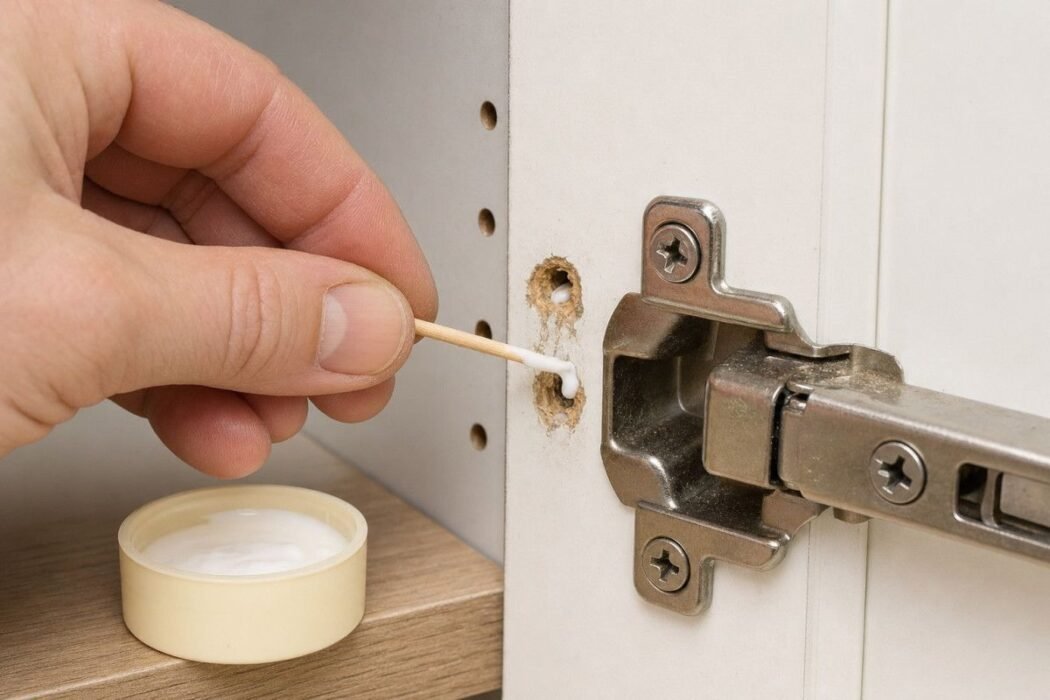
- Prepare the hole: Dip the end of a wooden toothpick (or a wooden matchstick) into wood glue.
- Fill the hole: Insert the glued toothpick into the stripped screw hole. Break or cut off the excess so it is flush with the surface. You may need to use two or three toothpicks to fill the hole completely.
- Let it dry: Allow the glue to dry for at least an hour (or according to the glue’s instructions).
- Reattach the door: The toothpicks provide new wood for the screw threads to bite into. Reattach the hinge using the original screws.
Using Longer Screws
If the cabinet frame is thick enough, you can sometimes fix a loose hinge simply by replacing the original screws with slightly longer or thicker ones. Be careful not to use screws that are so long they poke through the other side of the cabinet panel.
Adjusting Misaligned Doors (European Hinges)
If the door is securely attached but hangs crooked, rubs against another door, or doesn’t close flush, you need to adjust the European hinge. These hinges typically have two or three adjustment screws.
| Adjustment Direction | Which Screw to Turn | Effect |
|---|---|---|
| Up / Down | The screws mounting the hinge plate to the cabinet | Loosen slightly, move door up/down, retighten. |
| Left / Right | The front screw on the hinge arm | Turns door closer to or further from the adjacent door. |
| In / Out | The rear screw on the hinge arm | Moves the door closer to or further from the cabinet box. |
Tip: Make small adjustments—a quarter turn at a time—and close the door to check the alignment after each adjustment.
Fixing Traditional Hinges
If you have older, traditional hinges that are bent or sprung, adjustment is difficult. If tightening the screws (using the toothpick method if necessary) does not fix the sagging, the hinge itself may be worn out. In this case, the best solution is to replace the hinges entirely. Take one of the old hinges to a hardware store to find an exact match.
Preventing Future Issues
To prevent cabinet doors from loosening in the future:
- Avoid leaning on doors: Do not use open lower cabinet doors to support your weight when standing up.
- Don’t overload door racks: If you have spice racks or organizers mounted on the inside of the doors, keep them light.
- Check screws periodically: Make it a habit to check and gently tighten hinge screws once a year.
Frequently Asked Questions
Why do my cabinet doors keep coming loose?
Frequent use, the weight of the door, and changes in humidity can cause the wood around the screws to expand and contract, eventually stripping the screw holes.
Can I use wood filler instead of toothpicks?
Yes, you can use a high-quality wood filler or epoxy designed for screw holding. However, the toothpick and wood glue method is often faster, cheaper, and provides a stronger grip for the screw threads.
How do I fix a cabinet door that won’t stay closed?
If the door is properly aligned but swings open, the hinge mechanism may be worn out, or the cabinet may not be level. You can install a magnetic catch or a roller catch to hold the door closed.
What size screws are used for cabinet hinges?
Most cabinet hinges use #6 or #8 wood screws, typically 5/8 inch or 1/2 inch long. If you are replacing stripped screws, you might step up to a #8 screw if the original was a #6.
Can I replace European hinges with traditional hinges?
It is difficult because European hinges require a large cup hole drilled into the back of the door. Traditional hinges will not cover this hole. It is best to replace like with like.
Conclusion
A loose cabinet door is a minor issue that can make your kitchen feel worn and neglected. By understanding how your hinges work and employing simple fixes like the toothpick method for stripped screws, you can restore your cabinets to perfect alignment and secure operation in just a few minutes.