
Most people get the zero-waste concept completely backward.
They think it means throwing out all their plastic Tupperware and spending four hundred dollars on matching glass jars and aesthetic bamboo scrubbing brushes. That is not saving the planet. That is just shopping. It is a trap.
I fell for it myself about five years ago. I remember standing in my kitchen looking at a thirty-dollar “sustainable” lunchbox I just bought. I realized I had to use that metal box three thousand times just to break even on the plastic baggies I used to buy.
True zero-waste isn’t about buying new eco-friendly gear. It is about efficiency. It’s about sealing the leaks in your finances where money is escaping as waste.
You want to build wealth? Stop throwing your money away. Literally.
The Financial Cost of Food Waste and Disposables
Let’s look at the numbers.
The average household wastes about 30% of the food they buy. I tracked this for a month in my own house. I put a price tag on every brown banana and half-eaten block of cheese I tossed. It came out to about $120 a month. That is $1,440 a year. Just in food.
Add in paper towels. Cling wrap. Aluminum foil. Ziploc bags. The single-use swiffer pads.
You are basically lighting money on fire.
Wealth building starts with retention. You cannot fill a bucket that has a hole in the bottom. When you switch to a zero-waste mindset, you stop buying disposables. You stop buying food you won’t eat. Suddenly, you have an extra $200 or $300 a month.
That doesn’t sound like much. But compound interest loves small, consistent contributions.
Investing Savings into Gold and Hard Assets
So what do you do with that extra cash? You don’t leave it in your checking account. You move it into something that holds value.
This is where the mindset shift happens.
I stopped buying disposable razors. I bought a safety razor for twenty bucks. The blades cost pennies. The money I saved over two years went straight into my investment portfolio.
You have to view your household consumables as a drain on your ability to acquire assets. Every box of trash bags you buy is money that isn’t working for you.
Maybe you take that savings and put it into an index fund. Maybe you prefer physical assets. I know most guys who take their yearly “waste savings” and buy silver coins. If you are in Australia, you might look to buy gold bullion Gold coast dealers are selling. It doesn’t matter what the asset is. The point is that you are converting a liability—your household waste stream—into a hard asset.
You are trading plastic wrap for gold. That is a trade I will take every single time.
Integrating Efficient Systems and Support at Home
Willpower is a finite resource. You will run out of it by 4 PM.
If your zero-waste plan relies on you having the energy to hand-wash beeswax wraps every night, you will fail. I failed. My kitchen smelled like vinegar and resentment for six months.
You need systems.
Set up your home so the low-waste option is the lazy option. Keep the reusable bags in the trunk, not the closet. Put the compost bin next to the chopping board, not under the sink.
This applies to everything, even caretaking. If you are caring for an elderly parent or a family member with needs, the waste can be overwhelming. Medical packaging is a nightmare. Don’t try to be a hero and manage it all manually. Look into a structured support at home program if you qualify. These programs can often help manage the logistics of care supplies and equipment. Using available resources prevents burnout.
Burnout is expensive. Efficiency is cheap.
Building Wealth with a Buy It For Life Strategy
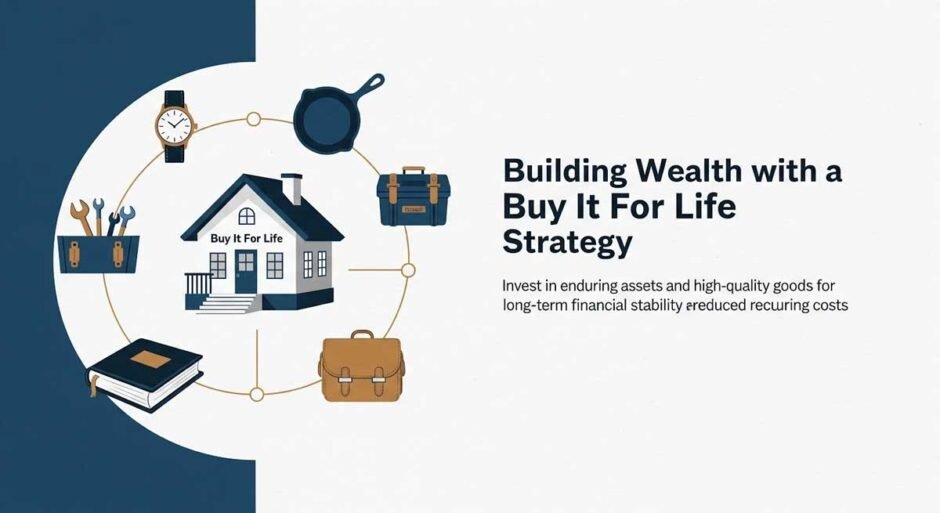
Here is a rule I live by: If I have to buy it again, I don’t want it.
I bought a cast iron skillet ten years ago. It cost me thirty bucks. It will outlive me. It will probably outlive my kids.
Compare that to the cheap non-stick pans I used to buy every two years because the coating started flaking off into my eggs.
Buying cheap goods is a poverty trap. Zero-waste builds wealth because it forces you to buy quality. You buy one good winter coat. You buy one solid pair of boots. You repair them when they break.
This builds a barrier against inflation. When the price of cheap goods goes up, you don’t care. You already own the good stuff. You opted out of the cycle.
Conducting a Financial Audit for a Zero-Waste Lifestyle
People obsess over the aesthetics of zero waste. They want the Instagram-worthy pantry.
Forget that. It is nonsense.
My pantry looks like a mess of mismatched jars and bulk bags. But my savings rate is up 15% since I stopped buying packaged convenience foods and single-use garbage.
You don’t need to fit a year’s worth of trash into a mason jar to be successful. You just need to stop buying things that exist only to be thrown away.
Look at your bank statement. Highlight every purchase that went into the landfill within 48 hours.
That number is your potential wealth.
Reclaim it.