
Most unfinished basements are quiet energy drains. Without proper insulation and air sealing, they allow conditioned air to escape upward and cold ground temperatures to creep in from below, forcing heating and cooling systems to work harder than they should. The result is higher energy consumption, higher utility bills, and a larger environmental footprint, and these are all from a space that isn’t even being used.
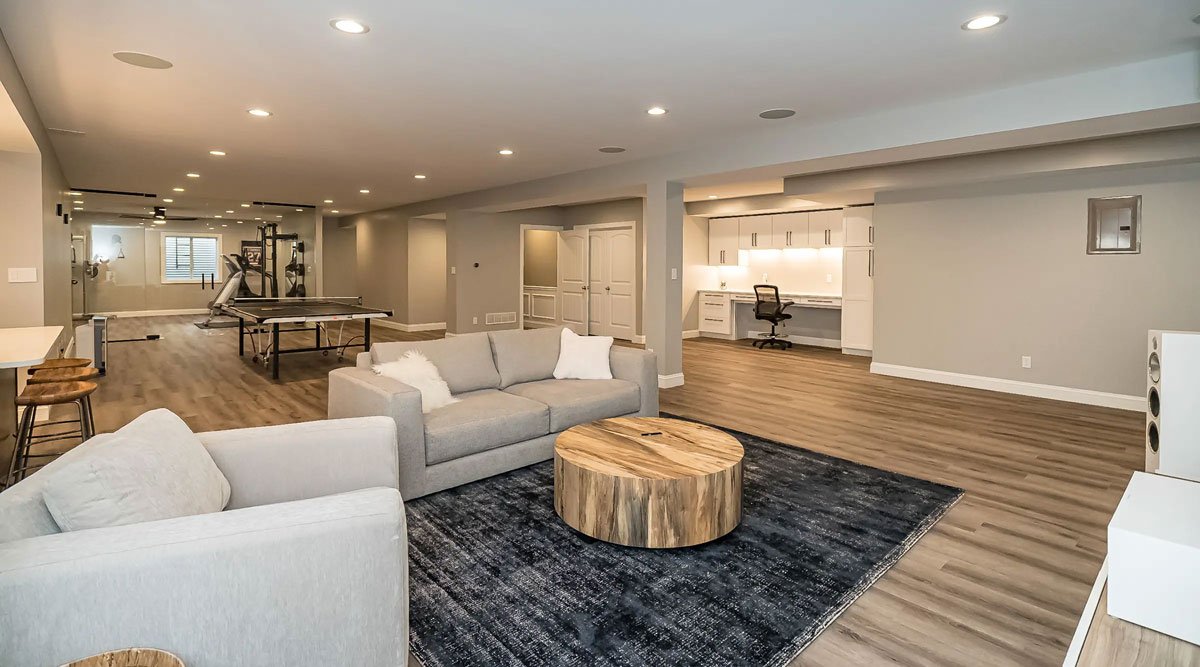
Finishing a basement changes that equation entirely. Thoughtful basement finishing done with sustainability in mind doesn’t just create livable square footage; it strengthens the thermal performance of the whole home, reduces energy waste, and eliminates the environmental cost of alternatives like home additions or moving to a larger property. For eco-conscious homeowners, it is one of the most efficient upgrades available.
The Greenest Square Footage Is Already-Built Square Footage
One of the clearest principles in sustainable home improvement is that improving what already exists is almost always more environmentally responsible than building something new. New construction requires raw materials, generates construction waste, disturbs land, and produces significant carbon emissions throughout the building process.
An unfinished basement, by contrast, already has its foundation, its framing potential, and its structural shell. Finishing that space makes use of what is already there rather than adding to the built environment. For a homeowner weighing a basement renovation against a room addition or a move to a larger home, the sustainability math strongly favors working with existing square footage.
Insulation as the Foundation of an Eco-Friendly Basement
Basement insulation is the single most impactful decision in any eco-conscious finishing project. Below-grade spaces have a natural thermal advantage because the surrounding earth maintains a relatively stable temperature year-round but that advantage is only realized when the basement envelope is properly sealed and insulated.
Spray foam insulation applied to rim joists and foundation walls creates an airtight barrier that dramatically reduces heat transfer. Rigid foam board is another strong option, particularly for interior wall applications. Both materials outperform standard fiberglass batts in below-grade conditions where moisture and air infiltration are ongoing concerns. A well-insulated basement reduces the load on the home’s heating and cooling system, lowering energy consumption every single month the space is in use.
Choosing Low-Impact Materials for the Finish
Material selection is where a basement finishing project can either deepen or undermine its environmental credentials. Conventional building products often contain volatile organic compounds, or VOCs, which off-gas into indoor air long after construction is complete. In a below-grade space with limited natural ventilation, this is a meaningful concern for both human health and air quality.
Low-VOC paints, adhesives, and caulks are widely available and perform just as well as conventional alternatives. For framing, lumber certified by the Forest Stewardship Council ensures the wood was sourced from responsibly managed forests. Flooring choices matter too – luxury vinyl plank made with recycled content, cork harvested as a renewable resource, or engineered wood with low-emission adhesives all reduce the environmental impact of the finished floor without sacrificing durability in a moisture-prone environment.
Moisture Control and Indoor Air Quality
Sustainability in the built environment is inseparable from durability. A basement that develops moisture problems within a few years of being finished is not a sustainable improvement, it is a renovation that will need to be partially or fully redone, consuming additional materials and generating unnecessary waste.
Proper moisture management begins before any framing or insulation is installed. The foundation walls should be assessed for water intrusion, grading around the exterior should be evaluated, and a vapor barrier should be installed where conditions require it. Mechanical ventilation, whether through an energy recovery ventilator or a well-designed HVAC extension, ensures the finished space maintains healthy air circulation without relying on windows that a below-grade room typically lacks. Getting this right from the start is what separates a basement that lasts from one that causes problems.
Energy-Efficient Lighting and Electrical Planning
Lighting choices in a finished basement have a direct effect on its energy performance. Recessed LED fixtures are the most practical option for below-grade rooms – they preserve headroom, provide even illumination, and consume a fraction of the energy required by older incandescent or fluorescent alternatives.
Smart lighting controls, including dimmers and occupancy sensors, take efficiency a step further by ensuring the space is only drawing power when it is actively being used. Thoughtful electrical planning at the rough-in stage also avoids the need for disruptive upgrades later, extending the functional life of the finished space and reducing long-term material consumption.
Long-Term Value and a Smaller Environmental Footprint
A finished basement that performs well thermally, maintains healthy air quality, and uses durable, low-impact materials continues delivering environmental and financial returns for decades. Lower utility bills, reduced HVAC wear, and increased property value all compound over time, rewarding the upfront investment with sustained results. Homeowners seeking quality basement finishing in Utah County will find that working with a team experienced in both craftsmanship and sustainable building practices makes a measurable difference in long-term outcomes.
The home improvement sector is increasingly recognizing that responsible renovation and practical performance are not in conflict. They reinforce each other. A basement finished with sustainability at the forefront is more comfortable, more efficient, and more resilient than one built without those priorities and that benefits both the homeowner and the broader environment for years to come.