
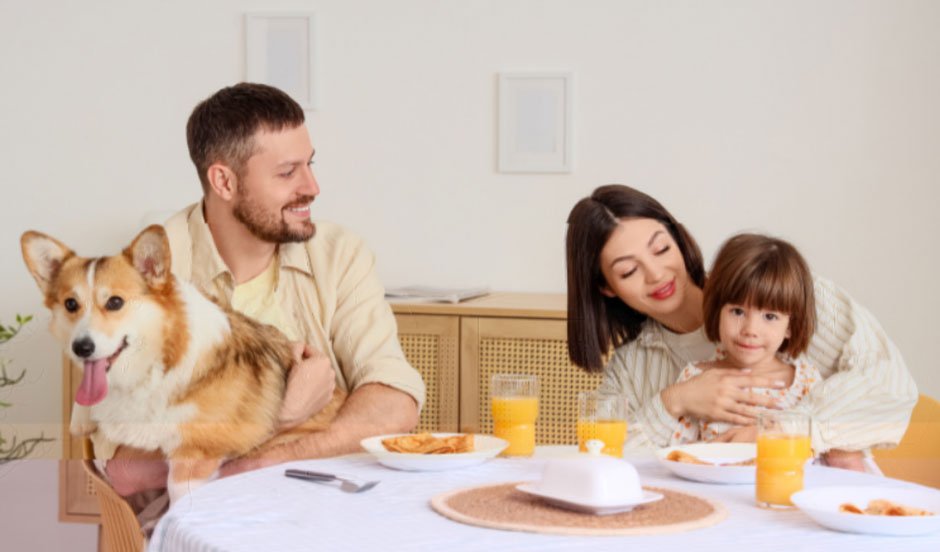
Bringing a new puppy home is one of life’s most joyful, chaotic, and heartwarming adventures. Suddenly, your quiet, predictable routine is replaced with tiny, adorable chaos—and a whole new set of responsibilities. Among the biggest changes? Mealtime.
You thought you had family meal planning down to a science. Now, you’re juggling your human family’s schedule, your own need for a healthy dinner, and the non-negotiable, multiple daily feedings of a rapidly growing, very hungry little dog. It’s a challenge, but with a little planning, you can make it work for everyone.
This isn’t just about making time for your puppy’s food; it’s about integrating the puppy’s schedule into your own family dynamic while keeping your kitchen safe and your dining experience enjoyable. Let’s dive into how you can conquer the canine-human culinary clash and create a sustainable, happy meal routine.
Setting the Stage: The Puppy Feeding Schedule
The most important rule for surviving family meal planning with a puppy is this: Your puppy needs a consistent schedule. Their digestive systems are sensitive, and a regular feeding time is the foundation of successful house-training.
Puppies, especially those between 8 and 12 weeks old, often require three to four meals per day. That’s a lot of bowls to fill! The smart approach is to anchor your puppy’s meals around your family’s mealtimes. This is a game-changer for synchronization.
For instance, if your family eats breakfast at 7:00 AM, lunch at 12:30 PM, and dinner at 6:00 PM, try to schedule your puppy’s meals to happen just before or just after these times.
- Puppy Meal 1 (Breakfast): 7:15 AM
- Puppy Meal 2 (Lunch): 1:00 PM
- Puppy Meal 3 (Dinner/Late Afternoon): 5:30 PM
By establishing this routine, you achieve two things. First, you create an easy-to-remember pattern. Second, you set the stage for training. If the puppy eats shortly before your dinner, they are less likely to be hungry—and therefore less likely to beg—while you are eating.
The importance of a good routine cannot be overstated, especially for smaller breeds that require more careful attention to their blood sugar levels. When you’re looking for a new family member, like a sweet Cavapoo or one of those charismatic and sturdy French Bulldogs, choosing an ethical breeder or adoption company, such as HonestPet ensures you get a healthy, well-socialized pup ready to integrate into your home.
Creating Calm Human Mealtimes
A puppy who is allowed to wander, whine, and beg during your family’s dinner will quickly turn your relaxing meal into a stressful mess. The solution is to proactively manage their location and state of mind during your mealtimes.
- Crate or Playpen Time:This is the golden rule. When your family sits down to eat, your puppy should be in their crate, an exercise pen, or gated safely in a different room with a long-lasting, puppy-appropriate chew toy or a food puzzle. This teaches them to be calm and independent during a time when you can’t give them full attention.
- The “Enrichment Dinner” Trick:Serve your puppy’s kibble or a safe, high-value treat insidea puzzle feeder or a Kong toy. This keeps them mentally and physically busy for 15–30 minutes, which is often exactly the length of your family’s dinner. By the time they finish, you’re likely done eating.
- Stick to the “No Table Scraps” Rule:Be consistent! Every family member—even guests—must adhere to the rule of no food from the table. If you give in even once, you’ve taught your puppy that begging works, and they will only try harder next time.
Puppy-Proofing Your Kitchen and Meal Prep
Your kitchen is a landmine of potential puppy hazards, and the worst time for a crisis is when you’re busy chopping vegetables or managing a hot oven. Puppy-proofing the food preparation area is vital for safety.
Your puppy sees the world with their mouth and nose. The kitchen smells amazing to them, which means they’re constantly looking for things to sample—and not just food.
Invest in a heavy-duty, locking, or enclosed trash can. A determined puppy will knock over an open bin for a treasure trove of dangerous scraps like chicken bones (which can splinter) or wrappers. Store all cleaning agents in high cabinets or behind childproof locks; pups chew on low cabinet doors! Adopt a “nothing on the counter” policy when you aren’t using an item. Puppies learn to counter-surf. Never leave hot pans or dishes near the edge.
During prep and cleanup, you must be hyper-aware of what hits the floor. A dropped onion slice, a stray grape, or a glob of raw meat drippings can all be toxic or cause serious gastrointestinal issues for your puppy. Consider using a baby gate to keep your puppy out of the kitchen entirely while you are actively cooking. This is often the simplest and safest solution. Spill a bit of food? Clean it immediately and completely. Don’t wait five minutes—your puppy is already on their way to investigate.
Integrating Dog-Friendly Ingredients
Meal planning becomes much easier when you can streamline the grocery list. You can save time, money, and your sanity by planning human meals that allow you to set aside safe, unseasoned ingredients for your puppy’s enrichment. This also helps curb the desire to share “human food.”
Remember the golden rule here: Plain, unseasoned, and in moderation. Your puppy’s primary nutrition must come from a complete and balanced puppy food recommended by your vet. The following ingredients should only be used as a small, healthy addition or high-value training reward.
Human Meals with Shared Ingredients
When you meal plan, try to incorporate the following items into your family’s meals so you can easily set aside a puppy portion before adding seasonings, salt, or oil:
- Lean, Plain-Cooked Meats:Chicken, turkey, or beef. If you’re grilling chicken breasts for your dinner, cut off a small, plain piece for your puppy before you marinate or salt the rest. Always remove all bones.
- Dog-Safe Vegetables:Carrots, green beans, sweet potatoes, and pumpkin. If you roast a tray of sweet potatoes for your family, simply cook a few pieces plain and unsalted for your puppy. They can be a great, healthy chew when chilled or slightly frozen for a teething pup!
- Eggs:Plain-cooked scrambled or boiled eggs are an excellent, high-protein snack or training reward.
Conclusion
A puppy adds so much love, life, and laughter to your home. While they may complicate your dinner routine for a while, a few smart strategies will help you sail through the chaos. Embrace the schedule, stay consistent with your rules, and soon your new family member will be a calm, happy addition to your mealtime rhythm.