
When you dream of gliding down the slope with clean arcs etched into the snow, carving feels like the ultimate goal. But every master once started from scratch, and the green slope is the perfect stage for your first steps. Before we dive in, remember that a good lift pass sets the tone for the whole day. You can always get yours here — https://www.comfort-ski.com/day-pass-lift-tickets/ — and head to the mountain with peace of mind.
Carving is not just about technique. It is about rhythm, trust in your skis, and surrendering to the mountain’s embrace. The exercises below will guide you gradually, from standing on your skis with confidence to making those first flowing arcs that turn skiing into poetry.
Finding balance on skis
Before turning, before speed, you must feel your skis as an extension of your body. On a green slope, start by simply gliding in a straight line, knees slightly bent, arms relaxed. Shift your weight gently from one foot to the other, noticing how even the smallest movement changes your balance. This is the stage where you and your skis begin to breathe in unison. Without rushing, you allow your muscles to memorize the position of calm stability.
Balance drills may feel simple, but they are essential for learning how to trust your skis. Many beginners underestimate this stage, but in truth, it shapes the whole foundation of skiing. Imagine that your skis are no longer equipment — they are part of your own body. By dedicating time here, you gain the calmness and presence that will protect you when runs become longer and faster.
Balance is the invisible thread that ties skier to mountain.
Practice steps
- Glide in a straight line on flat snow
- Shift your weight slowly from one ski to the other
- Keep your upper body quiet and forward-facing
- Let your skis move without forcing them
- Practice gentle stops to build confidence
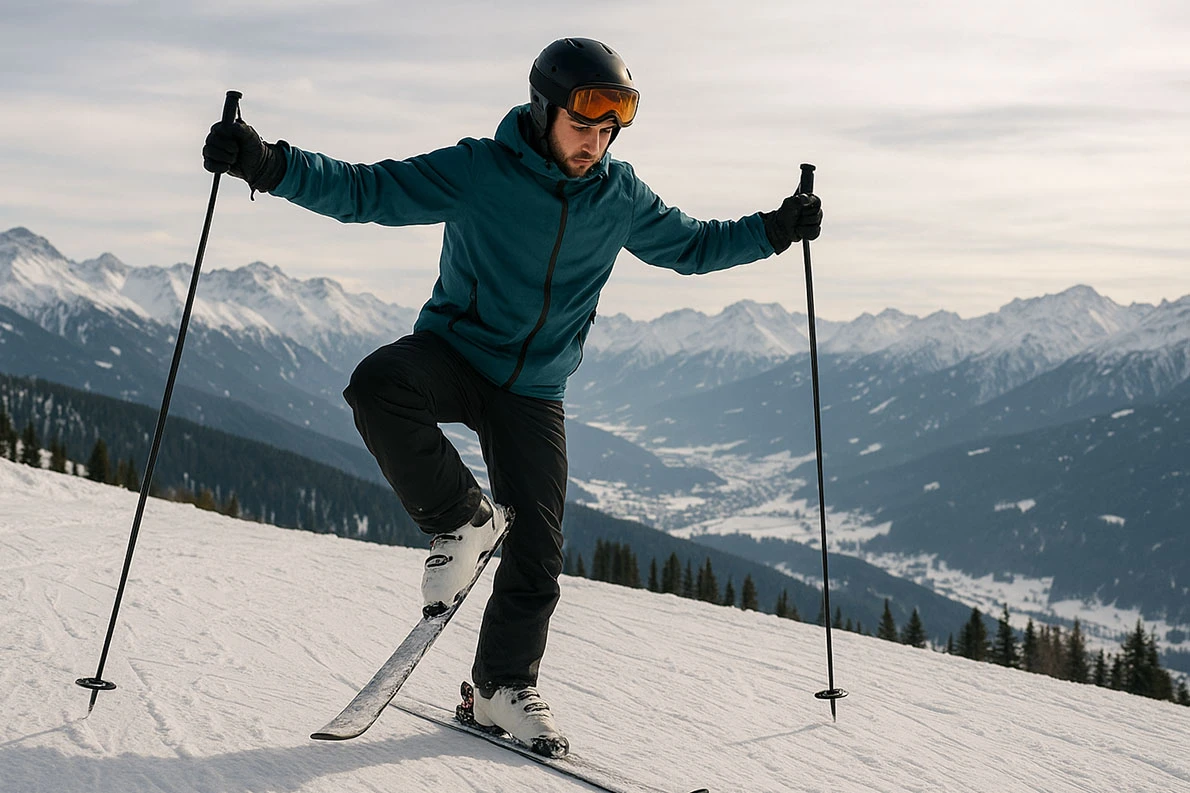
Edge awareness
Exploring ski edges is the moment when you first discover how steel meets snow. Stand still, tip your knees from side to side, and feel how edges bite. Glide gently while exaggerating this side-to-side motion, not to turn, but to feel grip. You are training your body to trust the skis as they hold you securely. This awareness is subtle yet powerful — the key to carving.
It is at this stage that you learn skiing is not only about speed but about sensitivity. By carefully paying attention to how the edges react, you create muscle memory that will later protect you when the slopes grow steeper. It is as though the skis are talking back to you with every movement, teaching you the language of snow.
Practice steps
- Stand still and press knees gently to one side
- Glide and notice the change in grip
- Shift slowly from edge to edge
- Avoid twisting hips — let knees lead the motion
- Repeat until edge grip feels natural
Side-slipping
The side-slip may feel clumsy, but it is a lesson in control. Place skis across the slope, dig in your edges, then release pressure slightly to slide. Stop by pressing edges firmly. Repeat while facing both directions. It teaches you that sliding is not danger, but a skill you can command. Suddenly, even icy sections become manageable.
This exercise builds resilience. At first, sliding sideways might feel like a loss of control, but soon you realize it is the opposite: a powerful way to dominate the slope. Each repetition chips away at fear and replaces it with calm confidence. The snow no longer feels unpredictable — you understand how to master it.
Confidence comes when you know you can stop anywhere, anytime.
Practice steps
- Place skis sideways across the hill
- Release edge pressure gently
- Allow a controlled slide
- Stop by digging edges again
- Repeat until the motion feels effortless
Falling leaf exercise
Now imagine drifting like a leaf in the wind. Point skis slightly downhill, slide gently, and shift weight left, then right. You move down the slope in a zigzag without turning. Your body stays calm, while skis drift where you guide them. This gives you confidence in controlling direction without fear of commitment.
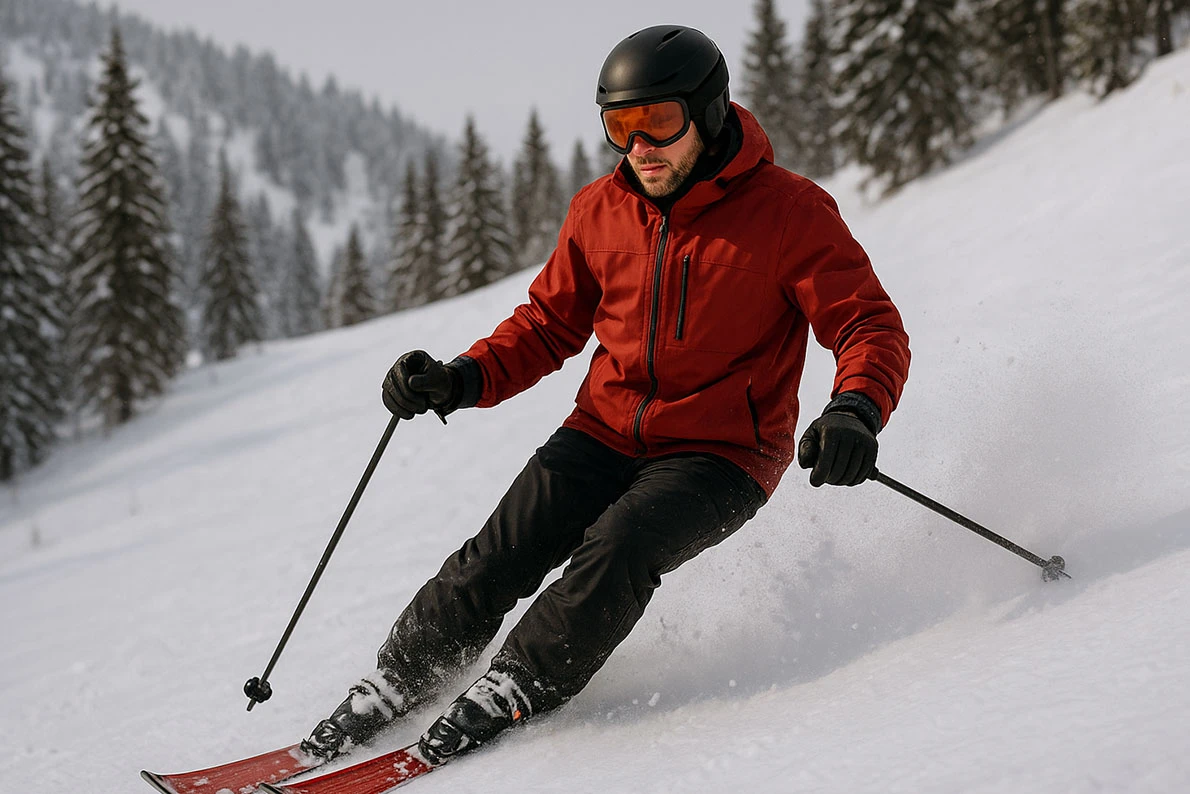
This drill frees the mind from stiffness. You stop thinking of skiing as a struggle against gravity and begin to experience it as a dance. Like a leaf in autumn air, you allow yourself to float, learning that movement can be soft and playful. The slope becomes less of a challenge and more of a companion.
The falling leaf frees you from the fear of losing control.
Practice steps
- Point skis at a shallow downhill angle
- Shift weight to drift left
- Switch pressure and drift right
- Keep your torso facing downhill
- Continue alternating until movement feels natural
First carved arcs
This is where the magic begins. Gain a little speed, tip both knees together, and feel skis bend naturally into a curve. Do not twist or push them — let them glide. The snow beneath responds with smooth arcs, and suddenly you realize what carving feels like: effortless precision.
The sensation of the first carve is unforgettable. It feels like being carried by the mountain itself, as if the skis are drawing a signature that belongs uniquely to you. The glide is smooth, the sound is quiet, and the sense of control is exhilarating. This is the moment you fall in love with skiing forever.
The first true carve is like signing your name on the snow.
Practice steps
- Gain moderate speed on a gentle slope
- Tip knees together to one side
- Let skis bend into their natural curve
- Keep arms forward and centered
- Repeat on the opposite side
Linking turns
After mastering single arcs, the real joy is in connection. Flow left, then right, letting skis switch edges in one rhythm. Each arc melts into the next, painting a wave-like pattern across the slope. This is when skiing becomes music — continuous, harmonious, and free.
Linking turns is the point where technique becomes art. The mountain ceases to be an obstacle and turns into a canvas for your movement. Every arc you connect builds fluidity, and suddenly you are no longer practicing — you are skiing with soul.
Carving is the art of joining arcs into melody.
Practice steps
- Begin with one carved turn left
- Release edges smoothly at the end
- Transfer weight onto the opposite edge
- Carve right and continue the rhythm
- Link multiple arcs without breaking flow
Adding rhythm and speed control
Now the slope turns into a dance floor. Count softly as you move: one, two, three. Widen your turns to slow down, tighten them to speed up. Instead of braking, you create tempo with the shape of your arcs. This rhythm is what transforms beginner drills into graceful skiing.
As rhythm takes over, your skiing becomes more than sport. It becomes a language of movement, a way to express confidence and joy. You stop fearing speed, because you know that through rhythm, you can control it. Skiing turns into a flowing dialogue between you and the mountain.
Practice steps
- Count turns with a steady rhythm
- Make wide arcs to reduce speed
- Tighten arcs to accelerate gently
- Keep shoulders and torso steady
- Repeat until speed feels under your command