
This is bjudlunch—the Swedish tradition of inviting someone to lunch and covering the cost as an act of generosity and connection. More than a meal, it’s an investment in relationships. Whether you’re an expat navigating Swedish workplace culture, a leader seeking authentic team-building strategies, or simply curious about Nordic social customs, understanding bjudlunch offers a window into what makes Swedish society tick.
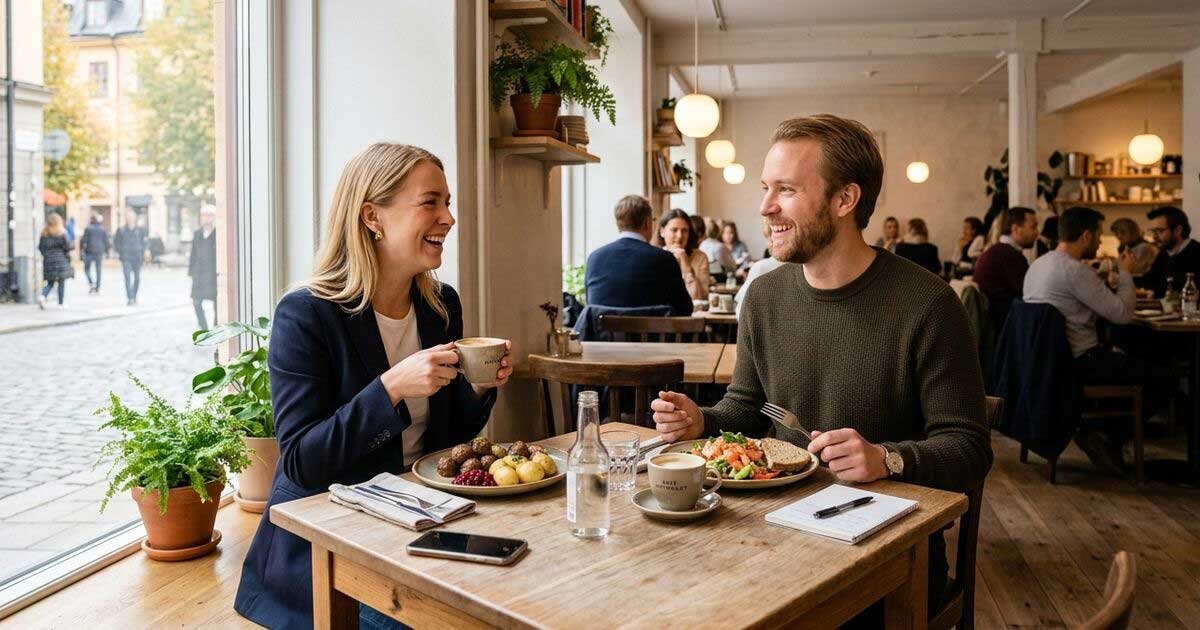
In this guide, you’ll discover what bjudlunch truly means, the cultural values that shaped it, essential etiquette rules for hosts and guests, and practical steps to host your own memorable bjudlunch. You’ll learn how this tradition strengthens professional networks, adapts to virtual teams, and why it remains remarkably relevant in our transaction-heavy modern world.
What Is Bjudlunch? Understanding the Core Concept
The Literal Translation and Etymology
Bjudlunch combines two Swedish words: bjuda (to invite or treat) and lunch (the midday meal). The direct translation is “invitation lunch” or “treat lunch.” Pronunciation? Think “BYOOD-lunch,” with the emphasis on the first syllable.
But here’s where it gets interesting. The verb bjuda carries deeper meaning than simple invitation. It implies offering something freely, generously, without expecting immediate return. When a Swede says “jag bjuder,” they’re not just suggesting lunch—they’re declaring their intention to host and pay. Clear. Direct. No ambiguity.
Beyond the Definition: What Bjudlunch Really Represents
Strip away the Swedish label and you find something universal: the act of treating someone to a meal as a deliberate investment in relationship. Not networking in the transactional sense. Not schmoozing. Just genuine human connection facilitated by shared food and undivided attention.
Bjudlunch embodies three core principles:
- Generosity without strings: The host pays with no expectation of immediate reciprocation. This removes financial awkwardness and creates psychological safety.
- Equality through experience: Regardless of hierarchy or status, both parties share the same meal, the same space, the same moment. Power dynamics soften.
- Intentionality over extravagance: A modest café lunch given with thought beats an expensive restaurant chosen to impress. Swedish lagom—the “just right” principle—applies here. Balance matters more than budget.
What Bjudlunch IS vs. IS NOT
| Bjudlunch IS | Bjudlunch IS NOT |
|---|---|
| An invitation where the host pays | A meal where costs are split |
| Relationship-focused | Transaction-focused (immediate favors expected) |
| Intentional and planned | Spontaneous “grabbing food” |
| Applicable to any relationship (colleague, friend, client) | Limited to business only |
| Modest and balanced (lagom) | Extravagant display of wealth |
| Based on Swedish cultural values | Exclusive to Sweden (anyone can practice it) |
The distinction matters. A business lunch where you hope to close a deal isn’t bjudlunch—it’s strategy. Splitting the bill equally isn’t bjudlunch—it’s fair but transactional. Bjudlunch happens when someone says, “Let me treat you,” and means it as gift rather than investment expecting returns.
The Cultural Roots: How Bjudlunch Became a Swedish Institution
Historical Evolution
Sweden’s relationship with shared meals runs deep. In the early 20th century, as industrialization transformed Swedish society, communal dining traditions provided social glue during periods of rapid change. Long, dark winters made gathering around food not just pleasant but essential for maintaining mental wellbeing and community bonds.
Bjudlunch as a formalized practice emerged alongside Sweden’s egalitarian workplace culture in the mid-1900s. As companies flattened hierarchies and prioritized work-life integration, informal lunch meetings became tools for building trust across organizational levels. A manager treating a new employee to lunch signaled welcome and equality more effectively than any orientation manual.
The tradition gained structure without losing warmth. What started as informal generosity evolved into a recognized social ritual with understood (though largely unspoken) rules—rules this guide will clarify for you.
Swedish Values That Shape Bjudlunch
To truly understand bjudlunch, you need to grasp the cultural bedrock it stands on:
Lagom: The “Just Right” Principle
Sweden’s defining value. Not too much, not too little—balanced and moderate. Bjudlunch reflects this perfectly: a thoughtful meal, not a feast. Genuine conversation, not performative networking. Just right.
Jämlikhet: Equality
Swedish society prizes equality across social strata. Bjudlunch flattens workplace hierarchies. When a CEO treats an intern to lunch, they sit across from each other as people, not titles. The temporary suspension of rank allows authentic conversation.
Trust-Based Social Contract
Sweden operates on high social trust. People generally assume good intentions. When someone offers bjudlunch, there’s no paranoid calculation of hidden agendas. The gesture is accepted at face value: kindness for its own sake.
Work-Life Integration
Unlike cultures that sharply separate professional and personal spheres, Swedes integrate them. A work lunch can include personal topics. A friendship can discuss career. Bjudlunch exists comfortably in this blended space.
Modern Relevance in Swedish Culture
Walk into any Swedish workplace today, and bjudlunch remains alive and well. Managers still welcome new hires over lunch. Teams celebrate project completions at neighborhood cafés. Colleagues reconnect after remote work periods over smörgås and coffee.
The tradition has even gained international fascination. Social media posts romanticizing Swedish work culture often highlight bjudlunch as evidence of healthier professional relationships. TikTok videos explain it to bewildered Americans. LinkedIn articles cite it as a retention strategy. The attention isn’t misplaced—in an era of Zoom fatigue and transactional networking, bjudlunch offers a refreshingly human alternative.
Why Bjudlunch Works: The Psychology of Shared Meals
Neuroscience of Breaking Bread Together
Science backs what Swedes have practiced for generations: eating together profoundly impacts how we connect with others.
When humans share a meal, our brains release oxytocin—often called the “bonding hormone.” This neurochemical promotes trust, empathy, and social connection. It’s the same mechanism that bonds parents to newborns and friends to each other through shared experiences. Breaking bread literally breaks down social barriers at a biological level.
Mirror neurons also activate during shared dining. As you watch someone across from you eat, talk, and react, your brain mirrors their experience. This neural mimicry builds empathy and rapport unconsciously. You begin to understand them not just intellectually but viscerally.
The informal setting of bjudlunch matters too. Research on psychological safety shows that people communicate more openly in relaxed, neutral environments. A café or bistro lacks the territorial implications of someone’s office. There’s no power desk, no interruptions from assistants, no visual reminders of hierarchy. Just two people and a meal.
Trust-Building Through Generosity
The act of paying for someone’s meal triggers powerful social mechanisms. Anthropologists call it the gift economy—systems where value flows through giving rather than direct exchange. While modern capitalism runs on tit-for-tat transactions, gift economies create bonds through asymmetrical generosity.
When you host bjudlunch, you’re essentially saying: “I value you enough to invest time and resources without immediate return.” That message resonates. The guest feels appreciated, not obligated. The absence of explicit reciprocity expectation paradoxically strengthens the desire to maintain the relationship.
Contrast this with traditional business meals where both parties know the score: this lunch has an agenda, probably involving selling or negotiating. Bjudlunch removes that transactional overlay. The relationship becomes the point, not a means to another end.
Research-Backed Benefits
Studies on workplace relationships consistently show that informal social interactions predict team performance, employee satisfaction, and retention better than formal team-building exercises.
A Swedish tech company interviewed in 2024 attributed their low employee turnover partly to monthly manager-hosted bjudlunches. The practice created regular touchpoints where employees felt seen as individuals, not just resources. Problems surfaced earlier because people had established trust outside formal meetings.
Cornell University research on shared meals found that teams who eat together regularly show higher cooperation scores and trust metrics. The effect persisted even when controlling for team size and project complexity. Simply put: eating together makes working together easier.
| Benefit | Impact | Why It Matters |
|---|---|---|
| Stronger Relationships | Deepens personal and professional bonds | Increased loyalty, easier communication |
| Enhanced Communication | Creates safe space for honest dialogue | Problems surface and resolve faster |
| Trust Development | Builds credibility through generosity | Foundation for collaboration |
| Networking Efficiency | Meaningful connection in 60-75 minutes | Better than multiple transactional encounters |
| Cultural Intelligence | Demonstrates understanding of values | Crucial for expats and international teams |
One more thing: bjudlunch works because it’s simple. No elaborate planning. No equipment rentals. No forced trust falls. Just a meal and a conversation—timeless tools humans have used to connect for millennia.
Bjudlunch Etiquette: The Essential Rules
Etiquette sounds stuffy. But bjudlunch etiquette is remarkably straightforward—it’s about respect, clarity, and making the other person comfortable. Think of these as guardrails, not restrictions.
For the Host
Extending the Invitation
Timing matters. Give your guest three to seven days’ notice. Too short feels rushed; too long creates unnecessary pressure to block time far in advance. Be direct about your intention to treat: “I’d love to take you to lunch next Thursday” works better than vague “Want to grab lunch sometime?”
Include enough context to set expectations. For professional bjudlunch: “I’d like to take you to lunch to discuss the upcoming project and get your insights.” For personal: “Let’s catch up over lunch—my treat.” Clarity prevents confusion and allows the guest to prepare mentally.
Choosing the Venue
The venue sets the tone. Priority one: conversation quality. Acoustic nightmare restaurants with clanging dishes and shouting servers sabotage bjudlunch’s core purpose. Look for moderate noise levels, comfortable seating, and reasonable spacing between tables.
Match formality to your relationship. Casual colleague reconnection? A cozy café works perfectly. Important client appreciation? A proper bistro signals respect without veering into uncomfortable extravagance. Remember lagom—”just right” beats “most impressive.”
Check practical details: Is the location convenient for your guest? Can they easily get there during lunch hour? Small considerations demonstrate thoughtfulness.
During the Meal
Arrive five to ten minutes early. Greet your guest warmly when they arrive—standing, making eye contact, a genuine smile. These micro-moments set a welcoming tone.
Guide the conversation with open questions. “How’s the project progressing?” “What are you excited about lately?” Listen actively. Bjudlunch isn’t a monologue opportunity; it’s mutual exploration.
Payment discretion is crucial. The smoothest approach: signal your waiter early (when your guest visits the restroom or when first ordering) that you’ll handle the bill. Alternatively, excuse yourself briefly near the meal’s end and settle up. What you avoid: dramatic bill-grabbing theatrics or protracted debates about splitting costs. Quiet confidence.
After the Bjudlunch
No grand gestures required. If it feels natural, send a brief follow-up message: “Really enjoyed our conversation today—thanks for making time.” That’s it. You’re not writing a thesis; you’re acknowledging shared experience.
Crucially: express no expectation of reciprocation. The moment you hint “You’ll get me next time,” you’ve converted gift into transaction. Let the gesture stand on its own.
For the Guest
Responding to the Invitation
RSVP promptly—within 24 hours if possible. Your quick response respects the host’s planning efforts. If you have dietary restrictions or allergies, mention them early: “I’d love to join you! I should mention I’m vegetarian—hope that’s easy to accommodate.” Hosts appreciate knowing this upfront.
Confirm the day before. A simple “Looking forward to tomorrow at 12:30!” prevents miscommunication and shows you’re taking the invitation seriously.
During the Meal
Arrive on time. Punctuality demonstrates respect for the host’s generosity and schedule. Five minutes early is ideal; ten minutes late without notice is inconsiderate.
Engage authentically. Ask questions, share thoughtfully, listen actively. Balance is key—bjudlunch isn’t your therapy session, but it’s also not an interview where you give one-word answers. Real conversation involves give and take.
The bill arrives. You may offer once to split or contribute: “I’m happy to cover my portion.” If your host declines—and they should—accept gracefully. Do not insist repeatedly. You’re not helping; you’re creating awkwardness. A simple “Thank you so much, I really appreciate it” closes the loop elegantly.
Keep your phone on silent and out of sight unless you’re sharing something relevant on screen. Presence is your gift back to the host.
After the Meal
Express sincere gratitude, both in the moment and via a follow-up message within 24 hours. The message needn’t be elaborate: “Thanks again for lunch today—really valued hearing your perspective on the project.” Specific is better than generic. Mention something from the conversation to show you were actually listening.
If you wish to reciprocate down the road, do so naturally when it feels right—not immediately, which feels obligatory. Perhaps a few months later, you host them. The gesture completes a circle without keeping score.
Common Mistakes to Avoid
- Aggressive Sales Pitching: Bjudlunch isn’t a captive audience for your proposal. If business discussion happens organically, fine. Planned ambush? No.
- Overscheduling: Cramming bjudlunch between back-to-back meetings creates stress for everyone. Buffer time matters.
- Ignoring Dietary Needs: Asking about restrictions shows care. Ignoring them shows carelessness.
- Excessive Phone Use: Every glance at your screen signals “something else matters more than you right now.” Don’t.
- Debate Marathons: Host offers to pay, guest insists on splitting, five-minute negotiation ensues. Just… stop. Accept the gift.
- Turning Social into Formal: Bjudlunch thrives in relaxed atmospheres. Don’t transform it into a board meeting with sandwiches.
| Responsibility | Host | Guest |
|---|---|---|
| Invitation | Extend with 3-7 days notice, state you’re treating | RSVP promptly, communicate dietary needs |
| Venue | Choose conversation-friendly location | Be flexible unless restrictions apply |
| Timing | Arrive 5-10 min early to greet | Arrive on time (5 min early ideal) |
| Payment | Handle discreetly, insist on treating | May offer once to contribute, then accept gracefully |
| Conversation | Guide with questions, listen actively | Engage authentically, balanced dialogue |
| Follow-Up | Optional brief message | Thank host sincerely, message within 24 hours |
| Reciprocation | No expectation | Optional, natural return gesture months later |
How to Host an Outstanding Bjudlunch: Step-by-Step Guide
You understand the why. Now the how—practical steps to host a bjudlunch that strengthens relationships and leaves positive impressions.
Step 1: Planning (2 Weeks Before)
Define Your Objective
Why this lunch, why this person, why now? Clarity sharpens execution. Common objectives:
- Welcome a new team member
- Celebrate a project milestone
- Reconnect with a colleague after remote work
- Thank a mentor or client
- Strengthen cross-departmental collaboration
Vague intentions lead to vague lunches. Specific objectives guide everything from venue selection to conversation topics.
Select Your Guest(s)
Bjudlunch works best with intimacy. One-on-one is ideal. Three people can work. Four is manageable. Beyond that, you’re hosting a lunch party, which has different dynamics. Smaller numbers allow deeper conversation.
Research Preferences
Casually discover dietary restrictions or strong food preferences. You don’t need a formal survey—context awareness works: “We should grab lunch soon—any dietary restrictions I should know about?” Most people appreciate the consideration.
Set Budget Range
Determine what’s appropriate for this situation and comfortable for your finances. Bjudlunch shouldn’t strain your budget—remember, lagom. Thoughtfulness trumps extravagance.
| Budget Level | Cost Per Person | Venue Type | Appropriate For |
|---|---|---|---|
| Economy | €15-25 | Café, lunch specials, company canteen | Casual colleague catch-up, frequent lunches |
| Mid-Range | €25-40 | Bistro, 2-3 courses, wine optional | Professional networking, client meetings, special recognitions |
| Premium | €40-60+ | Upscale restaurant, full menu experience | Major client appreciation, significant milestones, senior leadership |
Step 2: Venue Selection (1 Week Before)
Prioritize Conversation Quality Over Prestige
The fanciest restaurant in town means nothing if you can’t hear each other talk. Scout reviews specifically mentioning noise levels. Visit during lunch hours if possible to assess atmosphere.
Check Accessibility
Is there convenient parking or public transit access? For guests with mobility concerns, verify step-free entry. Small logistical considerations prevent unnecessary stress.
Book Reservation (If Needed)
Popular spots fill quickly during lunch hours. A reservation ensures you’re not standing around awkwardly waiting for tables. Communicate confirmed time and address to your guest.
Step 3: The Invitation
Template for Professional Context:
“Hi [Name], I’d love to treat you to lunch next Thursday, February 12th around 12:30 at [Venue]. I thought it would be great to [objective—discuss upcoming project/celebrate your recent success/simply catch up]. Does that timing work for you?”
Template for Personal Context:
“Hey [Name], I’ve been wanting to catch up properly—would you be free for lunch next week? My treat! I was thinking [Venue] if you’re interested. Let me know what days work.”
Key Elements:
- Specific date and time (reduces back-and-forth)
- Clear venue (helps guest prepare mentally)
- Explicit that you’re treating (prevents confusion)
- Brief context (sets expectations)
- Question format (respects their autonomy)
Step 4: Menu Considerations
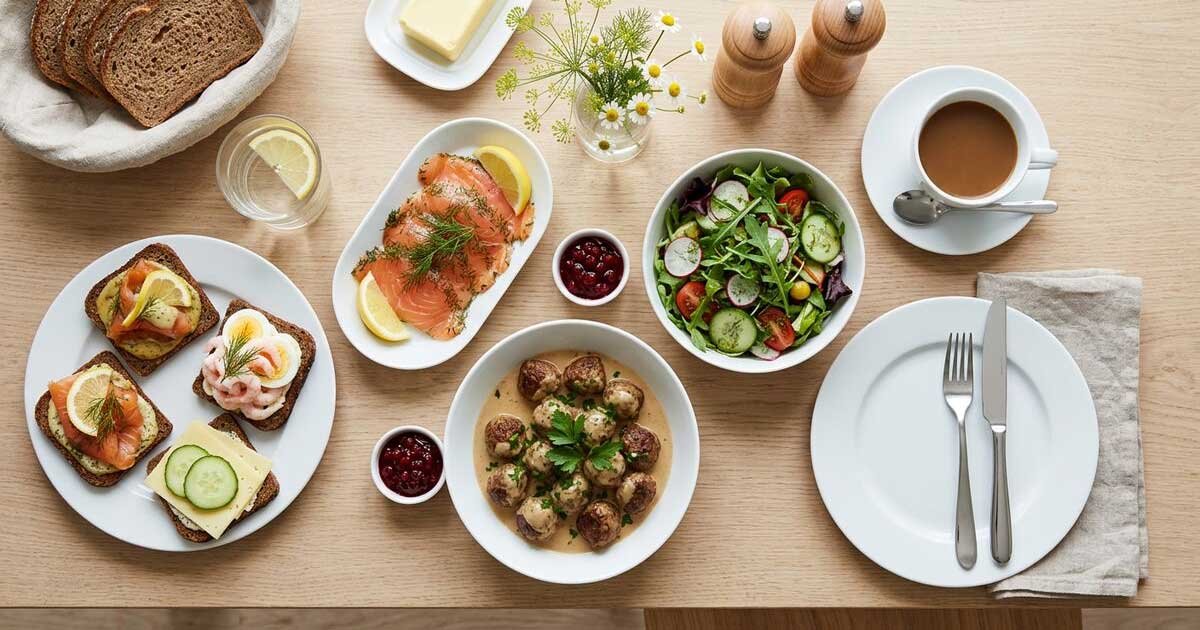
Traditional Swedish bjudlunch often features accessible, satisfying foods that don’t dominate the experience. The meal supports conversation; it doesn’t become the conversation.
Classic Swedish Bjudlunch Foods:
- Smörgås: Open-faced sandwiches with various toppings (shrimp, egg, roast beef)
- Gravlax: Cured salmon with mustard-dill sauce
- Köttbullar: Swedish meatballs with lingonberry
- Seasonal salads: Fresh, light, often with dill or radishes
- Simple desserts: Fruit, pastries like kanelbulle (cinnamon roll), or prinsesstårta (princess cake)
- Beverages: Coffee (always), sparkling water, juice, sometimes beer or wine (though alcohol isn’t necessary)
Adaptations for Non-Swedish Settings:
Focus on foods that are:
- Easy to eat while conversing (no messy finger foods requiring full attention)
- Moderately portioned (not so heavy that post-lunch productivity crashes)
- Diverse enough to accommodate common restrictions
- Representative of local cuisine (makes non-Swedish bjudlunch feel authentic to its setting)
Step 5: The Day Of
Pre-Arrival Checklist:
- Arrive 5-10 minutes early
- Inform server discreetly you’ll handle the bill (if paying at venue)
- Silence your phone completely
- Mentally review 2-3 conversation starter topics
- Relax—your genuine presence matters more than perfect execution
Conversation Starters That Work:
Opening (First 10 minutes):
- “How’s your week been?” (Broad, invites what they want to share)
- “Did you catch the [recent relevant event]?” (Contextual common ground)
- “I’ve been meaning to ask your thoughts on [topic they know well]” (Shows respect for their expertise)
Middle (Main conversation):
- “What’s exciting you about work lately?” (Positive focus)
- “What challenges are you navigating right now?” (Opens deeper dialogue if rapport is there)
- “What are you looking forward to this season?” (Personal, not intrusive)
Closing (Last 10-15 minutes):
- “This has been really valuable—thank you for making time”
- “I’d love to continue this conversation” (If true)
- “How can I support you with [project/goal they mentioned]?” (Concrete offer)
Topics to Approach Carefully:
- Politics, religion, controversial social issues (unless strong rapport exists)
- Gossip about colleagues
- Complaints about company leadership (unless guest initiates and trust is established)
- Deeply personal matters (health crises, family troubles—let them raise if they wish)
Step 6: Follow-Up
Within 24 hours, send a brief message acknowledging the shared experience:
Examples:
“Thanks again for lunch yesterday—I really enjoyed hearing about your approach to the project. Looking forward to seeing how it develops!”
“Yesterday’s conversation gave me a lot to think about. Appreciate you taking the time—let’s do it again soon.”
What Makes Good Follow-Up:
- References specific conversation point (proves you listened)
- Expresses genuine appreciation
- Brief (3-4 sentences maximum)
- Optional next-step suggestion, but no pressure
What to Avoid:
- Immediate requests for favors (undermines the gift nature)
- Long summary of entire conversation
- Pressure to reciprocate
- Generic templates that could apply to anyone
Bjudlunch in Professional Settings: Workplace Applications
The Swedish workplace has mastered something many organizations struggle with: building genuine relationships without forced team-building exercises. Bjudlunch is a cornerstone of this approach.
Common Business Scenarios
1. Onboarding New Employees
First weeks at a new job are overwhelming. Information firehoses. Name-face matching failures. Cultural adjustment. A manager hosting bjudlunch during week two accomplishes what no orientation PowerPoint can: it signals “you matter here as a person, not just a role.”
The informal setting invites questions the new hire might hesitate to ask in the office. It builds rapport that makes future communication easier. It demonstrates the company’s stated values around belonging.
2. Team Building and Collaboration
When teams operate in silos, bjudlunch creates bridges. A product manager treating an engineer to lunch opens channels that Slack threads never will. You discuss the project, sure, but you also discover shared interests, understand each other’s working styles, build trust that smooths future collaboration.
Unlike off-site retreats or elaborate team events, bjudlunch requires minimal logistics. Just time and intention. The simplicity is the strength.
3. Client and Partner Relations
Maintaining client relationships between projects prevents becoming “out of sight, out of mind.” Quarterly bjudlunch keeps connections warm without the pressure of active proposals. You’re demonstrating appreciation, not angling for immediate business.
The low-key nature of bjudlunch often works better than formal business dinners, which carry heavier expectations. A lunch says “I value our professional relationship.” A dinner sometimes says “I’m trying very hard to impress you,” which can feel awkward.
4. Mentorship and Career Development
The mentor-mentee relationship thrives on trust and candor. Office meetings, even behind closed doors, carry formality. Bjudlunch creates psychological distance from workplace dynamics. The mentee feels safer asking sensitive questions: “How do I handle this difficult colleague?” “Am I on track for promotion?” “Should I consider external opportunities?”
For mentors, treating mentees to regular bjudlunch demonstrates investment beyond checkbox obligation.

The Business Case for Corporate Bjudlunch Programs
HR leaders and finance departments think in metrics. Here’s the business logic:
ROI Considerations:
- Retention: Exit interviews consistently cite feeling undervalued as a top departure reason. Regular bjudlunch from managers combats this directly. Cost of one lunch: €30-40. Cost of replacing an employee: 50-200% of annual salary.
- Collaboration Quality: Teams with stronger interpersonal relationships deliver projects faster with fewer communication errors. McKinsey research shows high-trust teams are 2.5x more productive.
- Early Problem Detection: Issues surface in informal conversations before they become crises. A project derailing gets mentioned over lunch when it wouldn’t yet warrant a formal meeting.
| Team-Building Approach | Cost Per Person | Time Investment | Relationship Depth |
|---|---|---|---|
| Off-site retreat | €200-500+ | Full day | Moderate (large groups dilute intimacy) |
| Team-building workshop | €100-300 | Half day | Low to Moderate |
| Happy hour drinks | €20-40 | 1-2 hours | Moderate (alcohol complicates some situations) |
| Bjudlunch | €25-40 | 60-75 minutes | High (small groups, focused conversation) |
Integration with HR Initiatives:
Forward-thinking companies formalize bjudlunch:
- Manager training includes bjudlunch best practices
- Budget allocation for monthly team lunches
- New hire onboarding includes welcome bjudlunch with manager and peer buddy
- Quarterly skip-level bjudlunch (employees lunch with their manager’s manager)
The Swedish tech company Spotify reportedly encourages managers to maintain regular bjudlunch rotations with direct reports, seeing it as preventive maintenance for team health.
Bjudlunch Across Cultures: Adapting the Tradition Globally
Can Non-Swedes Practice Bjudlunch?
Absolutely. While the term is Swedish, the underlying principles—generosity, connection, intentionality—translate universally. You don’t need Swedish citizenship to treat someone to lunch with genuine care.
Adaptation Tips:
1. Be Explicit About Your Intention
In Sweden, “jag bjuder” clearly communicates the host will pay. In cultures where bill-splitting is default, you need explicit phrasing: “I’d like to take you to lunch—my treat” or “Lunch is on me.” Clarity prevents awkward bill arrival moments.
2. Adjust Formality to Local Norms
Japanese business culture requires more formality than Swedish casualness. In Tokyo, bjudlunch might happen at a more upscale establishment with greater attention to seating protocol. In Australia, a relaxed café perfectly fits the culture’s informality. The spirit remains; the execution adapts.
3. Respect Local Dining Customs
In some Middle Eastern cultures, insisting on treating someone is expected hospitality, and guests may initially decline (protocol) before accepting. Know the dance. In the U.S., splitting bills is so default that you might face more initial resistance to your treating—persist politely once, then let it go.
4. Choose Appropriate Venues
What constitutes a “lunch restaurant” varies enormously. Research what locals consider normal for daytime professional meals. Following local norms prevents both under- and over-shooting appropriateness.
Similar Traditions Around the World
Bjudlunch isn’t unique—versions exist globally, each reflecting local values:
| Culture | Tradition | Core Principle | Key Difference from Bjudlunch |
|---|---|---|---|
| Japan | Gochisosama / Nomikai | Host treats to honor guests or strengthen team bonds | Often involves dinner and alcohol; more hierarchical |
| Mexico | “Te invito” culture | Inviter pays as expression of warmth and hospitality | Can apply to any meal/outing, not lunch-specific |
| Italy | “Offro io” (I’m offering) | Treating friends/colleagues as pride and generosity | Often spontaneous; less formalized than bjudlunch |
| Middle East | Hospitality obligations | Hosting as fundamental social duty | Refusing is difficult; complex reciprocity expectations |
| South Korea | Jeong culture | Building emotional connection through gestures | Age/status hierarchy determines who pays |
What Makes Bjudlunch Distinctive:
- Emphasis on equality despite paying (Swedish jämlikhet)
- No pressure to reciprocate immediately
- Intentional relationship focus (not spontaneous)
- Modest execution (lagom over extravagance)
- Applicable across personal and professional contexts seamlessly
Making Bjudlunch Work in Your Culture
For U.S. Professionals:
Frame it within existing mentorship or team-building language. “I’d like to take you to lunch to catch up” is culturally familiar. The treating aspect might surprise, but Americans appreciate directness: “And lunch is on me—I insist.”
For UK Colleagues:
British culture values understatement. “Fancy a lunch? I’ll get this one” works. Don’t over-explain or make grand gestures—British sensibilities prefer low-key generosity.
For Asian Contexts:
Understand hierarchical expectations. Junior treating senior might be culturally unusual. Adapt bjudlunch to fit: managers treat team members, companies treat clients, but reverse flows differently than in egalitarian Sweden.
For Latin American Teams:
The warmth and relationship focus align naturally. Emphasize the connection aspect over transactional networking. Latin cultures already value relationship-first business—bjudlunch formalizes what feels instinctive.
Universal Principle:
Regardless of culture, the question is: “Does treating someone to lunch as an act of relationship investment make sense here?” If yes, bjudlunch works. Adapt the execution, preserve the spirit.
Virtual and Hybrid Bjudlunch: Modern Adaptations
Remote work challenges traditional bjudlunch, but Swedish ingenuity has adapted the tradition for distributed teams.
Making It Work for Remote Teams
Virtual Bjudlunch Model:
- Send meal credit or gift card to your invitee for local food delivery (Uber Eats, DoorDash, etc.)
- Schedule video call during mutually convenient lunch hour
- Both order food that arrives around call time
- Share the meal virtually, cameras on, eating together
The gesture maintains bjudlunch’s core: you’re covering the cost, creating shared experience, focusing on conversation.
Execution Tips:
- Send meal credit 2-3 days before scheduled lunch (allows planning)
- Specify amount that comfortably covers meal + tip (€25-30 in most markets)
- Frame it: “I’d like to treat you to virtual lunch inspired by Swedish bjudlunch tradition”
- Keep video call to 45-60 minutes (shorter than in-person due to screen fatigue)
Platform Recommendations:
- Zoom or Google Meet for reliability
- Enable waiting room so you can check setup before guest joins
- Use virtual backgrounds sparingly (can be distracting during meals)
- Test audio beforehand—good sound quality matters for conversation
Hybrid Models: Best of Both Worlds
Scenario 1: Partially Remote Team
Some colleagues work in-office, others distributed. Host in-person bjudlunch for local team members, send meal credits to remote members, and include everyone via video setup at the table. This requires:
- Clear audio setup (omnidirectional microphone, not laptop mic)
- Camera positioned so remote attendees see everyone
- Conscious inclusion effort (don’t let in-person people dominate conversation)
Scenario 2: Rotating In-Person Gatherings
Quarterly or monthly, bring distributed teams together for in-person bjudlunch when possible. The rarity makes the gathering more special. Between in-person meetings, maintain connection through virtual bjudlunch.
Scenario 3: Async Bjudlunch
For globally distributed teams across incompatible time zones: send meal credit with personal note explaining bjudlunch tradition. Schedule separate async connection (recorded video messages, collaborative document where you share thoughts). Less ideal than synchronous conversation, but preserves generosity gesture.
Maintaining Authenticity Virtually
Virtual bjudlunch faces skepticism: “It’s not the same as in-person.” True. But “not identical” doesn’t mean “not valuable.”
Keys to Authentic Virtual Bjudlunch:
- Minimize formality: This isn’t a business presentation. Eating on camera should feel normal, not performative.
- Embrace imperfection: Kids interrupting, delivery arriving late, messy sandwich eating—these human moments build connection.
- Focus on presence: Eliminate other tabs/distractions. Virtual bjudlunch with divided attention defeats the purpose.
- Share meal experiences: “What did you order?” becomes part of the conversation. Food remains a connector even when not shared physically.
What Companies Are Doing:
- GitLab, a fully remote company, allocates stipends for team members to host virtual bjudlunch with colleagues
- Buffer includes “coffee/lunch dates” in remote onboarding, explicitly inspired by Swedish workplace culture
- European startups with hybrid teams report virtual bjudlunch as surprisingly effective retention tool
The traditional Swedish café experience might be out of reach for distributed teams. But the essence—intentional time, covered cost, relationship focus—absolutely translates.
Common Questions About Bjudlunch (FAQ)
Who is expected to pay for bjudlunch?
The person who extends the invitation—the host—pays. This is fundamental. When someone says “I’d like to take you to lunch” or “jag bjuder” in Swedish, they’re declaring intention to cover the cost. Handle payment discreetly: notify the server beforehand or excuse yourself briefly to settle the bill. Smooth, unobtrusive payment maintains the relaxed atmosphere.
Do I need to reciprocate if someone treats me to bjudlunch?
No formal obligation exists. Bjudlunch operates on gift economy principles, not tit-for-tat transactions. If you wish to reciprocate naturally down the road—perhaps a few months later you host them—that’s lovely. But immediate reciprocation isn’t expected and can actually undermine the gift’s spirit. Genuine gratitude is the appropriate response, not scrambling to “pay back.”
How long should a bjudlunch last?
Typically 60 to 75 minutes. This timeframe allows meaningful conversation without consuming entire afternoons. Some casual bjudlunch might be 45 minutes; special occasions could extend to 90 minutes. The key is respecting everyone’s time—bjudlunch strengthens relationships partly because it’s bounded and considerate.
Can I decline a bjudlunch invitation?
Yes, politely and graciously. You might say: “Thank you so much for the invitation! Unfortunately I’m not available Thursday, but I’d love to find another time if you’re open to it.” If you’re genuinely not interested, a kind decline is better than reluctant acceptance: “I really appreciate the offer. Right now my schedule is quite packed, but thank you for thinking of me.”
What should I wear to bjudlunch?
Smart casual is the standard. Match or slightly elevate your typical work attire. Think: clean jeans or slacks, collared shirt or neat blouse. No need for full business formal unless it’s a particularly important occasion or your industry demands it. The goal is looking put-together without seeming like you’re attending a board meeting.
Is bjudlunch only for professional settings?
Not at all. While commonly practiced in Swedish workplaces, bjudlunch works beautifully for friendships, welcoming new neighbors, thanking mentors, celebrating personal milestones, or any situation where you want to show appreciation through shared time and generosity. The tradition isn’t confined to office relationships.
Can I host bjudlunch at home instead of a restaurant?
Absolutely. Home-hosted bjudlunch can feel even more personal and welcoming. You’re opening your space, which carries additional warmth. The same core principles apply: you provide the meal, cover costs, focus on connection. Home venues work especially well for dietary restrictions since you control the entire menu.
How do I handle dietary restrictions?
Ask about dietary needs when extending the invitation: “Any dietary restrictions or preferences I should know about?” Then choose a venue with diverse options or, if hosting at home, plan an accommodating menu. Thoughtful consideration of restrictions demonstrates care—core to being a good host. When in doubt, ask specifically rather than assuming.
What topics are appropriate for bjudlunch conversation?
Start with neutral, positive topics: recent projects, seasonal observations, shared professional interests, hobbies, travel, positive personal experiences. Avoid controversial subjects like politics or religion unless you have strong established rapport. Let conversation flow naturally—if it drifts toward deeper topics organically and both parties are comfortable, that’s fine. But don’t force heavy discussions.
Is bjudlunch tax-deductible as a business expense in Sweden?
Often, yes. In Sweden, business meals serving clear professional purposes—client meetings, employee development, professional networking—can qualify as representation expenses (“representation”) for tax purposes. Documentation matters: note the business purpose, attendees, and amount. Consult a tax professional for specific guidance, as rules vary by country and situation.
What if someone insists on splitting the bill or paying?
Politely but firmly maintain your role as host: “I invited you, so this is my treat. Please let me enjoy hosting you.” Most people will accept graciously. If they persist once more, you might add: “Perhaps you can host next time we meet”—but only if you mean it, not as obligation creation. Usually, clear kind insistence resolves the matter. The guest should ultimately respect your clearly stated intention.
Conclusion: Why Bjudlunch Matters in Our Connected World
We live in an era of connection abundance and relationship scarcity. LinkedIn networks swell into the thousands. Zoom meetings fill calendars back-to-back. Yet meaningful professional relationships—the kind where you actually trust someone, where collaboration feels natural, where you’d pick up the phone when facing a challenge—those remain rare.
Bjudlunch offers an antidote.
It’s radically simple: share a meal, cover the cost, focus on the human across from you. No agenda beyond connection. No metrics to track. Just intentional time invested in relationship.
The Swedish wisdom here isn’t complex. It’s that consistent small acts of generosity, stripped of obligation and expectation, build trust more effectively than elaborate team-building exercises or transactional networking. It’s that equality matters—regardless of title, you sit across from someone as a person, temporarily setting hierarchy aside. It’s that moderation (lagom) creates sustainability—regular modest lunches beat rare extravagant gestures.
For expats navigating Swedish culture: Understanding bjudlunch unlocks how Swedish workplaces actually function beneath their egalitarian surface. Practice it, and you signal cultural fluency.
For leaders seeking team cohesion: Bjudlunch costs less than most corporate initiatives while delivering superior relationship ROI. Make it a management practice, not a special event.
For anyone building professional networks: Stop collecting business cards and LinkedIn connections. Start treating thoughtfully selected people to lunch with genuine curiosity about them. Watch what happens.
The tradition adapts. Virtual bjudlunch for remote teams. Cross-cultural versions honoring local customs. Home-hosted intimate gatherings. The packaging changes; the essence persists: generosity, connection, presence.
Try it this week. Identify one person—colleague, client, friend, mentor—whose relationship you value. Invite them to lunch. Insist on treating. Be present. Listen well. See what shifts.
That’s bjudlunch. That’s how Swedes have strengthened relationships for generations. And in our fragmented, screen-mediated world, that human ritual feels more valuable than ever.
Now it’s your turn to practice this timeless tradition.