
A single misplaced fence post can turn a friendly neighbor into a legal adversary, and a property line dispute can slash your home’s resale value by thousands of dollars. According to the American Land Title Association, boundary conflicts are among the most common—and most emotionally draining—issues homeowners face. Knowing how to handle a dispute over property boundaries is not just about protecting your land; it’s about preserving your peace of mind and your wallet. This 7-step action plan provides a clear, chronological roadmap that covers what most guides leave out: a realistic timeline, a detailed cost breakdown for surveys, mediation, and legal fees, and the digital tools—from county GIS portals to apps like LandGlide—that can help you research the issue before you ever pick up the phone. Whether you are dealing with an encroaching driveway, a disputed tree line, or the threat of an adverse possession claim, this plan walks you through every stage, from the first difficult conversation to the final legal documentation.
7-Step Action Plan to Resolve a Property Boundary Dispute
According to property management Bellevue WA, resolving a property boundary dispute follows a predictable escalation path. Most conflicts de-escalate with a calm conversation or a professional survey. A small percentage reach court. This timeline gives you realistic expectations for each stage, including what it costs and how long it typically takes.
Step 1: Day 1–3 – Have a Friendly Conversation
Start with a face-to-face chat before anything becomes formal. Knock on the door at a reasonable hour, not when you’re angry. Lead with curiosity, not accusation.
Try an opening like: “Hey, I noticed the new fence went up and wanted to check in — I pulled my survey and it looks like there might be a discrepancy. Can we compare notes?”
Keep it short. 10–15 minutes max. Your goal is information exchange, not resolution. Listen more than you talk. Many boundary disputes start from honest mistakes — a contractor misread a plat map, or the previous owner gave verbal permission for an encroachment. A friendly conversation resolves roughly 30% of disputes before they escalate, according to the American Bar Association (2023).
Step 2: Day 4–10 – Gather Your Evidence
Collect every document related to your property. Start with your deed — look for the legal description, not just the address. Pull your plat map from the county recorder’s office (often free online). Gather any previous surveys, title reports, or closing documents from when you bought the house.
Use digital tools to supplement what you have. County GIS portals show parcel boundaries overlaid on aerial imagery — search “[your county] GIS map” to find yours. Google Earth’s historical imagery feature lets you scroll back years to see where old fences, driveways, or tree lines used to sit. This can reveal whether a boundary marker was moved or an encroachment is recent.
Mobile apps like LandGlide (subscription ~$10/month) and OnX Hunt (focused on rural land, ~$30/year) display parcel lines on your phone. Warning: these apps are for research only. They are not legally binding. They pull from county tax assessor data, which can be off by several feet.
Organize everything in a single folder — digital and physical. Take dated photos of the disputed area from multiple angles. If you have old photos showing the boundary line from years ago, dig those out too.
Step 3: Day 11–20 – Send a Formal Letter
If the conversation didn’t resolve things, send a professional written request. This creates a paper trail. Keep it factual and neutral.
Here’s a template:
Dear [Neighbor’s Name],
Following up on our conversation on [date], I’m writing to document my understanding of the property line between [address] and [address]. Based on my deed and the county plat map, the boundary appears to run [brief description]. I’ve attached copies of these documents for your reference.
I’d like to suggest we jointly hire a licensed surveyor to confirm the line. If you’re open to this, I’ll get quotes and share them with you.
Please respond by [date, 7–10 days out]. I value our relationship and hope we can resolve this amicably.
Sincerely,
[Your Name]
Send it certified mail with return receipt requested. The receipt proves they received it. Keep a copy for your records.
Step 4: Day 21–45 – Hire a Surveyor
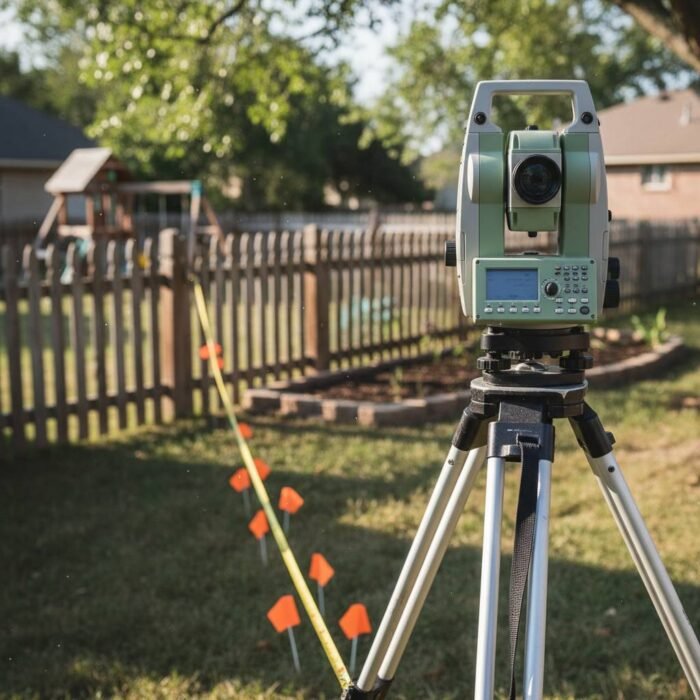
A licensed land surveyor is the only person who can legally determine a property boundary. This is not optional if you plan to take legal action later.
Cost breakdown for a boundary survey:
| Lot Size | Typical Cost Range |
|---|---|
| Small urban lot (under 0.25 acres) | $350 – $600 |
| Standard suburban lot (0.25–1 acre) | $500 – $1,000 |
| Large rural parcel (1–10 acres) | $800 – $1,500+ |
| Complex boundary (heavily wooded, steep terrain) | $1,200 – $3,000+ |
Choose a surveyor who is licensed in your state and carries professional liability insurance. Ask for references from recent boundary dispute work. The survey typically takes 1–3 weeks depending on the surveyor’s schedule and property complexity.
If your neighbor agrees to split the cost, get that agreement in writing. If they refuse, you pay for the survey yourself, it’s still cheaper than litigation.
Step 5: Day 46–60 – Try Mediation
Mediation brings in a neutral third party to help you and your neighbor reach a voluntary agreement. It’s not binding unless you both sign. Mediators don’t decide who’s right, they facilitate conversation.
Mediation costs run $300–$500 per hour, typically split between both parties. Most boundary disputes require 2–4 hours total, so expect to pay $600–$2,000 if you’re covering your half. Many community mediation centers offer sliding-scale fees based on income.
Mediation works well for disputes involving encroachment vs. trespass, where the neighbor built a structure that slightly overlaps your property but didn’t intend to steal land. The mediator helps you explore creative solutions: a land swap, an easement, or a monetary settlement for the encroached area.
According to the American Arbitration Association (2024), mediation resolves approximately 75–80% of neighbor disputes that reach this stage. It preserves relationships better than court.
Step 6: Day 61–90 – Consult a Real Estate Attorney
If mediation fails or the neighbor refuses to participate, it’s time for legal counsel. A real estate attorney specializing in property disputes can evaluate your case and advise on next steps.
Attorney cost ranges:
| Service | Typical Cost |
|---|---|
| Initial consultation (1 hour) | $250 – $600 |
| Retainer for boundary dispute | $2,000 – $5,000+ |
| Hourly rate (ongoing) | $250 – $600/hour |
You need an attorney when: the neighbor has filed an adverse possession claim against your land, the encroachment is significant (more than a few feet), or the neighbor has already hired a lawyer. You also need one if the dispute involves a quitclaim deed for boundary line resolution, an attorney drafts and reviews that document.
Bring your deed, survey, photos, the formal letter, and any mediation notes to the first meeting. The attorney will assess the strength of your case and explain your options.
Step 7: Day 90+ – File a Lawsuit (Last Resort)
Litigation is expensive, time-consuming, and emotionally draining. It should be your last option. But when a neighbor refuses a survey, ignores mediation, or actively takes your land, court may be the only path.
Court filing fees range from $150 to $500 depending on your state and the type of action. The most common lawsuit for boundary disputes is a quiet title action, a legal proceeding that asks the court to determine who owns the disputed land. The judge reviews deeds, surveys, and testimony, then issues
Digital Tools & Technology for Property Line Research
Before you call a surveyor, free digital tools can help you investigate a potential boundary issue from your living room. County GIS portals, Google Earth historical imagery, and mobile apps like LandGlide and OnX Hunt provide valuable visual evidence. However, these tools are for research only—they are not legally binding and cannot replace a licensed surveyor’s work.
Free Online Resources
Start with your county’s GIS (Geographic Information System) portal. Most counties in the U.S. provide free online parcel maps showing property lines, tax lot numbers, and owner names. Simply search “[your county name] GIS map” to find the portal.
Google Earth’s historical imagery feature is another powerful tool. You can scroll back decades to see where old fences, tree lines, or driveways once stood. According to the American Society of Photogrammetry and Remote Sensing (2023), historical aerial photos can help establish long-term use patterns relevant to adverse possession claims. County assessor websites also offer property records and plat maps for free download.
Mobile Apps for Property Lines
Several mobile apps bring property data to your phone. LandGlide provides parcel boundaries and ownership data for most U.S. counties through a subscription ($9.99/month or $99.99/year). OnX Hunt, designed for hunters, shows property boundaries on public and private land with high accuracy in rural areas.
| App | Best For | Cost | Accuracy Limit |
|---|---|---|---|
| LandGlide | Suburban/urban parcels | $9.99/month | ±10–20 feet; varies by county |
| OnX Hunt | Rural land boundaries | $29.99/year | ±5–15 feet; best in surveyed areas |
| County GIS Portal | Official parcel data | Free | ±10–50 feet; depends on county |
When to Trust (and Not Trust) Digital Data
Digital tools are excellent for spotting red flags—like a fence that clearly crosses a parcel line on the GIS map—but they are not survey-grade. GPS accuracy on smartphones typically ranges from 15 to 30 feet, which is far too imprecise for legal boundary decisions. A formal survey, accurate to within an inch or two, remains the only acceptable evidence in court. Use apps to gather initial evidence and prepare for a conversation with your neighbor, not to settle the dispute.
Cost Breakdown of Each Resolution Method
Resolving a boundary dispute costs anywhere from a few hundred dollars to tens of thousands, depending on the path you choose. The table below breaks down the typical price range for each method, helping you budget realistically before committing to a course of action.
| Resolution Method | Typical Cost Range | Key Details |
|---|---|---|
| Property Survey | $350 – $1,200+ | Varies by lot size, terrain, and region; rural or wooded lots cost more |
| Mediation | $300 – $500 per hour | Sessions typically last 2–4 hours; total $600–$2,000 |
| Real Estate Attorney | $250 – $600 per hour; retainer $2,000–$5,000 | Retainer covers initial research and demand letters; trial costs extra |
| Court Filing Fees | $150 – $500 | Filing a quiet title action or trespass lawsuit; county fees vary |
Survey Costs, $350–$1,200+ Depending on Lot Size and Region
A licensed surveyor is the only person who can legally determine your property line. According to the American Land Title Association (2024), a standard residential survey for a quarter-acre lot in a suburban area averages $500–$800. Complex boundaries—heavily wooded lots, irregular shapes, or rural acreage—can push the cost past $1,200.
Always ask for a written quote upfront. Some surveyors charge a flat fee; others bill by the hour at $100–$200 per hour.
Mediation Fees, $300–$500 per Hour, Typically 2–4 Hours Total
Mediation for neighbor disputes is significantly cheaper than litigation. A certified mediator charges $300–$500 per hour, and most boundary disagreements resolve in one to two sessions (2–4 hours total). That puts the total cost between $600 and $2,000—a fraction of what a lawsuit would cost.
Many community mediation centers offer sliding-scale fees based on income. Check with your local bar association or a nonprofit like the National Association for Community Mediation for low-cost options.
Attorney Costs, $250–$600/Hour; Retainer $2,000–$5,000
Real estate attorneys typically require a retainer before starting work. For a boundary dispute, that retainer usually falls between $2,000 and $5,000, covering initial research, deed review, and a demand letter. If the case escalates to litigation, hourly billing continues at $250–$600 per hour.
According to a 2023 survey by the American Bar Association, real estate litigation costs in contested boundary cases average $15,000–$25,000 when taken to trial. Settling early—through mediation or a mutual boundary agreement—dramatically reduces this figure.
Court Filing Fees, $150–$500 for Quiet Title or Trespass Lawsuits
Filing a lawsuit is the most expensive route, but the initial court costs are modest. Filing a quiet title action or trespass complaint costs $150–$500, depending on your county. That fee covers only the paperwork—not attorney time, expert witness fees, or trial costs.
If you win, the judge may order the losing party to reimburse your filing fees and some legal costs. However, there is no guarantee of recovery, and the risk of owing the other side’s fees exists if you lose.
Post-Resolution Legal Documentation
A verbal handshake or a text message exchange does not legally change a property line. To make a resolved boundary official and prevent future disputes, you must document the agreement in a legally binding format and record it with the county. Without this step, the original deed descriptions remain in effect, and either party could later file an adverse possession claim against the other. According to the American Land Title Association (2024), unrecorded boundary agreements are a leading cause of title defects discovered during real estate transactions.
Drafting a Mutual Boundary Agreement
A mutual boundary agreement is a written contract between adjacent landowners that formally acknowledges where the property line sits. The document must include a clear legal description of the new line (often referencing the surveyor’s plat map), the parcel identification numbers for both properties, the signatures of all owners, and a notarization block. Both parties should sign in the presence of a notary public to validate the document for recording. This agreement does not transfer ownership, it simply confirms the existing boundary location, making it harder for either side to later claim adverse possession.
Recording a Quitclaim Deed for the Boundary Line
If the resolution involves one neighbor giving up a sliver of land to the other, a quitclaim deed is the proper instrument. The grantor signs over whatever interest they have in that specific strip of land, no warranty of title is made, only a transfer of current ownership rights. County recorder offices charge a filing fee typically between $20 and $100, depending on the jurisdiction and number of pages. Once recorded, the new deed becomes part of the public record, and the county assessor can update the parcel boundaries accordingly.
Why This Matters
Formal documentation prevents future confusion and blocks adverse possession claims. In most states, adverse possession requires open, continuous, and hostile use of land for a statutory period (typically 5 to 21 years). A recorded boundary agreement or quitclaim deed resets that clock by establishing the owner’s explicit permission. It also protects future buyers: a title search will reveal the recorded document, preventing surprises during a home sale. Skipping this step leaves the resolution vulnerable to memory lapses, new owners, or legal challenges years down the road.
Frequently Asked Questions
How do you settle a boundary dispute?
Most boundary disputes are settled without a lawsuit through a progression of five steps: a direct conversation with your neighbor, a formal written request, a professional land survey, mediation, and finally a written agreement. According to the American Bar Association (2024), roughly 80% of property line disagreements reach resolution at the mediation stage or earlier. The key is moving through each step deliberately, documenting everything, and never skipping directly to litigation without first attempting negotiation.
What happens if a neighbor builds a fence on your property?
A fence built on your land is an encroachment, and you have legal options ranging from a friendly request to a lawsuit for trespass. The critical factor is timing: if you knowingly allow the fence to remain for the statutory period (typically 7–21 years depending on state law), your neighbor could potentially claim ownership through adverse possession. Send a certified letter documenting the encroachment as soon as you discover it, even if you plan to resolve things amicably.
Can I remove a tree on my neighbor’s property line?
You cannot legally remove a tree that straddles a property line without your neighbor’s written permission, even if branches overhang your side. Boundary trees are jointly owned by both property owners under common law in most states. You may trim branches or roots that cross onto your property, but only up to the property line and only if the trimming doesn’t harm the tree’s health. Cutting down a boundary tree without consent can result in damages of up to triple the tree’s value in some jurisdictions.
How much does a property line survey cost?
A professional boundary survey typically costs between $350 and $1,200 for a standard residential lot, with rural or heavily wooded properties often exceeding $2,000. The price depends on lot size, terrain difficulty, and local surveyor rates. According to the National Society of Professional Surveyors (2025), the average cost for a single-family residential lot in the United States is approximately $650. Always request a written quote that specifies what the survey includes, some surveyors charge extra for placing permanent boundary markers.
| Resolution Method | Typical Cost Range | Time Required | Best For |
|---|---|---|---|
| Friendly conversation | $0 | 1–3 days | Minor misunderstandings |
| Boundary survey | $350–$1,200 | 2–4 weeks | Uncertain property lines |
| Professional mediation | $300–$500/hour | 2–4 hours | Stalemated negotiations |
| Real estate attorney | $2,000–$5,000 retainer | 1–3 months | Complex legal disputes |
| Lawsuit (quiet title) | $150–$500 filing + legal fees | 6–18 months | Last resort only |
Do I need a lawyer for a property line dispute?
You do not need a lawyer for the early stages of a boundary dispute, conversations, evidence gathering, and mediation can all proceed without legal representation. However, you should consult a real estate attorney if the dispute involves an existing structure, if your neighbor has filed a lawsuit, or if the value of the disputed land exceeds $10,000. Many attorneys offer a 30-minute initial consultation for $100–$250, which is money well spent to understand your legal position before escalating further.
Conclusion
Property boundary disputes rarely vanish on their own. The seven-step action plan outlined here gives you a clear path forward, starting with a calm conversation and ending with legal action only as a last resort. Most conflicts can be resolved before reaching Step 6 or 7, saving both relationships and thousands of dollars in legal fees.
Digital tools like county GIS portals and mobile apps such as LandGlide provide a solid starting point for research, but they are not legally binding. A licensed surveyor’s report remains the gold standard for settling questions about encroachment vs. trespass. According to the American Land Title Association (2025), unresolved boundary issues are a leading cause of title defects during property transactions.
For homeowners and investors alike, the smartest move is to act early, document everything, and lean toward mediation before litigation. A mutual boundary agreement or quitclaim deed for the boundary line can formally resolve the issue and prevent future adverse possession claims. If the situation feels overwhelming, consult a real estate attorney, the cost of a consultation is far less than the cost of a lawsuit.
Quick-Reference: Resolution Methods at a Glance
| Method | Typical Cost | Timeline | Best For |
|---|---|---|---|
| Friendly conversation | $0 | Day 1–3 | Minor misunderstandings |
| Formal letter | $0–$10 | Day 4–10 | Documenting your position |
| Professional survey | $350–$1,200+ | Day 11–45 | Establishing legal boundaries |
| Mediation | $300–$500/hour | Day 46–60 | Preserving neighbor relationships |
| Attorney consultation | $250–$600/hour | Day 61–90 | Complex or escalated disputes |
| Lawsuit (quiet title) | $150–$500 filing fee + attorney | Day 90+ | Last resort, high-stakes cases |