
Your dog won’t stop licking the same raw spot, and you’re both losing sleep. You’ve tried “grain-free,” “limited-ingredient,” even prescriptions, yet the itch still flares.
A 2018 review in the Journal of Veterinary Dermatology reports that beef, chicken, and dairy trigger roughly 70 percent of confirmed canine food allergies. When those proteins stay in the bowl, no medicated shampoo can win.
So let’s delete them in one move. A complete, AAFCO-balanced vegan recipe swaps meat for clean plant proteins, giving the immune system space to heal.
Thousands of pet parents already pour these meals and watch the scratching fade. In this guide, we’ll show you how to run the diet safely—and what results to expect.
Understanding canine food allergies
A food allergy is your dog’s immune system misreading dinner. Instead of accepting a harmless protein, the body flags it as an invader and launches inflammation that shows up as itchy skin, gunky ears, or loose stools.
Allergies differ from sensitivities. A sensitivity irritates the gut, while an allergy recruits immune cells—so even a crumb of the culprit can restart the itch cycle.
According to a 2019 review in the Journal of Veterinary Dermatology, beef, chicken, and dairy account for roughly 70 percent of confirmed canine food allergies. Those familiar proteins baked into everyday kibble do most of the damage.
Common red flags include:
- Persistent paw-chewing
- Red patches on the belly
- Recurrent ear infections after antibiotics stop
- Soft stools that never quite firm up
Because these signs linger year-round, sprays and pills offer only short relief. Real progress happens in the bowl: remove the trigger or keep chasing it.
Veterinarians therefore reach first for an elimination diet. Feed ingredients the dog has never met for eight to twelve weeks and watch what changes. When the scratching fades, you have the answer.
The hurdle is finding a menu that dodges every usual suspect without blowing the budget. Balanced plant-based formulas do exactly that, sidestepping all common animal allergens in one clean scoop.
Now that we know the enemy and the strategy, let’s look at how an elimination diet works and why a vegan version makes the process simpler.
What an elimination diet is and how it works
Picture an allergy investigation with your dog as the detective and dinner as the clue. An elimination diet removes every familiar ingredient, serves a brand-new recipe, and watches the body’s reaction.
Veterinary dermatologists consider it the gold standard. A 2020 consensus from the American College of Veterinary Dermatology advises feeding one carefully selected food for eight to twelve weeks and nothing else—not chicken-flavored pills, cheese cubes, or peanut butter treats. If the itch fades, you have cracked the case.
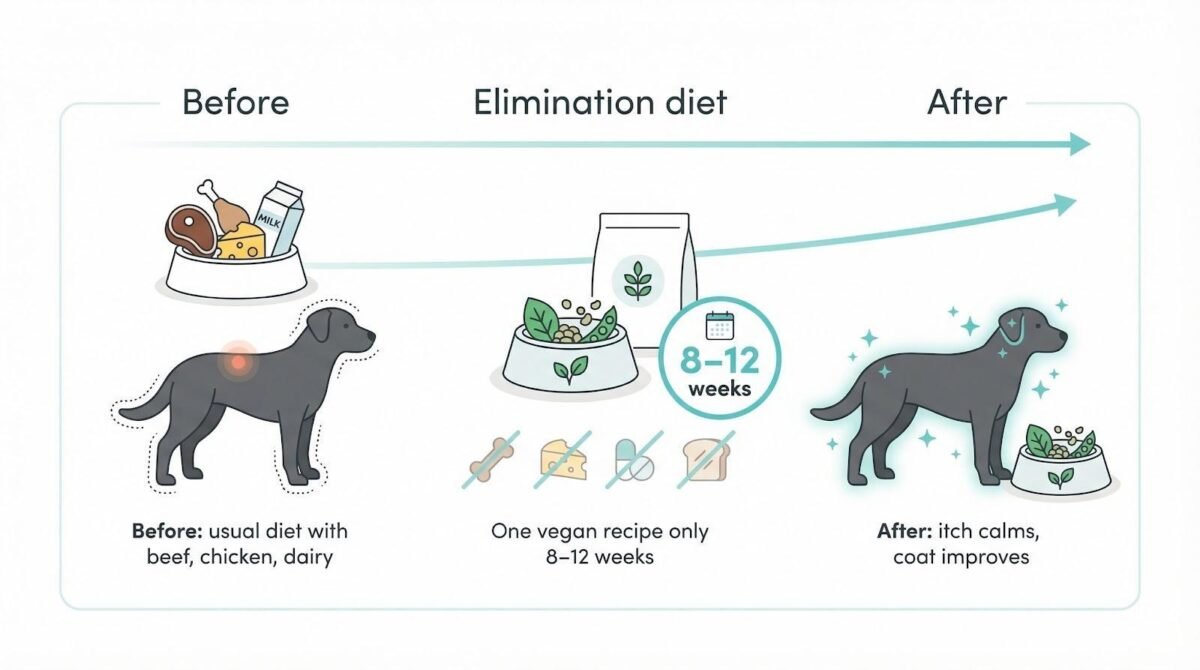
The strict rule matters because even a crumb of the old protein restarts the immune alarm. Consistency lets inflamed skin shed damaged cells, rebuild its barrier, and grow fresh fur.
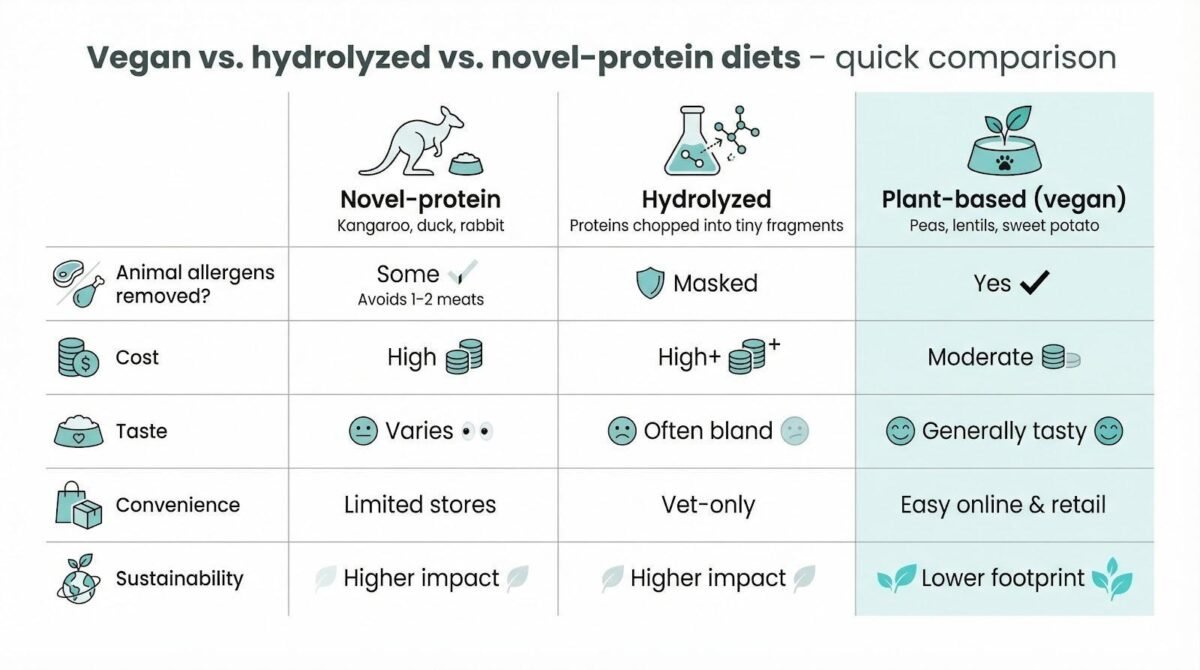
Traditional menus take two paths. Some use a novel meat such as kangaroo, duck, or rabbit that your dog has never tasted. Others rely on hydrolyzed diets in which proteins are chopped into fragments too small for immune patrols to spot.
Both methods can work, yet each has trade-offs. Exotic meats cost more and may bore picky eaters. Hydrolyzed formulas mask allergens but many dogs ignore the bland aroma.
A balanced vegan recipe avoids every common animal allergen in one scoop. The food stays tasty, the price stays predictable, and the same diet can continue once symptoms disappear.
For a real-world example, Bramble offers fresh plant based dog food created by board-certified veterinary nutritionists that meets and even exceeds AAFCO nutrient guidelines, making it a truly hypoallergenic option. Seeing a complete, ready-made formula like this proves how straightforward a vegan elimination diet can be.

Bramble fresh plant-based dog food official product photo
In a 2023 University of Illinois feeding trial, Bramble’s pea- and lentil-based meals delivered over 80 percent digestibility for every essential amino acid and 94 percent for fat—numbers that matched or beat a premium chicken kibble while sidestepping all common allergens.
Those peer-reviewed results are posted in full on Bramble’s site, so you can download the PDF and give your vet the hard evidence they usually ask for before green-lighting a vegan elimination trial.
Now that you know the rules, let’s see why plant proteins calm the immune system and help itchy dogs thrive.
Why a vegan diet can work wonders for allergic dogs
1. It removes the usual suspects in one scoop
Take every ingredient your vet warns about—beef, chicken, dairy, egg—and cross them off the label. That is exactly what a balanced vegan formula does.
Without those animal proteins, the immune response calms down. Skin settles, ears stay dry, and digestion finds its rhythm.
You are not guessing which single meat caused trouble; you are eliminating the entire animal category at once, which makes the trial simpler and more reliable.
Your dog still enjoys hearty protein from peas, lentils, or potato, and those plant sources rarely trigger an immune flare.
2. Novel plant proteins feed muscle without flaring allergies
Protein fuels every wag, leap, and zoomie. Peer-reviewed digestibility trials show pea and lentil isolates reach the bloodstream as efficiently as chicken protein, supporting muscle repair while keeping the immune cells calm.
Because the recipe combines several plants, each fills amino-acid gaps left by the others. Think of it as a relay team handing off the baton until the lap is complete.
The payoff is visible: lean muscle holds steady, energy rebounds, and routine bloodwork stays in the healthy range.
3. Natural anti-inflammatory boosters soothe from the inside
Good nutrition should help the body heal. Plant-based foods build that idea in from the start.
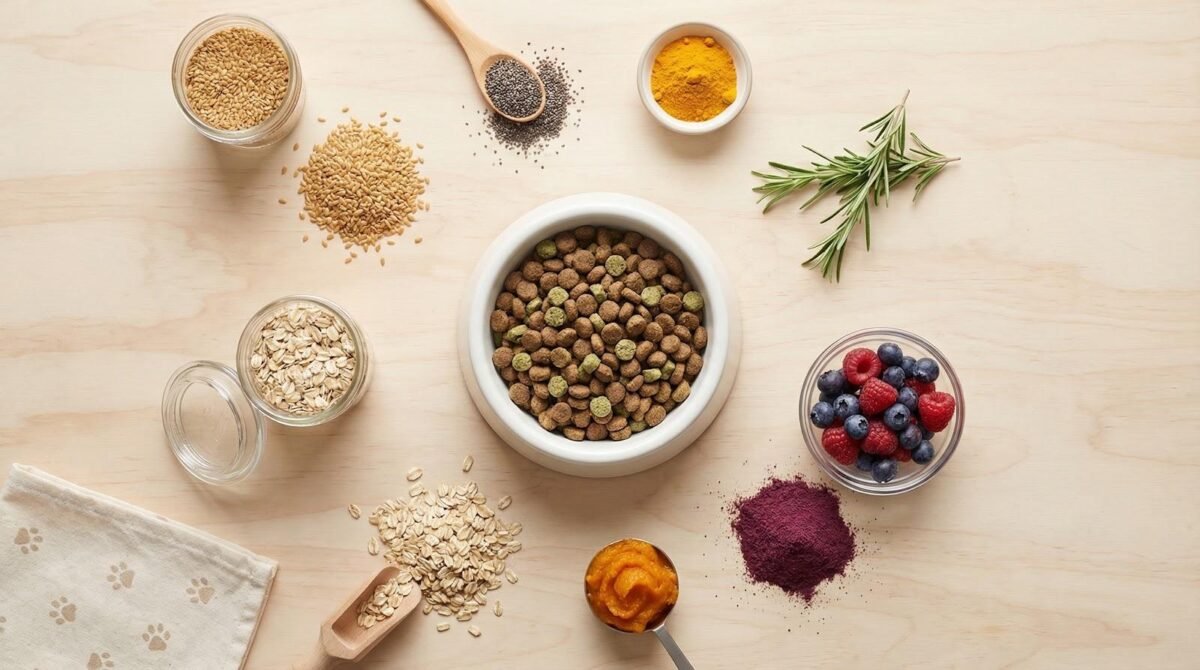
- Flaxseed and chia supply alpha-linolenic acid, a plant omega-3 that strengthens the skin barrier.
- Turmeric, rosemary, and berry powders add antioxidants that dial back redness.
- Fiber from pumpkin and oats feeds friendly gut bacteria, and a balanced microbiome fine-tunes immune signals.
These perks arrive in every bowl. No extra pills required. The diet itself becomes daily skin care while still hitting every nutrient target.
(Next you will see how vegan, hydrolyzed, and novel-meat diets compare side by side so you can choose with confidence.)
Vegan vs. hydrolyzed vs. novel-protein diets – quick comparison
Traditional prescription diets: novel and hydrolyzed
When your vet reaches for a prescription bag, it usually fits one of two profiles.
Novel-protein formulas swap beef or chicken for kangaroo, rabbit, or duck, meats your dog has never tasted.
Hydrolyzed diets keep familiar proteins but break them into fragments too small for immune cells to detect.
Both strategies can silence itching during a strict eight-week trial, which is why they remain staples in dermatology clinics.
Real-world use, however, reveals frustrations.
Exotic meats cost more per meal and often ship only from specialty suppliers. If you run out on a Sunday, local stores rarely stock kangaroo kibble.
Hydrolyzed recipes solve availability yet sacrifice flavour. Chemical processing strips natural aromas, many dogs sniff the bowl and walk away. Owners add broth or cheese, undoing the discipline the trial demands.
Cost adds up quickly. Prescription diets can double the price of premium retail kibble, and long-term use stretches budgets thin.
Effectiveness for diagnosis is reliable, but sustainability and everyday convenience fall short. That context sets the stage for a plant-based alternative.
Plant-based elimination diets: simple, tasty, and sustainable
Now picture a menu that avoids every top allergen without exotic sourcing or heavy processing. A complete vegan formula does exactly that.
Peas, lentils, and sweet potato replace meat and dairy, removing the entire animal-protein category in one scoop. No detective work over which meat is guilty.
Palatability improves too. Whole-food aromas such as peanut, carrot, and nutritional yeast entice picky eaters, so bowls empty without bribery and the trial stays honest.
Cost lands in familiar territory. Premium vegan kibble sits near other specialty foods on the shelf, well below most prescription bags. Fresh, gently cooked options cost more per meal yet skip the veterinary markup.
Accessibility is straightforward. Order online, set auto-delivery, and never scramble for a rare protein. Every bag meets AAFCO standards and is fortified with taurine, B12, and L-carnitine.
Sustainability matters as well. A 2021 University of Oxford analysis found plant protein production generates up to 90 percent fewer greenhouse-gas emissions than beef farming.
Head to head, a balanced vegan diet offers equal diagnostic power, higher taste appeal, easier logistics, and a lighter environmental footprint. For many families, that balance tips the scales.
(With the comparison complete, we will confirm nutrition and safety next.)
Ensuring nutrition and safety on a plant-based diet
Balanced vegan dog food is more chemistry than guesswork. Formulators start with plant proteins rich in lysine and leucine, then add targeted amino acids such as taurine, methionine, and L-carnitine to match AAFCO standards down to the milligram.
Evidence supports that precision. A 2022 peer-reviewed survey of 2,500 dogs found those eating well-formulated vegan diets showed equal or better wellness scores than meat-fed peers, including muscle tone, red-blood-cell counts, and heart markers.
Protein quality also holds its own. Pea and lentil isolates reach digestibility in the high eighties, similar to chicken, so your dog absorbs what goes in the bowl. By blending several plants, their amino-acid profiles mesh into a complete chain with no gaps.
Vitamins B12 and D come from fermentation and algae, while minerals bind to chelates for easy uptake. Every nutrient arrives in a form a dog’s body can use.
Your checklist:
- Look for “Complete and Balanced” plus the correct life-stage on the label.
- Confirm taurine, B12, zinc, and L-carnitine appear in the ingredient list.
- Choose soy-free or grain-free only if your dog has a proven issue with those plants.
After the switch, book a six-week exam. A quick check and optional blood panel confirm weight, stool, and heart health are on track. From there, yearly wellness visits are plenty—the same schedule you would keep on any diet.
In short, follow a reputable brand and feeding guide, and your dog can thrive without the animal ingredients that once fueled the itch cycle.
Step-by-step: switching your allergic dog to a vegan diet
1. Partner with your vet and pick the right food
Schedule a brief consult before you open a new bag. Bring your dog’s history, current meds, and the vegan formula’s nutrient sheet. This paperwork shows the diet meets AAFCO standards and contains taurine, B12, and L-carnitine, easing any concerns.
Choose one food for the entire trial. A fresh meal service or limited-ingredient kibble both work; what matters is zero animal protein and a “Complete and Balanced” claim on the label.
Resist the urge to buy multiple flavours. Sticking to one recipe keeps variables at zero and makes improvements crystal clear.
2. Transition gently over seven days
Swap diets slowly to keep stools firm and appetites strong.
Day 1: mix one spoonful of the new food into the old.
Each day, raise the ratio by about 15 percent until the bowl is all-vegan on Day 7.

A gradual climb lets gut bacteria adapt and gives you an early read on enthusiasm—most dogs finish sooner than you can set the bowl down.
If stool softens, hold the ratio steady for an extra day, then continue. A tablespoon of plain pumpkin adds soluble fibre that firms things up without sabotaging the trial.
When the bowl reaches 100 percent plant-based, clear the pantry of meat treats and flavoured chews. From here your dog’s immune system gets a clean slate.
3. The eight-to-twelve-week elimination phase
Start the clock once the diet is fully switched. Your dog now eats this food—and only this food—for 8–12 weeks.
No flavoured heartworm tablets, pill pockets, or table scraps. Even a crumb of the old protein can restart the immune storm you are trying to calm.
Use the vegan kibble or fresh bites as training treats. For medicine, ask your vet for unflavoured tablets or capsules you can hide in the same food.
Track progress in a simple notebook. Note weekly itch scores, ear smell, and stool firmness. Better yet, snap photos of red paws or bald spots; pictures reveal slow gains our eyes miss.
Most owners notice quieter scratching by week 4, new hair growth by week 6, and cleaner ears by week 8. Remain patient—skin needs time to rebuild its barrier.
If symptoms fade, celebrate but keep the diet locked for the full 12 weeks to cement the result.
(Up next: how to reintroduce foods and maintain long-term relief.)
Beyond diet: supporting your dog’s allergy recovery
Even the best food needs backup. While the new diet calms the immune system, a few simple habits speed skin repair and keep flare-ups away.
- Control the environment. Stay current on flea prevention, vacuum once a week, and wash bedding in hot water to strip pollen and dust mites.
- Choose gentle baths. Use an unscented oatmeal shampoo every two weeks to rinse allergens and soothe skin. Skip perfumes that can undo progress.
- Add probiotics. A canine-specific chew or powder keeps gut bacteria diverse, which in turn fine-tunes immune signals.
- Boost omega-3 intake. Most vegan foods include flax or algae oil; an extra pump of algae-derived DHA can quiet redness during dry seasons.
- Use mild cleaners. Swap harsh chemicals for plant-based products around the house; strong fumes irritate sensitive skin and noses.
Frequently Asked Questions
How long should the elimination diet last?
Veterinary dermatologists recommend keeping the trial strictly plant-based for eight to twelve weeks before reintroducing other foods.
Can a vegan diet give my dog all the protein it needs?
Yes. Pea and lentil isolates reach digestibility levels similar to chicken, and formulating with complementary plant sources provides a complete amino-acid profile that meets AAFCO requirements.
What early signs show the diet is working?
Most owners notice quieter scratching by week four, new hair growth by week six, and cleaner ears by week eight.
Conclusion
Together, these tweaks turn a good diet into a full-circle wellness plan, giving itchy skin every chance to heal.