
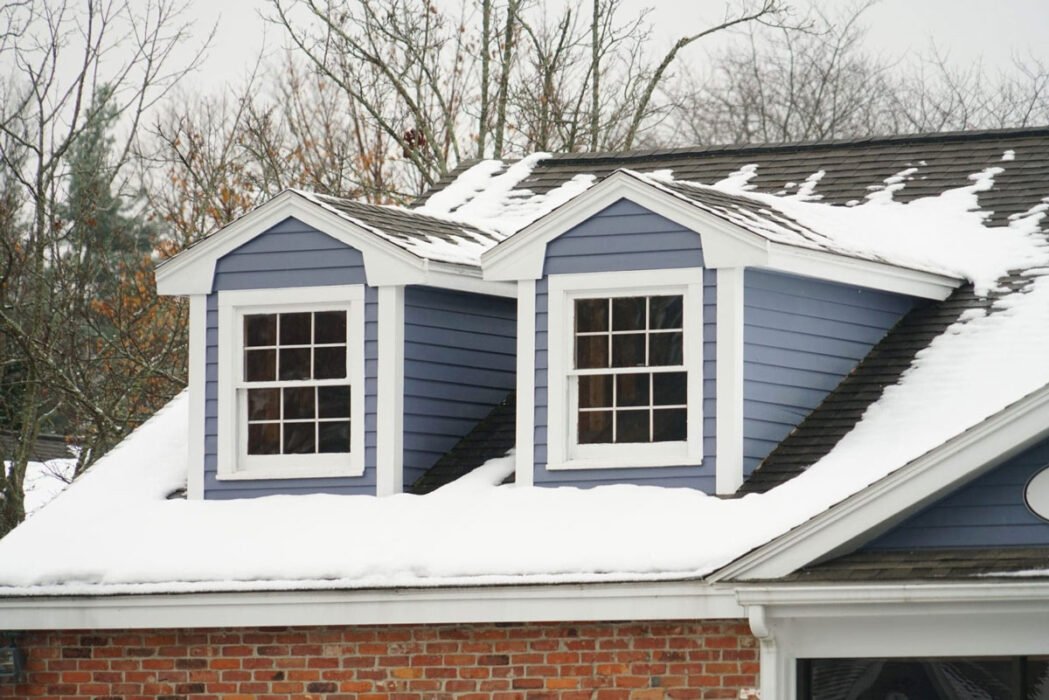
Snow piling up on a roof might not seem urgent, but the weight builds faster than most people expect. In Ohio, repeated snowfalls, ice dams, and steady freeze–thaw swings put constant pressure on roof framing, gutters, and valleys. Long before water drips through a ceiling, small warning signs often appear — a slight dip along the ridgeline, fresh drywall cracks near trusses, or gutter brackets starting to pull loose after a storm.
Catching those changes early helps avoid costly repairs. A few straightforward checks inside the attic and around the roof edge can show if you’re dealing with routine winter wear or active load stress that calls for professional attention.
Structural Stress Signals
Drywall joints near truss intersections tend to show the first clues when snow weight starts pushing on the frame. Check for new cracks wider than 1/8 inch, especially where ceiling lines meet interior walls, and watch for a visible dip along the ridgeline from the street. Older framing can show fresh splitting around metal connector plates, which is a sign the load is working through the wood and hardware, not just the shingles.
Mid-span deflection is one of the clearest ways to verify strain without guessing. Inside the attic, set a straight board across the roof deck and use a tape measure to record the gap at the center of the span. If sag exceeds 1 inch across a 20-foot span after a snowfall, schedule a licensed roofing contractor assessment before the next round of accumulation adds more stress.
Attic Pressure Indicators
Frost forming on the underside of roof decking indicates warm interior air reaching cold sheathing surfaces. Use a bright flashlight to check for frost thicker than 1/4 inch, dark staining between rafters, or damp insulation below. Confirm insulation depth meets approximately R-49, and verify soffit and ridge vents remain unobstructed after snowfall.
Melting frost can drip into insulation, compressing fibers and lowering thermal resistance. Reduced insulation performance increases heat transfer through the roof deck, accelerating snow melt above and refreezing at eaves. Correcting ventilation blockages and insulation gaps limits moisture accumulation and reduces additional structural load caused by repeated freeze–thaw cycles.
Exterior Drainage Failures
Gutters and valleys manage concentrated meltwater during Ohio freeze–thaw cycles. Check gutter hanger spacing and keep brackets no wider than 24 inches apart to limit pullout under ice weight. Look for sections separating from the fascia or bowing along the run. Measure ice accumulation at eaves and in valleys, and treat buildup thicker than 2 inches as concentrated edge loading that increases stress on fasteners and sheathing.
Inspect valley flashing within 36 inches of the centerline for lifted shingles, exposed fasteners, or cracked sealant. Confirm downspouts discharge at least 3 feet from the foundation and remain fully open. Replace undersized 4-inch gutters with 5-inch K-style systems in high-snow regions to increase flow capacity and reduce overflow during rapid melt periods.
Commercial Flat Roof Risks
Low-slope roofs hold snow and meltwater longer because they depend on internal drains, scuppers, or built-in slope to move water off the surface. Inspect the roof 48 hours after snowfall; standing water deeper than 1/2 inch can indicate drainage or compression problems. Check drain strainers for ice blockage and confirm the roof still slopes at least 1/4 inch per foot toward outlets to keep water moving.
If insulation beneath the membrane becomes saturated, it can soften and lose its ability to support weight. Soft areas underfoot often signal trapped moisture below the surface. In some cases, sections may need to be tested to determine how far moisture has spread before planning repairs or replacement work.
Proactive Mitigation Steps
Use a 15–20-foot roof rake with a non-abrasive blade to remove snow from the first 3–4 feet along eaves while standing on stable ground. Clear snow evenly to prevent uneven loading across rafters or trusses. After storms exceeding 6 inches in 24 hours, visually check ridgelines, gutters, and soffits for sagging or separation.
Create a written winter checklist that includes crack width measurements, mid-span deflection readings, ice thickness at eaves, and ponding depth on flat sections. Record outdoor temperature swings and snowfall totals from local weather data. Consistent documentation provides objective benchmarks for seasonal comparison and maintenance planning.
Structural strain from winter accumulation develops through measurable changes long before visible interior leaks appear. Mid-span sag, new drywall cracks near trusses, ridgeline dips, and connector plate movement indicate framing stress, while attic frost, staining, and softened sheathing point to trapped heat and moisture adding weight over time. Outside, loose gutter hangers, stressed valley flashing, ice buildup at eaves, and ponding on low-slope sections reveal where drainage and load distribution are out of balance. Tracking these conditions through the winter and involving a licensed professional when thresholds are exceeded helps prevent minor movement from turning into major structural repair work.