
Indonesia, a sprawling archipelago of over 17,000 islands, sits on the volatile Pacific Ring of Fire. Each year, it faces thousands of natural disasters, from earthquakes and tsunamis to volcanic eruptions and floods. When crisis strikes, who are the first on the scene? Often, it is the dedicated volunteers in red vests.
These individuals are the heart of Korps Sukarela (KSR), the backbone of Indonesia’s community-led emergency response. They represent a powerful fusion of modern humanitarianism and deep-seated cultural tradition, stepping up where and when they are needed most.
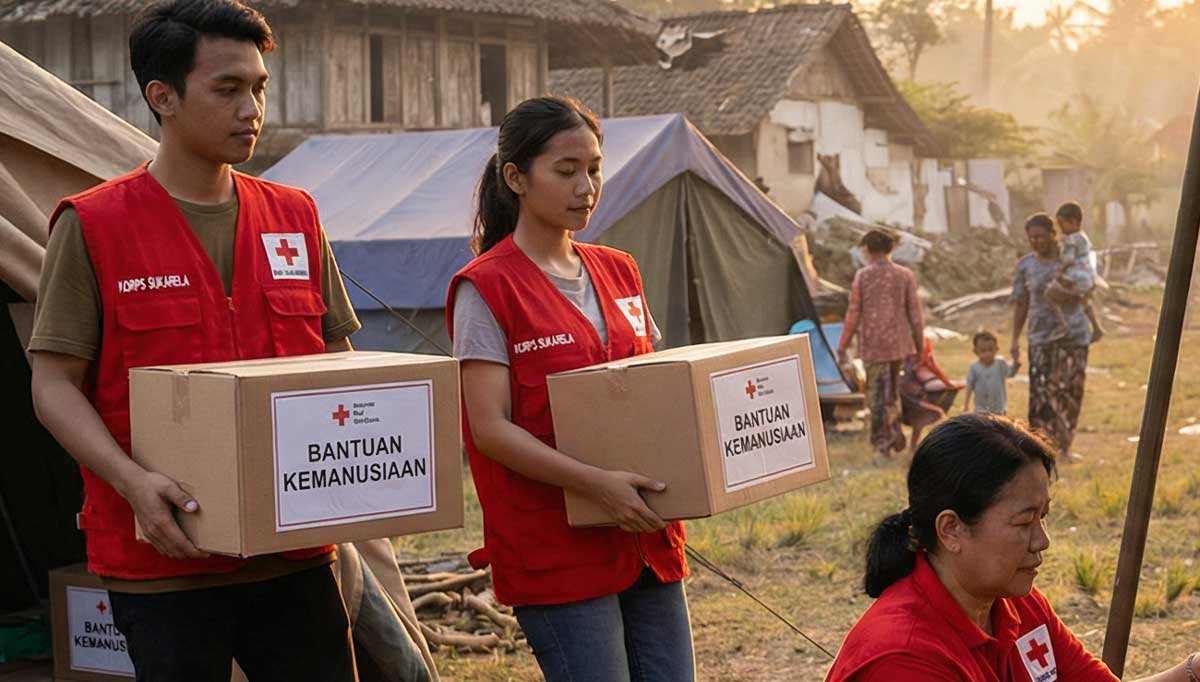
This guide provides the most comprehensive look available at this remarkable organization. We will explore its cultural roots in gotong royong, its vital role within the Indonesian Red Cross (PMI), its real-world impact during national tragedies, and a clear guide for those inspired to join their ranks.
What is Korps Sukarela? More Than Just a Volunteer Corps
Korps Sukarela, which translates to “Volunteer Corps,” is the official, structured body of volunteers for the Indonesian Red Cross (Palang Merah Indonesia — PMI). It is not a casual group of helpers but a trained and organized force dedicated to a wide spectrum of humanitarian services.
With over 58,000 active members, KSR forms a significant part of PMI’s total volunteer network, which is one of the largest in the world. These are the individuals who mobilize for disaster response, organize blood donation drives, conduct public health campaigns, and support social welfare programs across the nation.
Their mission is simple yet profound: to alleviate human suffering. They operate under the globally recognized principles of the Red Cross and Red Crescent Movement, ensuring that help is delivered with humanity, impartiality, and neutrality.
Gotong Royong: The Cultural DNA of Indonesian Volunteerism
To truly understand Korps Sukarela, one must first understand gotong royong. This Indonesian phrase, which means “mutual cooperation” or “collective effort,” is a cornerstone of the national philosophy. It represents the belief that communities thrive when individuals work together for the common good.
KSR is the modern, institutionalized expression of this age-old tradition. It channels the innate Indonesian spirit of helping one’s neighbors into a structured, effective, and accountable system. This is not simply charity; it is a shared responsibility.
This community-focused approach stands in contrast to more individualistic models of volunteerism. In Indonesia, helping others is a collective duty — a cultural DNA that gives KSR its unique resilience and deep community trust.
The Structure of Service: KSR, TSR, and PMR Explained
The Indonesian Red Cross (PMI) organizes its volunteers into three main tiers, each with a distinct role. Understanding these tiers is key to seeing how KSR fits into the broader humanitarian landscape.
| Feature | Korps Sukarela (KSR) | Tenaga Sukarela (TSR) | Palang Merah Remaja (PMR) |
|---|---|---|---|
| Primary Role | Generalist Frontline Volunteers | Specialist / Technical Volunteers | Youth Volunteers (School-based) |
| Age Group | 18 – 35 years | 18+ (no upper limit) | 10 – 17 years |
| Typical Members | University students, general public | Professionals (doctors, engineers, logisticians) | School students |
| Core Training | Basic Training (120+ hours), First Aid, Disaster Management | Specialized skills based on profession | Basic First Aid, Red Cross principles |
| Key Activities | Disaster response, blood drives, health campaigns | Technical support during crises, professional advice | School health programs, peer education |
KSR forms the versatile frontline, TSR provides the expert backbone, and PMR cultivates the next generation of humanitarians.
From Training to Action: What KSR Volunteers Actually Do
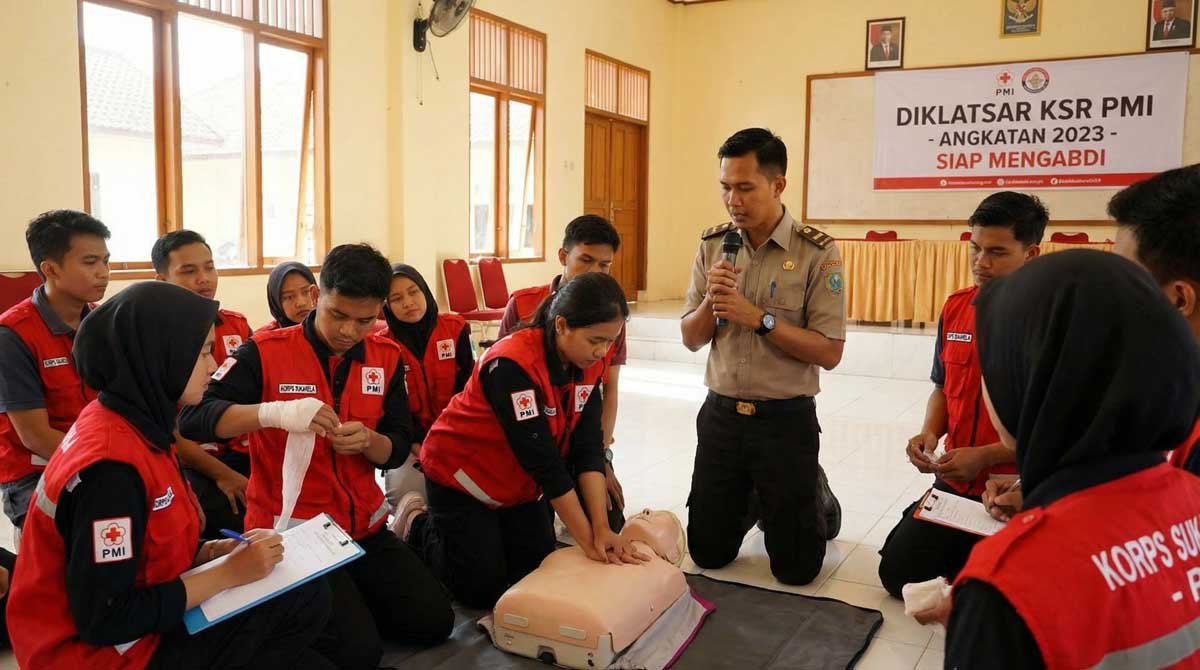
Becoming a KSR volunteer involves a serious commitment, starting with intensive training. Every member must complete a Basic Training program (Pendidikan dan Pelatihan Dasar or Diklatsar), which requires over 120 hours of instruction.
This foundational training covers everything from the seven principles of the Red Cross to practical skills in first aid, shelter management, public kitchen operations, and disaster risk reduction. This ensures every volunteer is prepared, professional, and effective.
Once certified, KSR members engage in a wide range of activities:
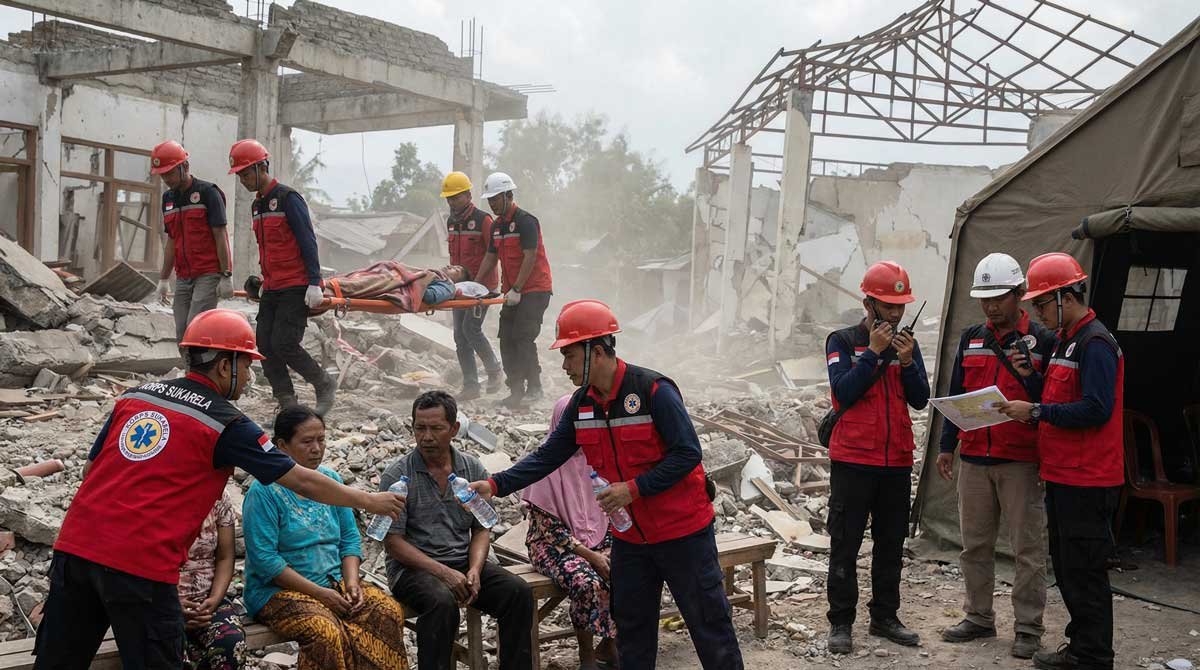
- Disaster Response: As first responders, they provide emergency first aid, assist in evacuations, manage logistics for relief supplies, and support search and rescue operations.
- Blood Services: They are instrumental in organizing and running blood donation drives. With Indonesia requiring an estimated 5 million blood bags annually, their work is a literal lifeline for the nation’s hospitals.
- Community Health: Volunteers conduct vital health education on hygiene, disease prevention, and nutrition. They also play a key role in supporting national vaccination campaigns.
- Social Services: Their work extends to supporting vulnerable populations, including activities at orphanages, elderly care facilities, and community development projects.
Real-World Impact: KSR in Action During National Crises
The true measure of Korps Sukarela is seen when disaster strikes. Their training, local knowledge, and rapid mobilization have proven invaluable during some of Indonesia’s most challenging moments.
Case Study 1: 2018 Sulawesi Earthquake & Tsunami
When a 7.5 magnitude earthquake and subsequent tsunami devastated Palu and Donggala in Central Sulawesi, KSR volunteers were among the first to respond. They worked alongside national search and rescue teams, pulling survivors from the rubble and providing immediate medical attention. In the chaotic aftermath, they established emergency shelters, distributed food and clean water, and helped trace missing persons, bringing comfort to countless families.
Case Study 2: 2022 Cianjur Earthquake
Following the 5.6 magnitude earthquake in Cianjur, West Java, local KSR units were mobilized within hours. They quickly set up field kitchens that provided thousands of hot meals to displaced survivors and emergency workers. Their training in psychosocial support was critical in helping traumatized children and adults cope with the loss of their homes and loved ones — demonstrating that their role extends far beyond physical aid.
A Tale of Two Nations: KSR in Indonesia vs. RELA in Malaysia
Many people confuse Indonesia’s Korps Sukarela (KSR) with the Malaysia Volunteers Corps Department (RELA). While both are volunteer organizations, their mandates and structures are fundamentally different.
| Feature | Korps Sukarela (KSR) — Indonesia | Jabatan Sukarelawan Malaysia (RELA) — Malaysia |
|---|---|---|
| Parent Body | Indonesian Red Cross (PMI) — an NGO | Ministry of Home Affairs — a government agency |
| Primary Focus | Humanitarianism (disaster, health, social) | National security & public order |
| Core Principles | Red Cross Principles (Humanity, Neutrality, Impartiality) | National sovereignty and security |
| Key Activities | First aid, blood drives, disaster relief | Immigration checks, security patrols, crowd control |
| Legal Authority | No law enforcement powers | Limited policing powers (detention, interrogation) |
In short, KSR is a humanitarian force, while RELA functions as a civil security auxiliary. They share a similar name in spirit, but serve entirely different purposes.
How to Join Korps Sukarela: A Step-by-Step Guide
For those inspired to serve, joining Korps Sukarela is a structured and rewarding process. First, ensure you meet the basic eligibility criteria.
| Requirement | Details |
|---|---|
| Citizenship | Indonesian Citizen (WNI) or a foreigner officially residing in Indonesia |
| Age | 18 – 35 years old |
| Education | Minimum Junior High School (SLTP) equivalent |
| Health | Physically and mentally healthy |
| Commitment | Willing to undergo basic training and adhere to PMI principles |
If you meet these requirements, follow these five steps:
- Find Your Local Unit: Connect with a KSR unit at a PMI branch in your city or regency, or at a major university near you.
- Submit an Application: Complete an application form during the unit’s open recruitment period.
- Undergo the Selection Process: Applicants are screened through interviews and sometimes a basic fitness or aptitude test.
- Complete Basic Training (Diklatsar): Commit to and complete the 120+ hour Basic Training program — the most critical step to full membership.
- Become an Active Member: After certification, you are officially a KSR volunteer, eligible to participate in activities, develop specialized skills, and take on leadership roles.
Frequently Asked Questions
What does Korps Sukarela mean?
Korps Sukarela translates to “Volunteer Corps.” It is the official name for the main body of adult volunteers within the Indonesian Red Cross (PMI).
What is the main difference between KSR and RELA?
KSR is an Indonesian humanitarian organization under the Red Cross, focused on disaster relief and health services. RELA is a Malaysian government agency under the Ministry of Home Affairs, tasked with assisting in national security and public order. Their missions, values, and legal powers are entirely different.
Do KSR volunteers get paid?
No, KSR members are unpaid volunteers. However, during long-term disaster deployments, they may receive a small allowance to cover basic personal expenses — but this is not a salary.
What is the time commitment to be a KSR volunteer?
The initial Basic Training requires over 120 hours. Afterward, members are expected to participate in regular unit activities and be available for deployment during emergencies. The level of activity depends on the individual’s availability and their unit’s schedule.
Can foreigners join Korps Sukarela?
Yes, foreigners who are officially residing in Indonesia with a valid residence permit are eligible to join, provided they meet all other requirements such as age and health criteria.
What skills will I learn in KSR?
You will gain certified skills in first aid, emergency response, disaster management, shelter and logistics coordination, and public health promotion. You also develop valuable soft skills like leadership, teamwork, and problem-solving under pressure.
How does KSR relate to the Indonesian government?
KSR is part of the Indonesian Red Cross (PMI), which is an independent, neutral NGO. However, PMI is a key partner to the Indonesian government — especially the National Disaster Management Agency (BNPB) — during emergency responses.
Is joining a university KSR unit different from a city unit?
The core training and principles are the same. University units focus on campus and local community projects, while city/regency units are open to the general public and have a broader operational scope.
Conclusion: The Enduring Spirit of Service
Korps Sukarela is far more than just an organization. It is a living embodiment of Indonesia’s enduring spirit of gotong royong, channeling collective responsibility into life-saving action. Through disciplined training and selfless dedication, its volunteers form a resilient network that strengthens communities from within.
In a nation constantly facing adversity, KSR stands as a powerful symbol of hope and empowerment. It proves that when ordinary people are given the training and structure to work together, they can achieve extraordinary things. Their red vests represent not just aid — but the very heart of humanity in action.
Sources: Indonesian Red Cross Society data via Wikipedia; blood donation statistics via PSPP Journals; Malaysia Volunteers Corps Department via Wikipedia.