
The first thing you notice about Bacup is the stone. It’s everywhere. Dark, sturdy, and silent, it wraps the town in a history you can almost touch. This isn’t some polished, tourist-trap village; this is the real North, a place where the grit of the Industrial Revolution still clings to the air, but where a vibrant, modern community is quietly thriving.
We will explore its unique architectural soul, uncover its strange cultural quirks, and provide a clear-eyed look at what it’s actually like to live here. If you’re a history buff, a TV fan, or someone looking for an affordable, authentic slice of the Pennines, keep reading. Bacup is ready for its close-up.
The Industrial Soul: England’s Best-Preserved Mill Town
Bacup sits high in the Rossendale Valley, a landscape carved by industry and surrounded by dramatic moorland. The town’s very name, derived from the Old English baec-hop, means “valley by a ridge,” a perfect description of its sheltered, working-class location. Its story is the story of cotton.
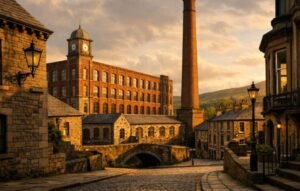
The town’s rapid growth began in the 18th century, transforming it from a small medieval settlement into a powerhouse of textile production. This history is not hidden; it is the town’s foundation. English Heritage officially designated Bacup as the “best-preserved cotton mill town in England.” That is a huge claim.
Why the designation? Because unlike many of its neighbors, Bacup’s Victorian and Edwardian architecture remains remarkably intact. Walk down the main streets and you see a cohesive streetscape of stone-built terraces, grand civic buildings, and former mills. These buildings are a testament to the wealth and ambition of the cotton boom. They tell a powerful story.
| Year | Event | Significance |
|---|---|---|
| c. 1200 | First recorded settlement (Ffulbachope) | Marks the town’s ancient origins in the Rossendale Forest. |
| 1782 | First cotton mill established | Beginning of the town’s transformation into an industrial hub. |
| 1852 | Bacup’s first railway line opens | Connects the town to Manchester, fueling the cotton trade. |
| 1967 | Last cotton mill closes | Marks the end of the town’s primary industrial era. |
| 1980s | English Heritage Conservation Area status | Official recognition as the best-preserved mill town. |
From Peaky Blinders to Brassic: Bacup on Screen
The town’s preserved architecture and rugged landscape have made it an unlikely star of the screen. Directors don’t come here for modern gloss; they come for authenticity. They come for the stone, the grit, and the atmosphere of a bygone era.
You might have seen Bacup without even knowing it. The town has provided the backdrop for some of the UK’s most popular dramas. Its cobbled streets and dramatic stone buildings were perfect for the dark, brooding world of Peaky Blinders. The show’s producers needed a place that felt genuinely 1920s Birmingham, and Bacup delivered.
More recently, the town has become synonymous with the hit Sky comedy-drama Brassic. The show, which follows the chaotic lives of Vinnie O’Neill and his friends, uses Bacup’s unique character to great effect. The contrast between the stunning natural beauty of the moors and the hard-edged reality of the town creates a perfect visual metaphor for the show’s themes.
The Brassic Trail: A Fan’s Guide
For fans of the show, a self-guided tour of Bacup’s filming locations is a must. It’s a great way to explore the town’s hidden corners.
- The Pub: The exterior of the pub where the gang often meets is a real Bacup establishment.
- Vinnie’s Shack: While the shack itself is a set piece, the surrounding moorland and views are authentically Bacup.
- The Town Centre: Look closely at the scenes set in the town centre; you’ll recognize the Victorian architecture that forms the core of the conservation area.
Living in the Valley: Reality vs. Reputation
What is it actually like to live in Bacup? The reputation often precedes the reality. Yes, it’s high up in the Pennines, and yes, you will need a good coat—the weather is a constant, honest companion. But the community spirit here is fiercely loyal and welcoming.
The town offers a genuine sense of belonging that is often lost in larger cities. You see it in the local market, in the independent shops, and in the way neighbors look out for each other. It is a place where people put down roots.
One of Bacup’s most compelling features is its affordability. Compared to the national average, or even its immediate neighbors, Bacup offers exceptional value for money. This makes it an increasingly attractive option for first-time buyers and families.
| Location | Average House Price (2025 Estimate) | Difference from Bacup |
|---|---|---|
| Bacup | £150,000 | Base |
| Burnley | £148,198 | -1.2% |
| Rochdale | £202,000 | +34.7% |
| UK National Average | £280,000+ | +86.7% |
The numbers speak for themselves. You can buy a substantial stone-built terrace in Bacup for a fraction of the cost of a comparable property elsewhere. While the commute to Manchester is longer than from Rochdale, the financial trade-off is significant.
Cultural Quirks: The Nutters and the Shortest Street
Every great town has its eccentricities, and Bacup is no exception. These local oddities are what give the town its unique, human character.
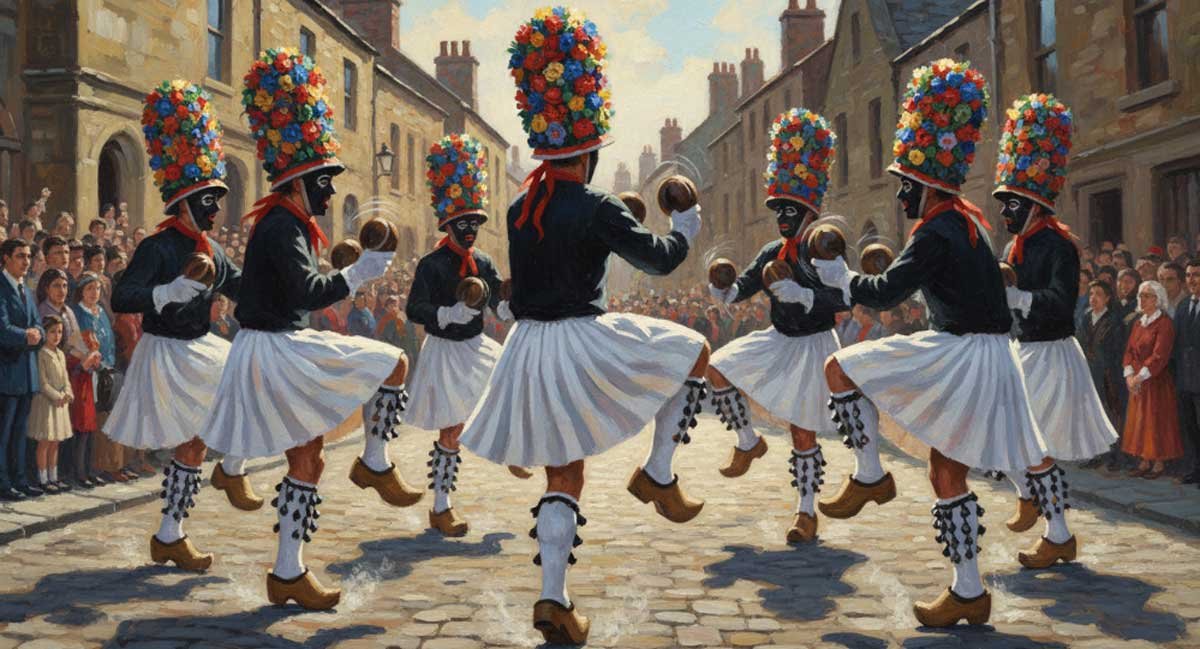
The Britannia Coconut Dancers
Imagine a group of men, faces blackened, wearing white skirts, clogs, and a hat adorned with flowers. They dance through the streets, clashing wooden ‘nuts’ attached to their knees, waist, and hands. These are the Britannia Coconut Dancers, or “The Nutters,” as they are affectionately known.
This traditional folk dancing team has been performing since 1857, with origins tracing back to the “Tunstead Mill Nutters.” Their annual Easter Saturday procession is a spectacle of sound and movement, a tradition fiercely protected by the community. It is a direct, living link to the town’s industrial past and its unique cultural heritage.
The Shortest Street
Bacup also holds a curious claim to fame: Elgin Street. This tiny stretch of road, measuring just 17 feet (5.2 meters), was once listed in the Guinness Book of Records as the shortest street in the world.
While it lost the official title in 2006 to a street in Scotland, the story remains a source of local pride. It’s a perfect example of Bacup’s character: small, unassuming, but with a history that punches above its weight. It’s a fun, quick detour that reminds you that even the smallest places can hold big records.
FAQ: Everything You Need to Know
- 1. Is Bacup a nice place to live?
- Bacup is widely considered a secure and family-friendly town with a strong sense of community. Its appeal lies in its affordability, its stunning moorland surroundings, and its preserved architectural heritage. While it is a former mill town, it offers a quieter, more rooted lifestyle than larger urban centers.
- 2. What is Bacup famous for?
- Bacup is most famous for two things: its history and its culture. It is officially recognized by English Heritage as the best-preserved cotton mill town in England. Culturally, it is known worldwide for the Britannia Coconut Dancers, a unique traditional folk dance troupe.
- 3. Is Bacup in Lancashire or Yorkshire?
- Bacup is firmly located in Lancashire, England. It sits in the Rossendale Borough, right in the South Pennines, close to the boundaries with both West Yorkshire and Greater Manchester.
- 4. What films were made in Bacup?
- Bacup is a popular filming location due to its preserved Victorian streetscapes. It has been used for major TV series including Peaky Blinders and Brassic, as well as the classic 1961 film Whistle Down the Wind.
- 5. How far is Bacup from Manchester?
- Bacup is approximately 18 to 20 miles (29 to 32 kilometers) north of Manchester city center. By car, the journey typically takes around 45 minutes to an hour, depending on traffic and the specific route through the Rossendale Valley.