
Before the smoke of a thousand chimneys choked the sky, there was only the wind. It swept across the West Pennine Moors, carrying the scent of damp earth and ancient secrets. This was Bolton le Moors, a place where the wild landscape forged a people as rugged as the gritstone beneath their feet.
Have you ever wondered how a small moorland settlement became the “Geneva of the North”? It wasn’t just luck. It was a combination of fierce faith, revolutionary machines, and a resilience born from tragedy. Today, the name “Bolton le Moors” whispers from old maps, reminding us of a time when the town was the beating heart of Lancashire.
This article peels back the layers of industrial soot to reveal the vibrant history of Bolton. We will explore the bloody cobbles of the Civil War and the clatter of the spinning mule. Whether you are a history buff or a curious local, you are about to discover why this town’s legacy still echoes across the moors.
The Wild Beginnings: Why “Le Moors”?
The name itself is a map. “Bolton” likely stems from the Old English bothel-tun, meaning a settlement with a dwelling. But it is the suffix “le Moors” that captures the imagination. It distinguishes this place from its cousins, rooting it firmly in the high, windswept heaths of the Salford Hundred.
In 1067, the Norman conquerors recorded the Manor of Bolton as a vast, untamed estate. By the 14th century, it had grown into a parish in its own right. Life here was dictated by the seasons and the soil. The moors weren’t just a backdrop; they were a source of water, wool, and a peculiar kind of independence.
This isolation bred a fierce spirit. By the 17th century, Bolton had earned the nickname “The Geneva of the North.” Its residents were staunch Puritans, deeply committed to their faith and suspicious of royal overreach. This religious fervor would soon set the stage for one of the darkest chapters in English history.
The Blood on the Cobbles: The Bolton Massacre
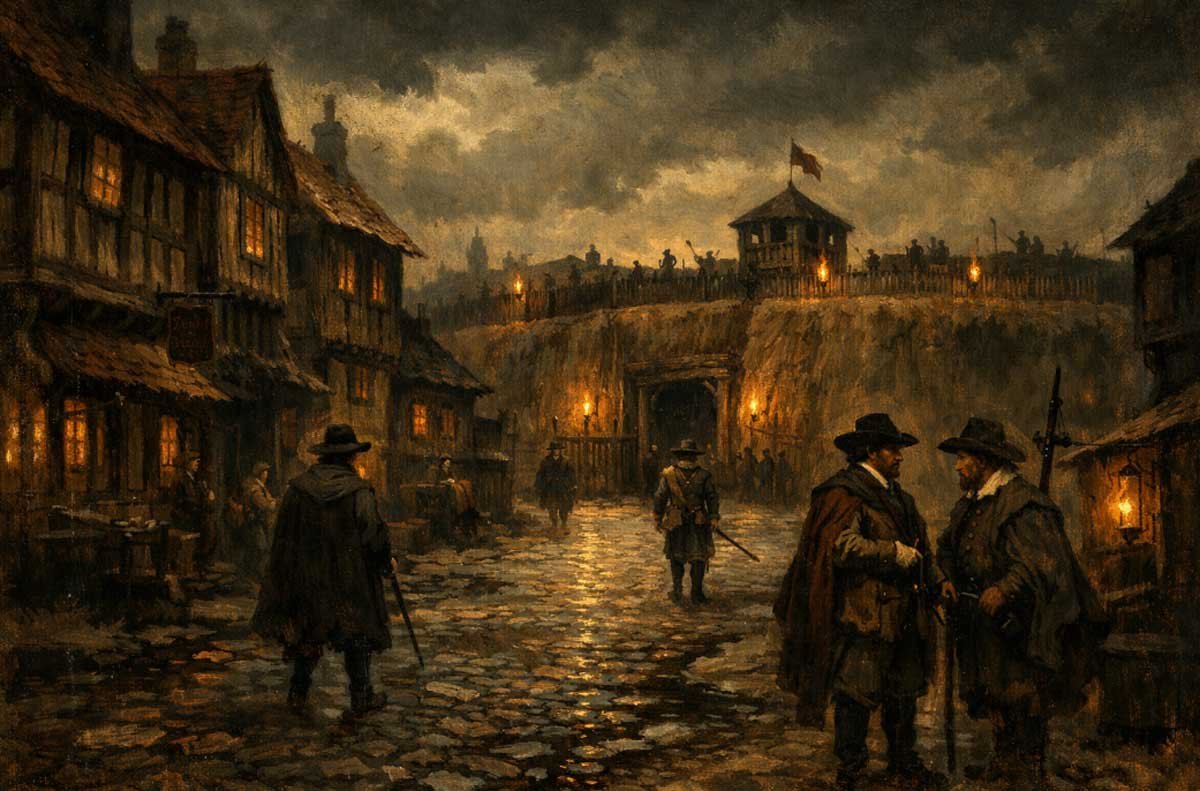
The year 1644 remains etched in the town’s collective memory. As the English Civil War raged, Bolton stood as a defiant Parliamentarian outpost. Surrounded by Royalist strongholds, it was a target that Prince Rupert, the King’s nephew, could not ignore. On a rain-soaked May day, the storm broke.
The “Storming of Bolton” was swift and brutal. Royalist cavalry surged through the mud-walled defenses, turning the streets into a slaughterhouse. Historical accounts suggest up to 1,600 people were killed in the chaos. This wasn’t just a battle; it was a massacre that shocked the nation and solidified Bolton’s reputation for stubborn defiance.
The aftermath left the town scarred but unbowed. The Earl of Derby, who led the attack alongside Rupert, was eventually executed in Bolton years later. This cycle of violence and retribution became a cornerstone of local identity. It proved that the people of the moors would rather break than bend to a crown they didn’t respect.
The Machine that Spun the World
Tragedy eventually gave way to transformation. As the 18th century dawned, the clatter of looms began to replace the clash of swords. Bolton’s damp climate, perfect for handling cotton, turned the town into a laboratory for the Industrial Revolution. The world was about to change, and a local man held the key.
Samuel Crompton, working in the shadows of Hall i’ th’ Wood, invented the spinning mule in 1779. This ingenious machine combined the best of previous inventions, producing yarn that was both fine and strong. Suddenly, Bolton wasn’t just a market town; it was a global powerhouse, spinning the fabric of empires.
The growth was explosive. Great Bolton and Little Bolton, once separate townships, merged into a sprawling forest of brick and iron. By the 19th century, the “Mill Town” was born. The table below illustrates how the ancient townships of the parish transformed during this era of unprecedented change.
The Township Transformation Table
| Township | 1801 Population | 1881 Population | Primary Industry |
|---|---|---|---|
| Great Bolton | 12,549 | 45,694 | Cotton Spinning & Trade |
| Little Bolton | 4,867 | 41,937 | Bleaching & Textiles |
| Turton | 1,369 | 5,653 | Quarrying & Agriculture |
| Blackrod | 1,623 | 4,234 | Coal Mining |
Note: Data reflects the dramatic shift from rural hamlets to industrial hubs within the Bolton le Moors parish. For more details, see the Wikipedia entry for Bolton le Moors.
Modern Echoes: Bolton le Moors Today
History in Bolton isn’t confined to dusty books; it is written in the skyline. The towering spire of St Peter’s Church, rebuilt in the 1870s, still watches over the town center. It stands on the same ground where medieval worshippers once gathered, a Victorian Gothic masterpiece that anchors the town to its spiritual past.
In 1974, administrative lines were redrawn, moving Bolton from Lancashire into Greater Manchester. Yet, ask any local, and they will tell you the red rose still blooms here. The “Le Moors” identity survives in the passion for Bolton Wanderers and the weekend hikers who still flock to Rivington Pike to breathe the moorland air.
For those who wish to touch this history, the ancient boundaries offer a perfect trail. Walking from the Smithills Estate toward the West Pennine Moors, you can still see the transition from urban grit to wild green. It is a reminder that while the mills have mostly fallen silent, the spirit of the moors remains eternal.
A Walker’s Guide to the Ancient Boundaries
- Start at St Peter’s Church: Witness the heart of the old ecclesiastical parish.
- Head to Hall i’ th’ Wood: Visit the birthplace of the spinning mule.
- Climb Rivington Pike: Look back at the town and see the “Le Moors” landscape in its full glory.
Frequently Asked Questions (FAQ)
- 1. What is the history of Bolton le Moors?
- Originally a part of the ancient parish of Eccles, Bolton le Moors became an independent parish in the 14th century. It evolved from a Norman manor into a Puritan stronghold and eventually a world-leading center for the textile industry during the Industrial Revolution.
- 2. What is Bolton historically known for?
- Bolton is famous for being the “Geneva of the North” due to its Puritan roots, the site of the tragic 1644 Bolton Massacre, and the home of Samuel Crompton, whose spinning mule revolutionized global cotton production.
- 3. When did Bolton leave Lancashire?
- Administratively, Bolton became part of the metropolitan county of Greater Manchester in 1974. However, it remains part of the historic county of Lancashire, and many residents still maintain a strong Lancashire identity.
- 4. What was the Bolton massacre?
- The Bolton Massacre occurred in 1644 during the English Civil War. Royalist forces led by Prince Rupert stormed the town, resulting in the deaths of an estimated 1,600 Parliamentarian soldiers and civilians.
- 5. Who is famous from Bolton?
- Notable figures include Samuel Crompton (inventor), Thomas Cole (founder of the Hudson River School of painting), and modern icons like comedian Peter Kay and boxer Amir Khan.
Discover the Spirit of the Moors
Bolton le Moors is a testament to human endurance and ingenuity. Whether you’re exploring its historic streets or hiking its wild peaks, the legacy of Lancashire’s heart is waiting for you.