
It may appear simple at first, but you soon have to repaint every few years, replace some warped boards, or even pull out a complete section as the bottom begins to rot.
If you’re trying to make a greener choice, here is the true shortcut:
The most eco-friendly fence is the one that does not need to be replaced
A durable fence conserves resources, reduces waste, and avoids unused materials, repairs, and contractor visits. This guide keeps it simple and functional so you can select a fence that endures and looks good.
The single question that eases fence choices.
Rather than posing the question, What is the most eco-friendly material? Ask:
What fence will be good and functional for 10-20 years with minimal replacement?
The sustainability, as it is realized in practice, is typically reduced to:
- Durability (holds up in your climate)
- Minimal maintenance (no continuously applied coats)
- Repairability (fix one part rather than the whole)
Quick comparison: what matters long-term
This table focuses on the factors that create waste over time: repairs, coatings, and early replacements.
| Fence type | How much upkeep? | What usually goes wrong | Easy to repair a small section? | What happens when it’s old? | Best fit when… |
| Wood | Medium–High | Rot near the ground, warping, split boards, frequent refinishing | Often yes (swap boards), but posts/rails can be bigger work | Untreated wood can sometimes be reused; treated wood is harder to deal with | You want natural looks and you’ll maintain it |
| Vinyl (PVC) | Low–Medium | Cracks from impacts; some types get brittle in cold | Depends on the system | Recycling is inconsistent in many places; often disposed of | You want low upkeep and a strong warranty |
| Composite (WPC) | Low–Medium | Heat movement, surface wear, color shift; repairs harder if profiles discontinue | Usually yes, system-dependent | Mixed materials can be difficult to recycle | You want a wood-style look with less staining/rot |
| Metal (Aluminum / Steel) | Low | Coating damage, dents, hardware loosening | Usually yes (swap a panel/slat) | Strong recycling potential | You want long life and minimal upkeep |
Key point: climate and installation quality matter as much as material. Even the best materials will fail if installed poorly. To achieve an eco-friendly fence, focus not just on the material but on ensuring it is built to last.
Wood fences may be a wonderful choice – when you construct and take care of them
Wood can be a smart, responsible material when sourced correctly and kept dry. However, wood is highly sensitive to water, soil, and time.
Wood stays “eco-friendly” when you do three things:
- 1. Buy responsibly. Enquire about the source of wood and seek a plausible certification.
- 2. Keep moisture under control. Rot usually begin at the bottom, where soil and water are placed.
- 3. Follow up on a maintenance schedule. A fence that is supposed to get stained but never does gets done up.
Modern aluminum systems are available in wood-like finishes, and although they still require maintenance, they should be considered if you love the appearance of wood but despise the maintenance cycle.
Vinyl (PVC): low maintenance, but think about repairs and end-of-life
The fact that vinyl does not rot is a significant advantage, and in most cases, it requires less work than wood. The downsides usually show up in one of these ways:
- Impact damage (cracking after bumps or storms)
- Cold-weather brittleness in some regions
- End-of-life uncertainty (recycling options vary, and many old vinyl fences get disposed of)
Composite (WPC): It is usually pragmatic: just make sure it is repairable
The composite fencing can reduce staining and rot, thereby minimizing waste in the long run. The recycled content is also available in some products.
However, a composite may create a future problem: repairs may be difficult if the profile is discontinued. Composite works best when:
- It is easily removable (a board/slat can be changed)
- It possesses adequate spacing of heat expansion.
- The company is well-established and reliable.
Metal fencing: a popular set-it-and-forget-it option
If you want a fence that’s eco-friendly, durable, and doesn’t need frequent maintenance, metal fences check most boxes: Long service life.
- Very little ongoing maintenance (no staining cycle)
- Easy repairs (swap a panel/slat instead of rebuilding everything)
Aluminum is popular in privacy and slat designs. It does not rust like steel in many outdoor conditions. A fence that lasts and can be repaired instead of replaced creates less waste.
Why aluminum privacy systems are often the practical choice
Homeowners who start by comparing “wood vs vinyl vs composite” often lean toward aluminum once they factor in:
- Time saved (no repainting/staining)
- Appearance stability (no rotting, fewer surprises)
- Section-by-section repairs (one damaged area doesn’t mean a full rebuild)
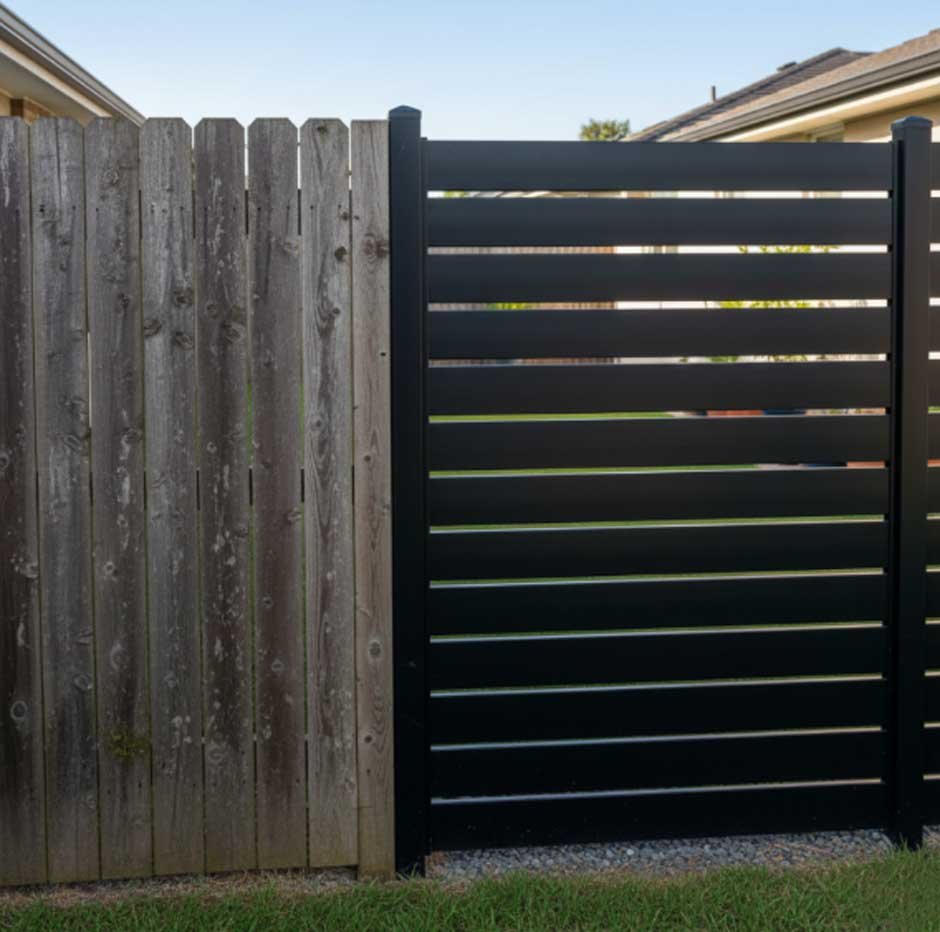
The PrimeAlux is an aluminum-based privacy fence system. It provides a viable alternative to local options. It features a modern look, low maintenance, and easy repair, all with long-term durability in mind.
And when it comes to privacy, their aluminum privacy fence panelling will provide the same modern look of an outdoor room without the maintenance requirements of a wood fence. Before concluding, it’s important to recognize environmental costs that extend beyond the fence panels themselves, especially those related to ongoing maintenance and repairs.
A fence’s footprint includes the panels, as well as ongoing extras like stain, paint, and sealants.
- replacement boards and rails
- hardware and fasteners
- partial repairs that turn into full replacements
Here’s what usually drives waste over time.
Easy wins: installation choices that make any fence more sustainable
No matter which material you choose, these details usually matter more than people expect:
- Choose a fence you can repair. Replacing a single section is far better than replacing the entire run.
- Protect it from constant moisture. Drainage and airflow help almost every fence type.
- Don’t overbuild. Extra height and decor mean more material now and waste later. Use landscaping on purpose. Sometimes, a shorter fence and planting can provide the same privacy with less material.
- Pick a stable supplier. A fence system that still exists in 8–10 years is easier to repair.
The simple checklist to bring to your contractor
| Ask this | Why it matters | A good answer sounds like |
| Can I replace one panel/slat if it’s damaged? | Prevents full replacement | “Yes, it’s modular and parts are stocked.” |
| What maintenance will I realistically need? | Less products = less waste | “Mostly cleaning; minor hardware checks.” |
| How is it protected from moisture? | Moisture drives early failure | “Proper spacing, drainage, airflow details.” |
| What’s the warranty—and what voids it? | Filters out low-grade systems | “Clear coverage with realistic exclusions.” |
| What happens at end-of-life? | Recycling vs disposal | “Recyclable materials / take-back options.” |
Final takeaway
If you want to make the best eco-friendly fence decision, focus on what keeps your fence out of ‘repair-and-replace mode.’ Longevity, minimal maintenance, and repairable design are the most important factors. Prioritize these, not just the material label.
- Long service life
- Minimal maintenance products
- Repairable design
- Realistic end-of-life options
This is why many homeowners are inclined to use aluminum for privacy fencing, particularly when the system is intended to be installed cleanly, and the parts can be easily replaced. Be the direction you are thinking about, put the local quotes up against a product designed to do the job, such as PrimeAlux (it may not be the one you use, but it is a fine example of what low maintenance should be).
The fence that requires no regular repairs is the most long-lasting and often the most sustainable decision a homeowner can make.