
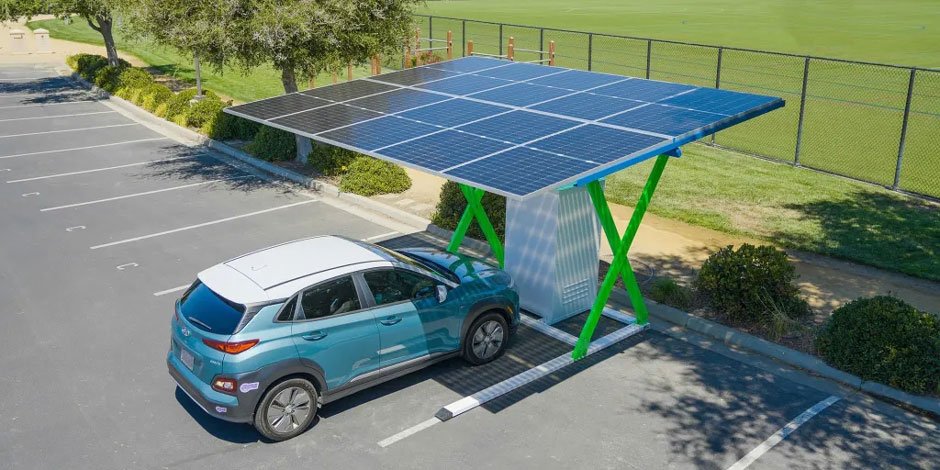
As more homeowners across Western Australia realize the benefits of solar panels, home battery storage and EV motor vehicles, the need for adequate EV chargers are also growing. In 2022, a record number of EVs were sold and sales are expected to increase by 35% in 2023.
People are understanding that with these technologies, they can create a fully self-sufficient home energy system. A system that reduces electricity bills, cuts reliance on the grid while providing clean, renewable power for the home and your Electric vehicle. Charging your EV at home with solar power costs less than using a public charger or grid power at home.
Western Australian homes enjoy approximately 4.5–6.0 peak sun hours per day, calling for a well-designed solar + battery + EV charger system, one that delivers about 70–95% energy self-sufficiency depending on system size, load and scheduling.
ChargingWA are helping homeowners design safe, efficient and future-proof systems that maximise solar use and minimise grid reliance.
Why WA Homes Are Perfect for Solar-Powered EV Charging
With its high solar irradiation, Western Australia is one of the ideal places for self-powered EV charging. The contributing factors to this are:
Average solar output
Homes in Perth generally generate 4–5 kWh per kW of solar installed per day, which translates into substantial daily electricity production.
Time-of-use tariff
WA households on off-peak or EV-specific tariffs can maximise savings by scheduling battery and EV charging during low-cost periods.
Rising electricity costs
Grid electricity prices in WA have increased by 15–20% over the past five years, making solar-generated energy the most viable and cost effective energy source.
EV adoption growth
With more WA residents switching to EVs, home charging solutions are increasingly important.
Practically, a WA home with 8–10 kW of solar panels, a 10–13.5 kWh battery and a smart EV charger can cover most household needs and charge one or even two EVs primarily using solar energy.
How do your Solar Panels, Batteries and EV Chargers Work Together
An efficient, well designed alternative energy system relies on three essential components.
1.Solar Panels
For most WA homes, a 10 kW rooftop solar panel system will produce roughly 40–50 kWh per day during peak summer months. This energy powers household loads and, when surplus exists, feeds the battery or EV charger.
2.Home Battery Storage
Your home battery stores excess solar energy for use when the sun is hiding, like the evening, night or cloudy periods. With a 13.5 kWh battery, homeowners can charge an EV overnight or power high-demand appliances without relying on the grid. Batteries also provide backup power during outages and enable better tariff optimisation.
3. EV Charger
Home EV chargers range from 7.4 kW single-phase AC units to 22 kW three-phase chargers. Smart chargers can:
- Prioritise solar energy usage
- Schedule charging during off-peak grid periods
- Balance electrical loads to protect home circuits
ChargingWA’s smart charger installations can charge a 60 kWh EV battery primarily from solar over a single day, reducing grid reliance and costs.
How to Power an EV with Solar Energy
Electric vehicles consume approximately 4,666 kWh of electricity per year, depending on driving habits and vehicle efficiency. To generate sufficient energy for this entirely from solar power, you need to consider how much electricity each kilowatt (kW) of installed solar capacity produces.
On average, 1 kW of solar panels generates roughly 4 kWh per day, or about 1,500 kWh annually. Based on this, a typical EV would require approximately 3.1 kW of solar capacity to cover its yearly energy needs (4,666 ÷ 1,500 kWh).
Practically, it means adding eight to twelve additional solar modules to an existing home solar system, depending on the chosen solar panel wattage. The exact number depends on factors such as your location, panel efficiency, roof orientation and the seasonal availability of sunlight.
Solar calculators are available to work out the precise estimate. By entering details like your driving patterns, EV make and model, and charger type the calculator can estimate the optimal solar system size to power your vehicle and your home efficiently. It allows you to design a solar system that meets your mobility and household energy needs sustainably.
The Best Way to Charge an EV with Solar Power
Aside from an EV charging installation station, homeowners should also consider how to power it. Grid electricity is an option; however, it’s an expensive resource and less environmentally friendly.
Contrary, solar power provides a clean, cost-effective and sustainable solution. In WA, a standard 10 kW rooftop solar system can generate around 40–45 kWh per day during peak months, enough to charge most EVs while powering the home. Using solar energy at home to charge an EV can cost approximately $400–$450 annually, compared to $650–$700 using grid electricity or over $1,050 at public charging stations.
Compared with petrol-powered vehicles, which average $1,200–$1,300 per year, solar charging can save WA drivers more than $800 annually.
Home battery storage increases independence from the grid, thereby providing stored energy for EV charging at night or during blackouts. It allows households to schedule charging during periods of maximum solar output or off-peak electricity tariffs, optimising cost savings and energy efficiency.
With advanced bi-directional chargers, you can take this further, enabling vehicle-to-home (V2H) or vehicle-to-grid (V2G) functionality. Your EV can act as a temporary power source for your home or feed energy back into the grid when needed, turning it into a versatile part of your home energy system.
WA Homes Can Lead in Solar-Powered EV Mobility
Creating a self-sufficient solar home for EV charging allows WA homeowners to lower electricity bills, reduce carbon emissions and become more energy efficient. By combining solar PV, battery storage and a smart EV charger, households can successfully power their homes and vehicles from renewable energy.
WA’s residents can use its boundless sunshine to install an energy efficient solar powered system that will reduce electricity costs while increasing EV adoption.
Working with professionals like ChargingWA ensures that your system is optimally sized, safe, compliant and ready for the future of energy and mobility.