
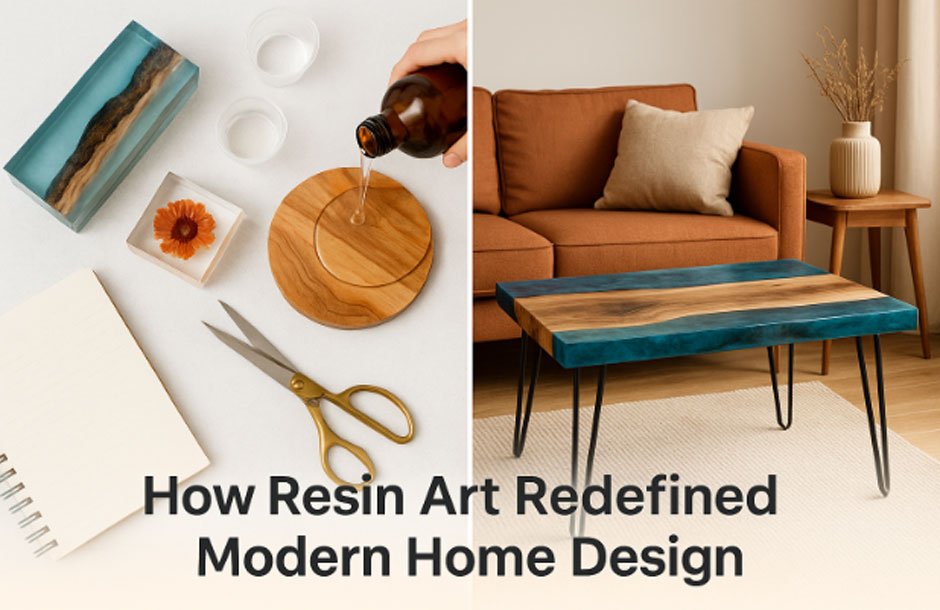
If you scroll through home-decor inspiration these days—whether it’s Instagram Reels, TikTok DIY accounts, or your favorite design blog—you’ll probably notice something unexpected: resin. Not the industrial kind, but the surprisingly elegant, handcrafted pieces people are making at home.
It seems like everywhere you look, someone is pouring a clear block around dried flowers, creating ocean-themed coasters, or turning a leftover piece of wood into a glossy side table. And somehow, it all fits perfectly into the clean, calm, modern interiors that have become so popular in recent years.
Why Resin Suddenly “Feels” Modern
A big part of resin’s appeal is how naturally it aligns with today’s design sensibilities.
People want their homes to feel intentional, soothing, and connected to the natural world—even if they live in a city apartment.
Resin allows that in a way few materials do. It can encase petals, leaves, stones, or wood. It can look like clear water, soft fog, or rippling marble. It’s modern, but not cold. Minimal, but not boring.
If you walk into someone’s living room and notice a resin bookend with a preserved fern inside, it immediately feels like a personal detail rather than a mass-produced object.
Small Pieces, Big Personality
One reason resin took off so quickly is that people discovered they didn’t need to commit to a huge project. A few small, well-chosen pieces can change the feeling of a room more than you’d expect. That same idea applies to other soft design accents as well, where subtle additions like pillows and textiles from www.colinandfinn.com/ help anchor handcrafted décor so it feels intentional rather than visually busy.
Trending resin items include:
- Bookends with dried botanicals
- Trays with cloudy, marble-like pigments
- Coasters inspired by beach waves
- Small accent blocks that double as décor
They’re functional, but they’re also tiny pieces of “art” that feel approachable. You don’t need to be an artist to appreciate them, and you don’t need a studio to use them.
Why Designers Depend on Deep-Pour Resin
For thicker or more sculptural décor, designers often reach for deep pour epoxy resin.
Not because it’s trendy, but because it behaves predictably.
Thicker pieces—such as solid blocks, river-style wood décor, or tall bookends—need a resin that can cure slowly and cleanly. If it cures too fast, it overheats. If it’s too thin, it turns cloudy. The “deep-pour” category solves these issues, making it possible to get that beautiful, glass-like finish people love.
And because clear resin plays so well with natural textures—especially wood—designers use it to create pieces that feel both modern and grounded.
What’s Driving This Movement (Beyond Aesthetics)
The more you look into the resin trend, the more you realize it’s not just about décor.
1. People like giving old materials new life
Resin is perfect for transforming leftover wood, broken shells, or dried flowers into something you’ll actually use. It’s sustainability in a small, personal way.
2. It offers personalization without pressure
Change the pigment, swap the flower, adjust the shape—everything is customizable without feeling overwhelming.
3. It gives people a creative break
A lot of resin creators say pouring resin feels almost meditative. Watching colors drift and settle is strangely calming.
And it doesn’t hurt that the finished pieces look expensive—even if the process is pretty simple.
A Material That Fits How We Live Now
As people spend more time at home, there’s a noticeable shift in what we want our spaces to feel like. Not flawless—just meaningful. That’s part of why resin has quietly moved from niche crafting material to something people use for interior pieces that feel personal and modern at the same time. And among the many types of resin, the slow-curing, deep-pour styles have become especially popular for creating thicker, sculptural objects that hold memories, texture, or natural elements inside them.
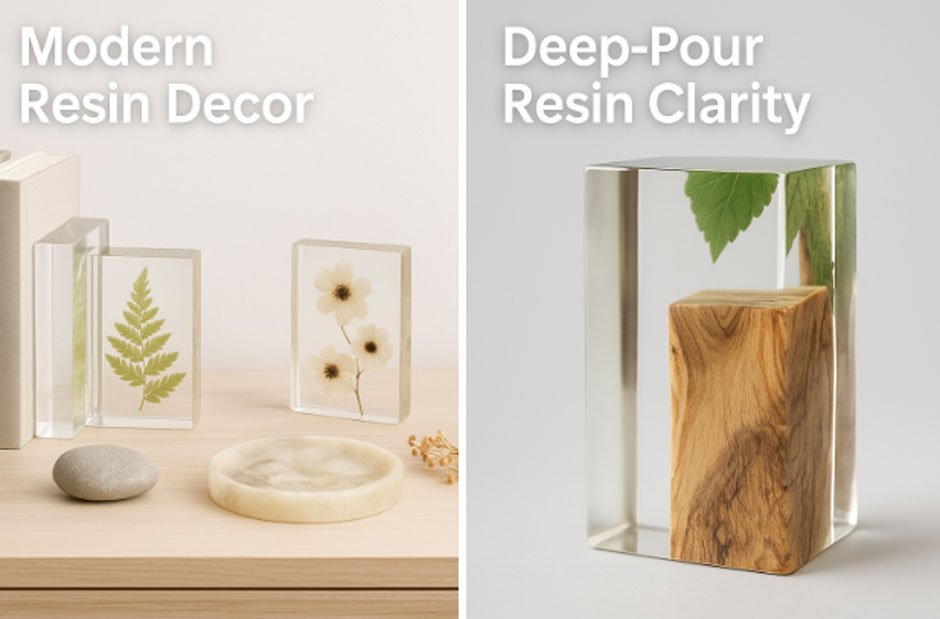
Deep-pour epoxy projects—like clear bookends, botanical blocks, or wood-and-resin accent pieces—allow people to capture something personal in a durable, display-ready form. It’s a material that works surprisingly well in small home studios or even on a dining table, which is exactly where many creators now spend their weekends experimenting.
That may be why brands like Bondcraftor come up often in conversations about at-home resin work. People mention them when talking about resins suited for thicker pours—formulas that stay clear, cure evenly, and give beginners enough working time to create something they’re proud to keep on a shelf or desk. For many home creators, that combination of stability and usability is what makes deep-pour resin feel so accessible.
Final Thoughts: Resin Is Here to Stay
What started as a quiet DIY trend has grown into a genuine design movement.
Resin isn’t replacing traditional décor—but it’s giving people a way to add personality and story to their homes, without needing an entire workshop or renovation budget.
For designers, resin provides creative freedom.
For hobbyists, it provides a relaxing outlet.
For modern homes, it provides warmth and character.
And sometimes, a single handcrafted piece is all it takes to make a space feel a little more like yours.